Travis Taylor Reveals a Dark Secret!!
Travis Taylor Reveals a Dark Secret!!

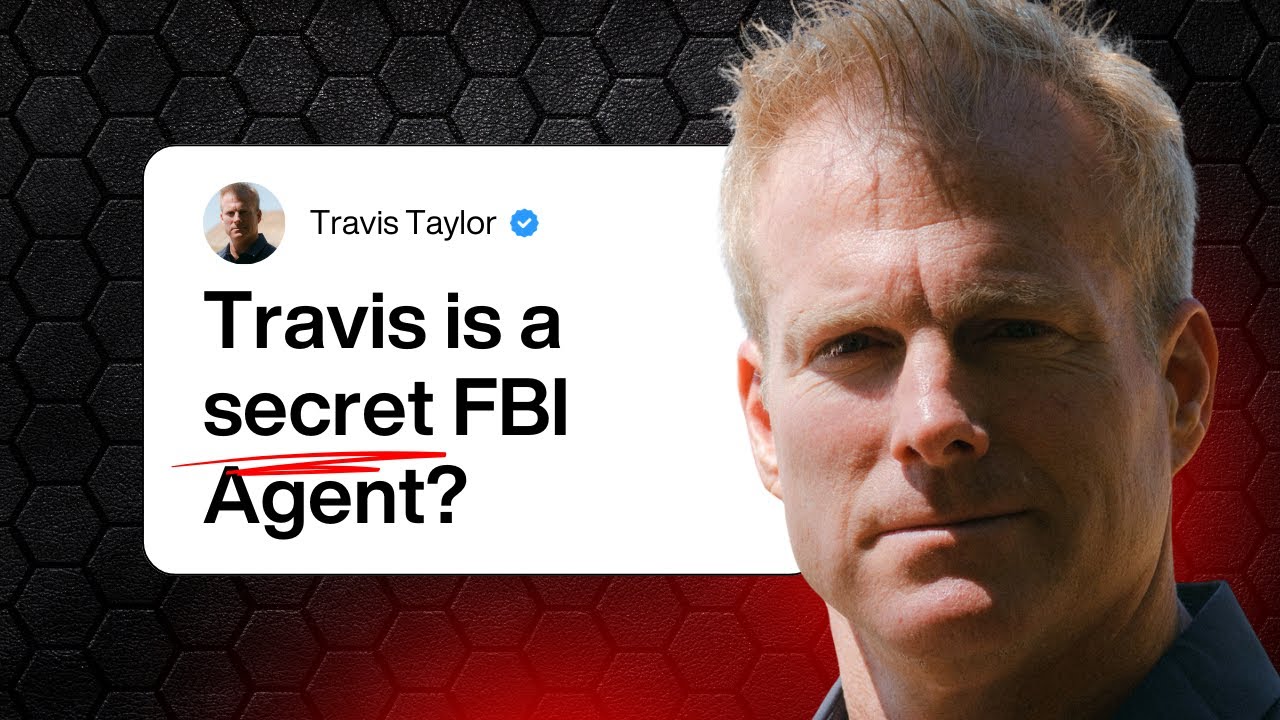
That the that you know there were aliens on the moon, Eric would probably believe me.
Dr. Travis S. Taylor is not easily categorized. He is at once a credentialed aerospace engineer, a defense scientist steeped in classified research, a prolific science fiction author, and a public investigator of phenomena that challenged conventional physics. From Alabama’s Rocket City to the mesa of Skinwalker Ranch, Taylor’s career traces a path along the fault line between established science and the unexplained.
Armed with multiple doctorates and decades of work on missile defense, directed energy, and advanced sensors, he approaches mysteries not as matters of belief, but as engineering problems, demanding data, instrumentation, and risk. To admirers, he is a rare insider willing to follow evidence wherever it leads. To critics, a symbol of how speculation and spectacle can blur.
Either way, Taylor stands at the center of one of the most provocative questions of our time. What happens when rigorously collected data refuses to fit the models we trust?



Dr. Travis S. Taylor occupies a rare and compelling space where hard aerospace science, imaginative speculation, and the investigation of anomalous phenomena converge. Born in 1968 in Decar, Alabama and raised in the rural community of Somerville, Taylor grew up in the long shadow of Huntsville’s rocket city, a place where Saturn 5 boosters were once assembled, and conversations about propulsion, guidance systems, and orbital mechanics were part of the local cultural fabric.
With NASA’s Marshall Space Flight Center in a dense network of defense contractors nearby, advanced engineering was not an abstraction, but a visible working reality that shaped his sense of what was possible.
From an early age, Taylor gravitated toward hands-on experimentation. He built and modified ham radios, dismantled electronics to understand how they worked, and launched homemade rockets in fields that doubled as informal test ranges. His father’s work in the aerospace sector reinforced this mindset, exposing him to the disciplined, problem-solving, and technical rigor required to turn theoretical ideas into functioning systems.
These experiences fostered a blend of curiosity and pragmatism, an instinct to ask expansive questions about the universe while insisting on measurable, testable answers. Rather than abandoning that childhood tinkerer spirit, Taylor refined it through formal education, pursuing advanced degrees in engineering and physics, and developing expertise across propulsion, orbital mechanics, and applied systems analysis.
What distinguishes his trajectory is not only the depth of his credentials, but the continuity between his early experimentation and his professional life. He represents a modern version of the southern inventor engineer, self-motivated, technically fluent, comfortable working at the edge of established knowledge and willing to explore unconventional questions without discarding scientific discipline.
That foundation would later allow him to move fluidly between government research, popular science communication, science fiction writing, and high-profile investigations into unexplained phenomena, always anchored, at least in principle, to the tools and standards of engineering analysis.
Taylor’s academic record forms a central pillar of his professional credibility and helps explain why he is often described as unusually versatile, even by the standards of advanced research communities. He is not simply highly educated. His training spans multiple hard science disciplines at a depth rarely accumulated by a single individual.
He earned a PhD in optical science and engineering from University of Alabama in Huntsville, followed by a second PhD in aerospace engineering. In addition, he completed master’s degrees in physics, aerospace engineering, and astronomy along with a bachelor’s degree in electrical engineering.
Together, these credentials reflect a deliberately broad and integrated technical foundation rather than a narrow specialization.
That breadth translated into highly specific expertise. Taylor’s work in optical science immersed him in laser physics, electrooptical sensors, and high energy systems technologies central to modern surveillance, targeting, and space-based observation.
His aerospace engineering background grounded him in propulsion, flight dynamics and systems engineering, while his physics and astronomy training reinforced a rigorous understanding of energy transfer, radiation, and observational methodologies.
This combination positioned him to operate comfortably at the intersection of theory, modeling, and real world deployment, particularly in classified and defense-oriented environments.
During his time at UAH, where he served as adjunct faculty, Taylor also developed a reputation as a bridge between academia and applied research. He mentored students while publishing and consulting on topics such as directed energy concepts, advanced sensor platforms, and emerging defense technologies, areas where laboratory theory must survive contact with operational constraints.
That dual role reinforced his identity as a practitioner scholar, someone equally at ease explaining equations on a whiteboard or evaluating whether a system would function under extreme conditions.
These academic and professional foundations later shaped how Taylor approached anomalous phenomena, including his work at Skinwalker Ranch. Rather than framing anomalies in purely speculative terms, he consistently leaned on instrumentation, data collection, and cross-domain analysis, treating unexplained events as engineering problems that lacked sufficient variables rather than as mysteries beyond measurement.
Whether one agrees with his conclusions or not, his educational background explains why he insists on addressing the unknown with sensors, models, and testable hypotheses, approaches rooted directly in the scientific rigor that defined his academic career.
Professionally, Taylor’s career unfolds with the scope and texture of a classified dossier, the kind more often encountered in technothrillers than in public biographies. For decades, he has worked in Huntsville as a senior research scientist for US Department of Defense contractors, contributing to programs at the cutting edge of national security.
His portfolio has included missile defense architectures, high energy laser systems, advanced space propulsion concepts, and next generation sensor platforms, domains where theoretical physics must be translated into reliable field-ready technology under extreme constraints.
In 2022, Taylor joined Radiance Technologies as a principal research scientist, further consolidating his role within the upper tier of applied defense research there. His focus has centered on directed energy systems, intelligence and sensing technologies, and other advanced capabilities that sit at the intersection of physics, engineering, and strategic deterrence.
Much of this work necessarily remains classified, but its contours are consistent with Huntsville’s long-standing role as a hub for missile defense, space systems, and experimental weapons development.
This sustained immersion in sensitive programs contributes significantly to Taylor’s public credibility. His familiarity with classified environments, compartmentalized information, and the limits of what can be discussed openly lends weight to his statements, even as it inevitably fuels speculation about what he knows versus what he can say.
For some observers, the coexistence of a deep defense resume with an openness to investigating anomalous phenomena raises questions about overlap and influence. For others, it reinforces the notion that his curiosity about the unknown is grounded in a career spent confronting the outer boundaries of established physics.
More broadly, Taylor’s trajectory reflects a distinctive regional legacy. Alabama’s military-industrial ecosystem, anchored by Huntsville, has produced generations of engineers accustomed to working where science edges into speculation, hypersonic flight, exotic propulsion, directed energy, and theoretical frameworks that challenge conventional assumptions.
In that context, Taylor appears less an outlier than an extreme example of a familiar archetype: the defense scientist trained to ask what lies just beyond the current limits of technology and to pursue those questions with both imagination and mathematical rigor.
Taylor’s transition into the public spotlight marked a decisive shift in how his work and his persona were perceived. Television transformed him from a largely invisible defense scientist into a recognizable and approachable interpreter of unconventional science.
His first major exposure came through Rocket City Rednecks, where he appeared alongside family and friends to celebrate the inventive, hands-on engineering culture of Northern Alabama. The show leaned heavily into humor and improvisation.
But beneath the spectacle of backyard rockets and improvised machines was a clear intent to demonstrate real engineering principles in a way that felt accessible, regional, and unapologetically practical. Taylor’s ease on camera, combined with his deep technical fluency, made him a natural focal point.
That exposure opened the door to more speculative programming, most notably his recurring role on Ancient Aliens. There, Taylor occupied a distinct niche. Rather than presenting himself as a believer, he framed ancient astronaut theories, unconventional propulsion ideas, and UFO sightings through the lens of physics and aerospace engineering.
His presence added a measure of technical discipline to discussions often criticized for drifting into conjecture, allowing audiences to see how such claims might be evaluated, at least hypothetically, using known or emerging scientific frameworks.
It was The Secret of Skinwalker Ranch, which premiered in 2020, that ultimately cemented Taylor’s public identity.
As the show’s lead physicist, he moved beyond commentary and into active field experimentation on the infamous Utah property known for decades of reported anomalies. Working alongside the ranch’s owner, Brandon Fugal, Taylor became responsible for designing, executing, and interpreting experiments that form the backbone of the series.
These range from launching rockets into restricted or anomalous airspace to deploying ground penetrating radar, electromagnetic sensors, and other instrumentation around the mesa and surrounding fields.
What distinguishes Taylor’s on-screen role is his insistence on direct engagement. He does not merely analyze data after the fact. He is visibly present during launches, drills, and equipment failures, treating the ranch less as a mythic location and more as an unruly test environment.
This hands-on methodology, rooted in engineering trial and error, drives the show’s narrative tension, balancing empirical measurement with a willingness to acknowledge when observations resist easy explanation.
Whether viewed as rigorous investigation or controlled spectacle, Taylor’s television work has positioned him as one of the most recognizable figures attempting to apply formal scientific tools to phenomena that exist uncomfortably at the edge of mainstream understanding.
At Skinwalker Ranch, Taylor’s function extends well beyond that of a technician running isolated tests. He operates as the project’s intellectual center of gravity, the person tasked with synthesizing streams of disparate data into a coherent analytical framework while events unfold in real time.
On screen, he is repeatedly shown parsing readouts from spectrum analyzers, radiation monitors, magnetometers, and GPS receivers, attempting to impose order on an environment defined by inconsistency.
Reports of UAP sightings, sudden equipment failures, and apparent poltergeist-like interference are not treated as narrative flourishes, but as variables that must be reconciled with instrumented measurements.
Episodes frequently hinge on Taylor’s willingness to make decisive and often controversial calls. He authorizes drones to be flown directly through designated hotspots, broadcasts radio frequency signals in an effort to elicit a response, and supports excavation and drilling operations, even as unexplained radiation spikes and neurological symptoms begin affecting members of the team.
These decisions are framed not as recklessness, but as calculated risk-taking rooted in engineering logic: controlled provocation, careful measurement, and repeatability wherever possible.
Across seasons, a pattern of anomalies recurs with unsettling consistency. GPS systems lose lock at narrowly defined altitudes. Microwave frequency emissions appear suddenly and vanish just as quickly.
Spikes in gamma radiation correlate with specific geographic features, particularly the so-called triangle zone and subsurface structures associated with the mesa.
Taylor treats these correlations seriously, documenting them and testing competing hypotheses rather than dismissing them as coincidence.
His explanatory models range widely, reflecting both his defense background and his scientific caution. At various points, he entertains the possibility of undisclosed legacy technologies, unconventional atmospheric or plasma-based natural phenomena, and mechanisms involving electromagnetic coupling not yet fully understood.
He also leaves open, carefully and often reluctantly, the possibility of intentional interaction by a non-human intelligence.
What remains constant is his refrain: conclusions must follow the data, even when that data undermines prior assumptions.
Over time, viewers witness a subtle but important shift in Taylor’s on-screen posture. Introduced as a skeptical engineer tasked with separating signal from noise, he gradually adopts a more assertive position that something real, persistent, and responsive appears to be present at the site.
This evolution mirrors the ranch’s broader narrative arc, which blends indigenous skinwalker traditions with Cold War secrecy and contemporary UAP disclosures.
Taylor does not abandon scientific discipline, but he visibly recalibrates it, acknowledging that the phenomena at Skinwalker Ranch may not fit comfortably within existing models and that refusing to confront that possibility would be in itself unscientific.
Layered atop Taylor’s television notoriety is a far more consequential dimension of his career, one that remained largely undisclosed until recently and sent shock waves through UFO and defense analysis communities alike.
While presenting himself publicly as a television physicist investigating anomalies on Skinwalker Ranch, Taylor was simultaneously operating inside the US government’s formal UAP apparatus.
He served as chief scientist for the Pentagon’s unidentified aerial phenomena task force, where he analyzed classified sensor data tied to encounters reported by Navy pilots and other military platforms.
The revelation that this work overlapped in time with his on-screen investigations fundamentally reframed how many viewers interpreted his role and credibility.
This dual-track existence immediately polarized opinion.
Supporters argue that Taylor represents a rare connective figure, someone capable of translating between classified defense intelligence and public-facing scientific inquiry without fully breaching either domain.
To them, he is not a sensationalist, but a constrained insider navigating non-disclosure boundaries while trying to push legitimate questions into the open.
Critics, however, see potential conflicts of interest, questioning whether television narratives blurred the line between rigorous analysis and dramatized speculation, or whether classified insights indirectly influenced experiments presented as independent inquiry.
Taylor himself has addressed these tensions most directly outside of television, particularly through podcasts and long-form interviews.
In those settings, he has spoken candidly, within limits, about the scale and seriousness of the data he reviewed, describing the task force’s work as less about isolated sightings and more about pattern recognition across enormous data sets.
He has referenced petabytes of radar returns, infrared tracks, electro-optical recordings, and multi-sensor correlations, much of it collected by systems designed to detect advanced threats.
According to Taylor, some of the observed objects exhibited performance characteristics, acceleration, maneuverability, and energy signatures that strain or outright violate conventional aerodynamic and propulsion models.
His public advocacy also extends into policy territory.
Alongside Brandon Fugal, Taylor has voiced opposition to eminent domain provisions embedded in proposed UAP legislation, arguing that such clauses risk stifling private sector research and independent investigation.
Their position reflects a broader concern that excessive government control could suppress unconventional lines of inquiry rather than illuminate them, especially when much of the most intriguing data originates outside traditional military channels.
Taken together, this layer of Taylor’s career complicates his public image.
He is neither simply a television personality nor a detached government scientist.
Instead, he occupies an uncomfortable middle ground, one where classified analysis, public experimentation, and personal interpretation intersect.
Whether viewed as a necessary bridge or a problematic hybrid, Taylor’s involvement in official UAP research has irrevocably altered the context of his work, suggesting that his interest in anomalous phenomena is not merely performative, but rooted in encounters with data that continue to resist easy explanation.
Beyond laboratories, classified briefings, and television cameras, Taylor has built a substantial parallel career as a prolific author, using fiction and non-fiction as an outlet for ideas that sit just beyond the reach of current technology.
He has written more than two dozen books, many published by Baen Books, a press known for emphasizing technically grounded science fiction.
His military and hard science fiction series, including Warp Speed, One Day on Mars, and The Tau Ceti Agenda, are marked by unusually detailed depictions of spaceflight, propulsion systems, and combat scenarios.
Space battles unfold according to orbital mechanics rather than cinematic convenience. Artificial intelligence behaves like engineered systems rather than magic, and faster-than-light concepts are framed as extrapolations of real physics rather than narrative shortcuts.
What distinguishes Taylor’s fiction is how directly it draws from his professional background.
Concepts such as directed energy weapons, autonomous defense networks, and exotic propulsion methods are treated not as speculative fantasies, but as engineering problems pushed a few steps beyond today’s capabilities.
His familiarity with defense research and aerospace constraints lends the stories a plausibility that resonates strongly with readers who favor hard science fiction over space opera.
Even when exploring interstellar travel or advanced alien encounters, the narratives are anchored in equations, power budgets, and systems integration.
His non-fiction work follows a similar philosophy, examining the challenges of space warfare, planetary defense, and long-term human expansion beyond Earth.
These books are written to bridge the gap between academic analysis and popular science, appealing to readers who want rigor without dense formalism.
In this sense, Taylor’s writing functions as an extension of his public-facing scientific role, translating complex, often intimidating subjects into accessible but technically honest narratives.
Taken together, this literary output does more than supplement his income.
It reinforces Taylor’s broader public identity as a futurist comfortable operating in the gray zone between established fact and informed speculation.
Much like his work at Skinwalker Ranch, his books test the boundary between what is currently known and what might be possible, inviting readers to consider how today’s experimental technologies could evolve into tomorrow’s realities.
The result is a body of work that mirrors his career as a whole: restless, cross-disciplinary, and persistently focused on what lies just beyond the horizon of conventional understanding.
In the public arena, Taylor operates within a sharply polarized environment, where interpretations of his work often say as much about the observer as they do about the investigations themselves.
Admirers view him as an embodiment of hands-on authenticity.
A credentialed scientist willing to step into uncertain conditions in jeans and a ball cap, place himself alongside technicians and drill rigs, and personally accept the risks associated with probing the unknown.
To this audience, his visible exposure to anomalous environments signals commitment rather than performance, a researcher prepared to test hypotheses with his own safety on the line.
Critics, by contrast, approach his work with a far more skeptical lens.
Commentators such as Jason Colavito and other science-minded skeptics have questioned the methodological rigor presented on television, arguing that selective editing can magnify anomalous moments while minimizing null results, alternative explanations, or behind-the-scenes safety protocols.
From this perspective, the structure of reality television itself becomes a confounding variable, shaping narratives in ways that may blur the distinction between genuine uncertainty and dramatic emphasis.
Health-related incidents on the ranch further intensify this debate.
Reports of injuries, neurological symptoms, or exposure to directed-energy-like effects, including those involving Taylor himself, are interpreted in radically different ways depending on one’s priors.
Supporters see these events as evidence that the phenomena carry real, poorly understood risks.
Detractors counter that such episodes may be overstated, misattributed, or framed for narrative impact rather than grounded in verified causal mechanisms.
The absence of full medical transparency and peer-reviewed follow-up leaves space for both interpretations to persist.
Despite the controversy, Taylor has retained and even expanded a devoted audience beyond television.
His appearances at conferences, extended podcast interviews, and long-form YouTube discussions allow him to elaborate on technical details that rarely fit into episodic formats.
These venues have helped cement his standing among paranormal investigators, cryptozoology enthusiasts, and UAP researchers who value his willingness to engage deeply with data, theory, and uncertainty.
In this fragmented media landscape, Taylor remains a lightning rod, simultaneously criticized and celebrated, but undeniably influential in shaping how anomalous phenomena are discussed at the intersection of science, entertainment, and belief.
On a personal level, Taylor remains closely tied to the pragmatic, no-nonsense culture of Northern Alabama that shaped him.
Despite his public profile, he keeps his family life deliberately private, maintaining a clear boundary between his work and his home.
Those who follow him closely note that his off-camera interests, amateur rocketry, martial arts training, and relentless electronics tinkering are essentially continuations of the curiosities that defined his childhood.
He has never abandoned the instinct to build, test, break, and rebuild, even as his professional stakes have grown exponentially.
Now in his late 50s, Taylor projects an easy, unpretentious energy that contrasts sharply with the complexity of his credentials.
He is as comfortable joking about redneck engineering as he is deriving equations or discussing sensor fusion and propulsion physics.
This self-awareness is not affectation.
It reflects a worldview in which ingenuity matters more than polish and practical results outweigh academic posturing.
That blend of humility and precision is central to his appeal, particularly among audiences who are wary of detached experts but skeptical of pure showmanship.
Within paranormal and UAP communities, Taylor’s personal narrative carries particular resonance.
He is perceived as a defense insider who stepped beyond classified confines to confront anomalies directly, someone fluent in institutional science yet willing to follow unsettling data into uncomfortable territory.
That willingness, combined with his visible presence in the field, has elevated him to a symbolic role that transcends his individual experiments.
For content creators immersed in Skinwalker Ranch lore, especially those producing long-form YouTube documentaries on cryptids, UAPs, and high strangeness, Taylor represents a kind of ideal protagonist.
He embodies the tension at the heart of the ranch itself: disciplined analysis colliding with phenomena that refuse to behave.
His story invites a larger, unsettling question that continues to drive fascination with the site.
What happens when the data does not merely challenge assumptions, but demands that reality itself be reconsidered?