Meat Mishaps, Hot Tub Parties, a “Come Apart” & Six Sigma
Meat Mishaps, Hot Tub Parties, a "Come Apart" & Six Sigma

So, have you ever heard of Six Sigma?
Six Sigma?
Six Sigma?
What is that? A sority?
No. It’s a business process focusing on six steps to consistently improve business operations.
No wonder why we don’t improve here.
Well, I I’m sorry I don’t know Japanese.
That’s not Six Sigma is American. It’s English.
Well, not my English.
All right. Well, that’s what airplanes use to keep you safe. It’s all six sigma.
So, it’s multiple steps of quality control.
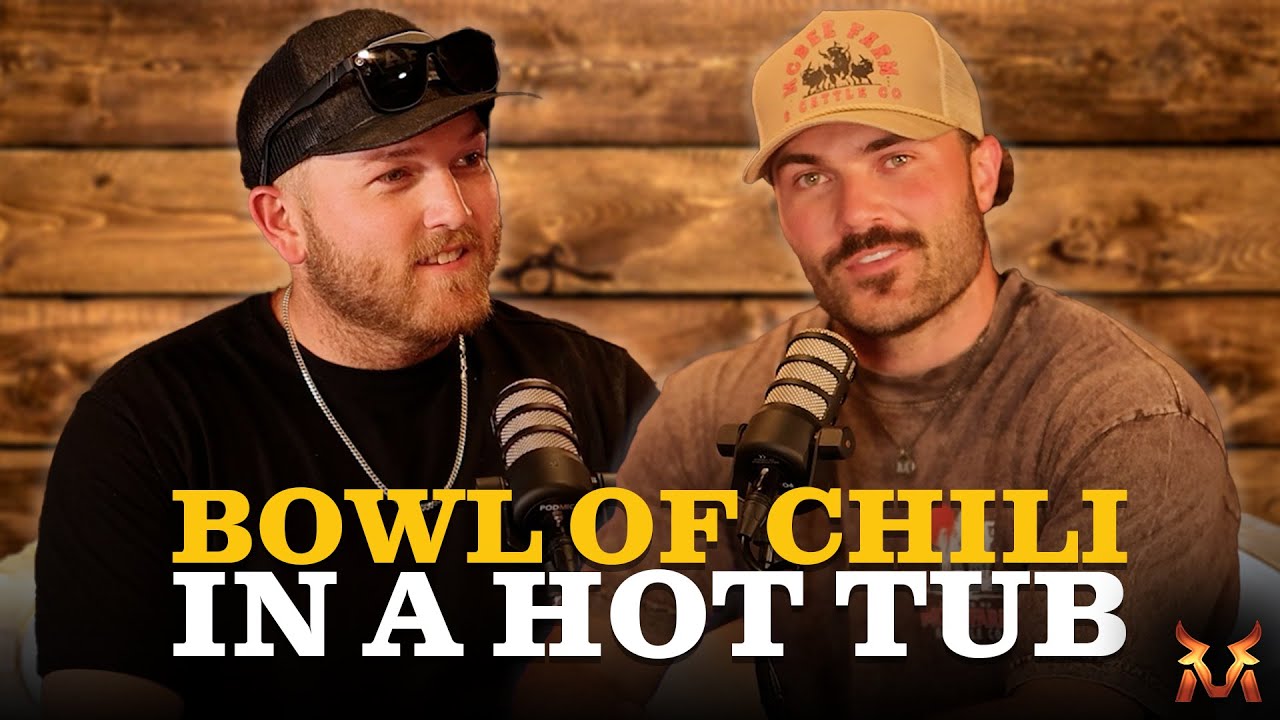
Hey y’all, welcome to another episode of Meet the McBes.
Cole and I are in the studio today.
It’s a struggle to get anyone else in here.
So, you’re stuck with Cole and I again.
Yep. Just us.
Just us.


We’re going to talk about what’s been going on at the farm here over the last week.
As always, it’s never boring.
It’s never slow.
We’re always moving at a ridiculous pace of life and uh trying to keep things afloat here at the farm.
So, saddle up.
Let’s get down and dirty with it.
I think every single week I am humbled at how difficult running a business is.
Yeah. No, there’s new problems every day.
But not only that,
it never like slows down.
So, so let’s say — and I’ve said this multiple times — like you solve a problem and behind the solution to problem number one, when you open that door, you end up discovering three more problems that you then have to find solutions to.
But then when you answer those three problems, behind the doors of those solutions are more problems.
So business is just truly a neverending game of problem, solution, problem, solution.
But the problem is the big overarching problem.
Well, another problem
is that at any point along that timeline, if you have any gaps that are missing, you’re losing money.
So like let’s say the meat facility, right?
So they — and this is like my latest problem — the meat facility to fulfillment center to shipping out, right?
So we had issues with UPS whenever we were on second day air.
We were losing 8 to 10% of our packages.
Well, business — that is 10% net profit.
If you’re losing 8 to 10% of your packages due to delays or lost shipments or whatever it may be, having to offer those refunds, you’re break even.
Solved that problem.
We ended up now we have next day air.
So we’re paying a little more for next day air, but we’re now down to like a 1.5% loss rate.
So that’s — I can handle that.
Lost,
delayed or like the package sits on the porch and we refund.
Oh, the meat goes bad.
I think —
the meat goes bad.
No, it’s not lost. It’s just delayed.
Yeah.
So that problem is essentially solved.
It’s still 1.5%, but it’s not like 10%.
Yeah.
So that’s solved.
Well, now like the way we have our profit margin built in, I feel really good about where we are.
And I was like chugging along and you know, I’m trying to figure out everything that’s going on in the business.
And it’s really easy to feel like, okay, we’re doing a ton of sales, like topline revenue is looking good, stronger month over month.
But then I’m going into the bank account and I’m like seeing less and less money and I’m like, how’s this making sense?
It’s like we should be making money with the amount of volume we’re doing based on what our margin is, how much topline sales are coming in.
Where is the stop gap?
Well, I had lost track of the weights that they were cutting steaks at.
Dude, we were sending steaks that were two to two and a half times the listed weight of what we’re supposed to send.
So we had some happy customers, but we were losing money.
Yeah, that ain’t good, man.
That’s that’s a big steak.
I mean, so you’re telling me like you’re sending out —
they were sending out —
like a 12 oz ribeye and they were getting like a 20 oz ribeye.
They were sending out almost two pounds of fillets and fillets are supposed to be 8 to 10 ounces, 2 inches thick.
They were getting full-on like half a loin tenderloin.
I should have bought some before this.
You should have.
Actually, I think there’s still a bunch in inventory and so buy them now.
Yeah, buy them now.
You’re getting to take advantage of us sadly because we can’t — once they’re labeled and out of the facility — we can’t take them back through.
So we’re just working through all of them.
So we’re just working through all of them.
We need to get that machine
that you just put the meat in and it does all the cutting for you guys.
If we can’t solve this via human labor,
I would much prefer to have people working for us so we’re supporting jobs,
but if it came down to it, we’re going to end up buying that machine that automates it.
There are some cool machinery that a lot of facilities —
Dude, it makes it — it’ll take a piece of meat.
So it takes an entire loin.
So there’s this uh company called Multivac is who makes it.
Yeah, that’s what we went and seen down their factory.
Imagine this giant machine.
You take a full loin.
So let’s say a loin off of a cow, like a strip loin.
It’s 24 inches long by, I don’t know, 10 inches in diameter.
You put it in this machine.
The machine compresses it down to where there’s no air pockets around the loin.
And then it automatically weighs it and can portion out.
Like if I hit 10 oz strip steak on the machine,
it knows exactly what thickness to cut each steak
to where you get nothing but 10 ounces of strip steak
and you’re left with like 2% yield loss.
What?
Like 2% trim that you grind up into ground beef.
What I liked was that machine they had that made the meat look like it was like 3D.
Well, that was a packaging machine,
but —
Yeah, but it made the meat like stick up kind of out of it.
It was crazy because it’s like airtight all the way down.
And it’s not like this normal one where it’s like over.
It was like airtight and then it would go up and shape around the —
It’s like what you see in a fish fillet.
That’s how they package fish fillets.
So like you have the package and then the meat actually sticks up like 3D in the package.
Yeah.
But that packaging machine is $400,000 and um —
Well, it ain’t that cool.
Let me look in the bank account.
I would say that’s probably $399,500 more than what we currently have in the account.
So maybe next year,
the following year.
There are some very, very cool meat facility equipment,
but we’re still hand cutting everything, which is good because we have, you know,
four people working in the processing room cutting up all of these steaks.
The problem with that is you have to make sure that they’re cutting them at the right thicknesses to hit your weights.
Because in our scenario,
I’m selling what I think are 12 to 14 oz ribeyes, strips,
8 to 10 oz sirloins and fillets,
and they’re sending out 20 oz fillets or 22 oz ribeyes,
and I wasn’t checking on that.
So again, I go back to —
I’m like, where is the money that should be in the account based on the topline revenue?
Well, we’re sending it out as these freaking heavy steaks.
Yeah, that’s —
it’s just —
Anyways, long story short,
there are so many lines in the business process that you could lose money at.
And if you’re wrong on any of them,
or if you have a faulty system along the way with any of them,
you’re losing money.
Yeah.
And I would say the businesses that we do,
I have the utmost respect for people that are doing very complex businesses.
We have the most simple business I could ever imagine.
We wash cars.
We take a cow.
We slaughter a cow.
We turn it into steaks and we ship it out.
That’s a pretty simple business.
It’s not rocket science.
No, it’s not.
And we still suck.
I still learn. Like —
Hey, whoa, whoa.
I don’t do much of the meat, silly,
so this sounds like a you problem.
I — well, I suck.
I will admit that.
It goes back to that saying —
The more I learn, the less I know.
Is that the saying?
Like you start off and it’s actually embarrassing.
I was going back to some podcasts of me back in 2019, 2020,
and I thought I was a big dog.
Like I thought I was —
I thought I knew my stuff.
I was fresh off my MBA,
few years in business,
was seeing some success,
had some good money in stocks.
Stocks were flying then, so I was making good money.
And I was like, you know what?
I’ve got this life thing figured out.
And I’d go on a podcast and I’d sit there and brag about how smart I was
or what we were doing that was leading edge
and we were just so advanced in our businesses.
And I sit here today and I look at some of those clips of me back in, you know, 19–20
and I’m like, that dude is such an idiot.
Like I was so dumb.
I had no idea.
I didn’t know my head from my butt.
And I still don’t,
but at least I’m able to admit that.
I guess I got humbled enough to admit that.
Yeah
You ever feel like that?
I kind of miss that chip on the shoulder though, you know?
So like —
Chip on the shoulder —
That you had back then, you know?
Like kind of had like —
The arrogant swagger.
Yeah.
Like that’s what — like everybody when they’re in their prime.
Like Prime Tiger, man.
Like when he was in it, he was feeling it at every aspect.
Like you kind of have to have that swag.
Not saying you need to be arrogant.
Like you probably deserve to be humble in a few ways.
I need to too.
I was — you know — everybody tells me online all the time,
but I just read comments.
That’s how I humble myself.
That’s right.
Hop on Facebook for a minute.
Yeah.
Hop on there and you can learn a lot.
But yeah, I just feel like you got to have some type of like —
pep in your step, you know?
Like you got to have some type of —
I’m not saying you got to be cocky,
but I’m saying —
You got to be confident in what you’re doing.
Which not saying you’re not.
But I think that life is sort of — obviously it’s a roller coaster ride.
But the element of success, especially in business,
when you first start out,
you’re so oblivious to how hard business actually is.
You walk around with this confidence
that is not built on evidence.
It’s sheer obliviousness to the business world.
So you walk around like your feet barely touching the ground.
“I have my own business. I’m a big dog.
Like I know exactly what I’m doing.”
And then you start off with all this enthusiasm and optimism.
And then as you learn the real world of business,
you get humbled.
And then you go through like this pit of despair of like,
“I know nothing.
I’m going to fail.
Everything is horrible.
I’ll never make it out.”
And then you just start to creep your way out of that
as you actually become somewhat experienced and seasoned
and have the battle scars on your back to prove it.
I feel like that’s where kind of we are.
Yeah.
You know, like we’re coming out of the pit of despair.
We have the battle scars
that will keep us humble
if we ever do get extremely successful again.
Yeah. No, for sure.
I mean, I can tell you this —
I will never talk crap like I know anything ever again.
Oh, I never did in the first place.
Oh, bull.
You acted like you knew everything there was to know about farming.
No, I did not.
I knew there was saying —
Did you not see you on the episode about the lease?
Yeah. Oh yeah.
This was 60 bushel soybeans all day long.
The farmer that had that farm at the time —
If you planted that farm this year,
would it have grown 60 bushel soybeans?
Yeah, it would have this year.
100%.
Okay. In a normal weather year —
I mean, I would say that farm was a very good farm.
I still to this day guarantee you
if I go look at the crops on that farm,
they’re good crops.
Is that because Cole McB wasn’t in the tractor planting that farm?
No, it’s not.
I mean our crops right now look good.
Everything we do sucks at the end of the day.
No, we’re not.
But you also have a lot that’s going good too.
I mean there’s a lot that we do that is good.
Like we wouldn’t be where we’re at
if we sucked at everything.
Our crops this year —
we’re going to average 55 bushel soybeans.
Yeah.
I mean our crops look good.
They’re not insane,
but we’re in Davies County also.
Yeah.
I mean it’s not pivot ground
and the Missouri River bottoms.
No, I agree with that.
But yeah, that farm —
I 100% think will grow good crops every year.
Okay.
It was a good farm.
No tree lines.
Big open fields.
Drained good.
Had waterways where it needed them.
Yep.
No standing water.
We’ll just call that the one that got away then.
Yeah.
Everybody gave me so much crap about that.
The reason it fell through
was because he wanted 100% paid up front.
We like doing 50/50.
Cash flow-wise, it didn’t make sense.
I get it from a landowner’s perspective.
They want to mitigate risk.
From a farmer’s perspective —
cash flow-wise —
we just don’t want to be in that position.
But where we’re at now,
it worked out for the best.
Yeah, for sure it did.
Prices discussion, farming economics:
The prices of corn in 1984
are the same as today.
Inputs have risen three to four times.
Think of anything else you buy today —
a cheeseburger, hardware store —
same price since 1984?
That’s what farmers are dealing with.
Yield has only increased 15–20%.
Inputs up 400–500%.
It doesn’t stack up.
Property taxes through the roof.
Illinois farmers selling paid-off ground
because they can’t afford taxes.
Lease prices starting with a four.
$450 an acre.
We’re still selling crops
for the same price.
Who’s getting squeezed?
The farmer.
2012 corn was $8.
Now imagine that today.
We started farming in 2015–16.
Late to the party.
Entrepreneurship & life balance:
Business never stops.
Work never shuts off.
There’s a balance
between income and quality of life.
For me,
$400–500k a year
is the threshold.
I don’t want Elon Musk’s life.
Absolutely never.
We want to elk hunt
two or three weeks in September.
Haven’t done that in seven or eight years.
Being your own boss
is firefighting all day, every day.
Sometimes working 9–5
and being done
doesn’t sound that bad.
Hot tub segment:
Speaking of Casey —
you guys got a hot tub.
Huge deal.
Six-person hot tub.
Twenty people invited.
Rotations.
We met in a hot tub —
just not dad’s hot tub.
Jets, lay-down seat,
104 degrees.
Perfect after hunting.
Chili + football + hot tub.
Fulfillment center update:
We’re almost caught up on orders.
Flow improved.
Inventory system improved.
Kaizen —
constant improvement.
Orders before 1:00 PM
shipping same day.
Six Sigma callback:
Have you ever heard of Six Sigma?
Six Sigma?
What is that? A sorority?
No — business process.
Quality control.
Airplanes use it.
Closing:
We need better looking faces on the podcast.
Braden, Jesse coming soon.
Website organization —
tallow, skincare, wellness.
Please send testimonials
for Casey’s products.
Thank y’all.
We’ll see y’all next Tuesday
right here in the studio.
Yep.
Thanks again.