Skinwalker Ranch Official’s Hid This From You
Skinwalker Ranch Official's Hid This From You

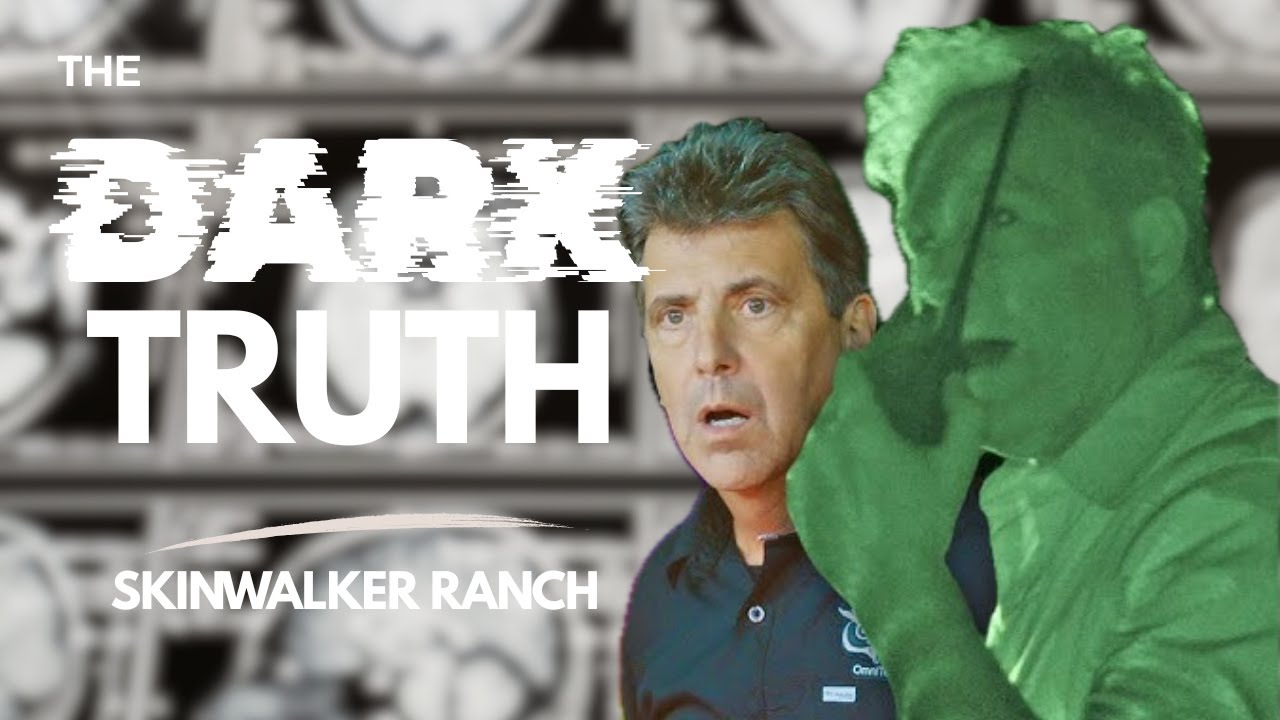
Let’s dive into the eerie and mysterious tale of one of the strangest locations on Earth. Skinwalker Ranch. This roughly 500 acre property nestled in the remote corners of Uinta County in northeastern Utah was purchased in 1994 by the Sherman family. They envisioned a peaceful, secluded life on the ranch, far from the chaos of the world. Little did they know they were stepping into a nightmare. The Sherman’s dream of a quiet life quickly unraveled as they encountered not just one or two bizarre events, but dozens, perhaps even over a hundred unexplainable occurrences during their short time there. The situation became so unbearable that after less than 2 years, they were forced to leave the ranch. When they finally shared their story, the world turned its gaze to this remote patch of land, now infamously known as Skinwalker Ranch.
Today, Skinwalker Ranch is heavily fortified with fences, security cameras, blocked roads, and no trespassing signs, making it clear that the area is strictly off limits to the public. But when Terry and Gwen Sherman moved in with their children in the autumn of 1994, the ranch was anything but secure.
What followed were events so extraordinary that they became the subject of intense investigation and public fascination. In this video, we’ll explore the standard account of what the Shermans experienced during their time on the ranch, as well as the subsequent investigations that sought to uncover the truth behind these mysterious occurrences. Much of what we know today was first brought to light in the 2005 book hunt for the skinwalker. Science confronts the unexplained at a remote ranch in Utah, authored by Dr. Cole McKelahgher and George Knapp. So, gather around as we unravel the chilling story of Skinwalker Ranch, an account that blurs the line between science and the supernatural. The Sherman family purchased the ranch with the hope of raising their two children, a teenage son and a 10-year-old daughter, and cattle in this seemingly ideal location.
Terry Sherman, an experienced cattle rancher, believed the area was perfect for raising highquality livestock. The previous owners, Kenneth and Edith Meyers, had held the property since the 1930s. However, it had been vacant for years, leaving the ranch in a neglected state. Despite this, the Shermans felt ready to take on the challenge of restoring the property. But as they began moving in, they quickly noticed some strange and unsettling details.
First, the purchase contract contained a peculiar clause requiring them to seek permission from the Meyers family before digging on the property. Then when they arrived, they found the home itself heavily fortified, as if the Meyers had been anticipating some kind of threat.
Doors and windows were bolted shut, metal bars were installed, and chains on the sides of the house hinted that guard dogs had once been stationed there.
Despite these oddities, the Shermans dismissed them as the eccentricities of the elderly couple and continued settling into their new lives. It wasn’t long before the first bizarre incident occurred. One day, while the Sherman couple, their two children, and Terry’s father were outside, they noticed a large dog-like animal approaching from about 400 yd away. At first, they thought it might be a wolf, but as it drew closer, they realized this was no ordinary animal. The creature was massive, its size astonishing, with its height reaching the chests of the two 6-ft tall men present. It had muscular features, gray fur, and piercing blue eyes that gave it an otherworldly appearance. Despite the unsettling sight, the wolf seemed calm and tame, even allowing the family to pet it. But the mood quickly changed when, in an instant, the wolf turned and bolted towards the corral where Terry’s calves were kept. It attacked a curious calf that had wandered too close to the gate, sinking its teeth into the animal. The Shermans, stunned by the sudden aggression of the beast they had just petted, realized they were dealing with something far more sinister than they could have imagined. This encounter would mark the beginning of a series of inexplicable and terrifying events that would plague the family during their short stay on the ranch. A prelude to the mysteries that would later make Skinwalker Ranch infamous worldwide.
Terry and his father rushed to attack the beast in a desperate attempt to save their calf. But their efforts proved feutal. The blows they dealt to the creature did nothing to deter it.
Realizing the severity of the situation, Terry called to his son to bring him his Colt 357 Magnum Pistol. What was already a tense and unnerving encounter quickly escalated into a nightmare. Terry fired at the wolf at pointblank range, but to his horror, the bullet seemed to have no more effect on the creature than the physical blows. The beast remained unfazed, as if completely indifferent to the gunfire. Terry shot twice more, and while the wolf finally released the calf, it did so slowly and deliberately, turning to face the family once more.
Its icy blue eyes locked onto them.
Despite being hit, the wolf showed no signs of pain or injury. Terry, now desperate, called for his son to bring him his 30 to06 rifle, a powerful weapon he used for elk hunting. He took aim and fired, and this time he was certain he hit the beast. He even claimed to have seen the bullet strike the wolf from just 40 ft away, but once again, the creature remained unaffected. A second shot seemed to remove a chunk of flesh from the animal, but incredibly it still appeared indifferent. The wolf then slowly turned and began to walk away.
Pacing back into the distance while continuing to stare down the family. In a state of shock and disbelief, Terry felt compelled to pursue the creature.
He and his son followed it, but the wolf moved quickly, eventually disappearing into the trees. They tracked its footprints for nearly a mile, but then inexplicably the tracks vanished. The ground where the tracks ended was just as soft as the ground where they had been clearly visible, leaving Terry and his son baffled. There was no explanation for how the tracks could abruptly stop. As the sun began to set and their search yielded no further signs of the wolf, Terry decided it was best to return home. Despite the many unanswered questions that plagued him, he attempted to put the unsettling incident behind him. However, the peace they sought was short-lived. In the weeks that followed, there were more sightings, not just of this wolf, but of other strange canines as well. Though these encounters were less intense, they still left the family on edge.
Eventually, the sightings of the mysterious wolves ceased, but this did not mark a return to normaly for the Shermans. Unfortunately, this encounter was only the beginning of a series of bizarre and disturbing events that would haunt the family during their two years on the ranch. As the wolves vanished, other forms of strangeness began to take their place. The family noticed that objects around the ranch were going missing. Large, heavy items like a 70 lb post digger would inexplicably disappear. And when these objects were found, the circumstances only deepened the mystery, as they were often in locations where it made no sense for them to be. For instance, the post digger was found improbably 20 ft up in a tree. This bizarre discovery was just one of many inexplicable events that plagued the Shermans. Soon after, another major incident occurred, marking their first encounter with a phenomenon that would become a persistent and haunting presence. strange lights and occasionally the crafts to which these lights seem to belong. One evening, as darkness fell over the ranch, Terry, his son, and his nephew noticed lights in the distance on their property, a white headlight and red tail lights, likely from an RV. Assuming they were dealing with trespassers, Terry was determined to drive them off. But as they approached the lights, they noticed something unsettling. The lights silently moved away from them. When they quickened their pace, the light suddenly rose about 50 f feet into the air. It was then that they saw the object more clearly. It was shaped more like a refrigerator than an RV. The three men froze, staring in disbelief as the object hovered for a moment before flying off into the night sky, disappearing from view. This encounter made it clear to the Shermans that they were not merely witnessing random isolated oddities. There seemed to be something intrinsically unusual about the ranch itself. As time went on, they learned that the Uenta Basin, where the ranch is located, was known as a hot spot for strange and unexplained events.
Even more unsettling, the very land they lived on was rumored to be cursed.
Unlike many scary stories that are loosely tied to Native American folklore, this one held some credibility. The Utes, the indigenous people of the area, had long regarded Skinwalker Ridge, part of which lies north of the ranch, as dangerous, supernatural, and cursed. Skinwalkers.
The sinister figures from southwestern Native American folklore are often mentioned in connection with the area.
While the full extent of skinwalker lore remains largely private and is an uncomfortable subject for many, what has been shared paints a chilling picture.
Skinwalkers are said to be dark figures who wield powerful black magic. They gain these powers through dark rituals, including the murder and consumption of a family member. In their natural state, skinw walkers are described as foul, thin husks of people with eyes that burn like coal in the darkness. They possess incredible strength, speed, and endurance and have a close connection to dark spirits, enabling them to curse others and cause illness. Their most infamous ability, however, is shapeshifting, often taking the form of animals like bears, birds, or wolves.
But the strange history of the Uenta basin extends beyond the lore of skinw walkers. In 1911, the region was the site of numerous other strange occurrences. Adding to its reputation as a place where the line between reality and the supernatural is thin, the Shermans, once skeptical and hopeful for a peaceful life, found themselves in the midst of a mystery that would forever change their understanding of the world around them. An article in the Sun Advocate highlighted strange thunderlike noises that had been echoing throughout the Uenta Basin, unsettling settlers in the area. These sounds were reportedly heard both day and night throughout the year and had persisted for years. The phenomenon was initially attributed to the shifting of rock layers along the Uenta fault, but it did little to ease the residents growing unease. By the 1950s, the unsettling noises were joined by an influx of strange occurrences, UFO sightings, cattle mutilations, and even reports of extraterrestrial encounters.
The area became notorious for these events, which also included sightings of Sasquatches and episodes of poltergeist activity. The 1970s saw a dramatic increase in these incidents, cementing Uinta County’s reputation as one of the nation’s leading hotspots for unexplained phenomena, a reputation it still holds today. As Winter’s cold grip took hold of the ranch, Terry Sherman grew increasingly frustrated with the continuous disturbances. Determined to protect his family and property, he began patrolling his land at night. On many occasions, he claimed to see strange lights moving in the darkness, usually just brief glimpses from a distance. But one fiercely cold winter night, something far more unsettling, occurred. Terry spotted a craft unlike anything he had ever seen. Jet black and eerily silent, it hovered about 30 feet above the ground, flashing a series of multicolored lights onto the snow-covered terrain below, almost like a disco ball, searching for something.
Terry, trying to avoid detection, hid quietly. But when he shifted slightly, causing his joints to pop, the craft reacted as if it had heard the noise.
The lights abruptly turned off, and the object slowly turned towards him before gliding away in the opposite direction.
Several weeks later, his wife Gwen had a similarly chilling encounter. While driving home one evening, she noticed a strange object following her car. She rushed home, and as she pulled into the driveway, the craft flew over her house and disappeared into the distance. An hour later, when Gwen looked outside, she saw something even more alarming. A craft similar to the one mistaken for an RV earlier was sitting on her property.
Inside the craft, she saw a 7- foot tall figure standing in a light-filled doorway. The figure was dressed in a black uniform and headgear, giving the impression that it was staring directly at her. Terrified, Gwen quickly closed the blinds. The next morning, when she and Terry investigated the area, all that remained were unusually large footprints, evidence that something had indeed been there. These encounters were just the beginning of a long string of bizarre and terrifying events that would plague the Sherman family during their time at Skinwalker Ranch. The Sherman’s experiences at Skinwalker Ranch only grew more perplexing and alarming over time. One of the most common and unsettling sites they encountered were large glowing orange objects in the sky.
Each member of the Sherman family witnessed these objects with Terry reportedly observing them dozens of times. He would often spend hours watching them, sometimes through the night vision scope of his rifle. These objects always appeared in the same location, hovering silently over a grove of cottonwood trees about a mile from their homestead. The objects were described as morphing in shape, sometimes appearing flat and elongated, other times as round as the moon. The shape seemed to change depending on the angle from which it was viewed. Oddly enough, the area around the Sherman homestead was the only place where the object was fully visible. From other perspectives, such as from a nearby roadway, it would appear as a faint, nondescript orange cloud. One night, Terry noticed something particularly strange within the orange mass, a blue spot. Upon closer inspection, he realized it wasn’t just a color. He was seeing the blue sky through the middle of the object, despite the fact that it was nighttime. This bizarre detail led Terry to suspect that the orange object might be some kind of portal. His suspicion deepened when he began to notice fast-moving triangular objects emerging from the orange mass. Although these sightings were deeply unsettling, the Shermans initially experienced no direct harm from them. The phenomena seemed more intent on confusing and frightening the family rather than causing physical damage. This was also true for their animals, with the notable exception of the earlier encounter with the mysterious wolf. Whether that incident was related to the other strange occurrences was unclear, but it soon became evident that whatever was controlling these phenomena had developed a dangerous interest in Terry’s cattle. One day, following a particularly fierce blizzard, Terry noticed that one of his cows was missing. Concerned, he went out to search for it, following the animals tracks through the snow. The tracks led him to an open area where they abruptly stopped as if the cow had simply vanished into thin air. There were no predator tracks or any other signs of struggle, just a stark absence where the tracks ended. Despite extensive searching, the cow was never found. This incident marked the beginning of a troubling pattern. Over the course of that winter alone, five more cows would mysteriously disappear without a trace.
The ranch, once a place of hope for a peaceful and productive life, had turned into a ground zero for bizarre and increasingly menacing events. As spring arrived in 1995, the strangeness at Skinwalker Ranch only intensified, particularly concerning Terry Sherman’s cattle. In April, Terry began to find his cows dead in horrifying conditions.
Their bodies were often mutilated with a precision that defied explanation as large sections of their rear and other parts were removed as if by surgical means. What was even more disturbing was the lack of blood at the scenes, suggesting that whatever was responsible had taken extreme care in its work. The mutilations continued throughout the spring and into the following months, always accompanied by eerie yellow lights that appeared on the property, often during poor weather. The day after these lights were seen, Terry would frequently find another cow mutilated in the same precise manner. He also noticed that the carcasses of the cows decayed at a much slower rate than expected, adding another layer of mystery to the already bizarre events. On one occasion, Terry discovered a strange brown gel-like substance near a cow carcass.
When he touched it, he noted that it was cold to the touch, but it evaporated before he could collect a sample. This strange substance only deepened the mystery and heightened Terry’s growing concern. The financial toll of losing these valuable cattle, each worth thousands of dollars, was becoming a serious threat to Terry’s livelihood.
But the ranch was not just a hot spot for cattle mutilations. It was a nexus for a wide range of unexplained phenomena. Throughout this period, Terry reported hearing strange sounds that seemed to emanate from underground.
Large holes about a foot deep and several feet in diameter would appear in areas where flying lights had been seen the night before as if hundreds of pounds of soil had been mysteriously removed. Circular impressions were also found in the grass, adding to the inexplicable occurrences. One of the most unsettling aspects of the ranch were the glowing orbs that frequently appeared. These orbs came in various colors, blue, yellow, orange, and red, and seemed to be observing Terry and his activities. Although they were usually seen from a distance, there were a few encounters that were disturbingly close.
In April 1996, Terry’s dogs encountered one of the blue orbs. The dogs chased the orb, which seemed to taunt them by descending just out of reach of their bites. The orb then moved behind a line of trees, and the dogs followed. Moments later, Terry heard the dogs let out distressing yelps followed by an eerie silence. The next morning, when he investigated the area, Terry found three large brown circles of burned grass. In the center of each circle was a greasy, unidentifiable mess, the remains of his dogs. During another close encounter, Terry and his wife got a good look at one of the blue orbs. It was described as perfectly round, about three times the size of a baseball with a clear glass-like exterior. Inside, they observed a swirling, incandescent blue substance that appeared to be on the verge of boiling. The sight was both mesmerizing and terrifying, a tangible manifestation of the inexplicable forces at play on the ranch. The combination of these experiences left the Shermans deeply unsettled. Their dream of a peaceful ranching life had turned into a living nightmare, where the boundaries between the known and the unknown had completely dissolved. The ranch had become a place where the normal rules of reality no longer applied, and where the supernatural seemed to be at work. The strange and unsettling occurrences at Skinwalker Ranch reached a turning point following the loss of Terry Sherman’s cherished dogs. After enduring over a year of terror and unexplained phenomena, the Shermans decided it was time to leave the ranch. Around this time, Terry finally went public with the events that had been plaguing his family, sharing his story with Zack Van Ike of the Desireette News, Utah’s second largest newspaper. The story, published on June 29th, 1996, provided limited details, but was enough to spark widespread attention across the country.
Despite Terry’s reluctance to lose his privacy, he hoped that by drawing attention to the situation, it might deter whoever or whatever was responsible for the strange events or at least lead to some answers. However, instead of stopping the incidents, the publicity only attracted more attention to the property, including unwanted visitors eager to investigate the ranch.
Although Terry turned away most of these visitors, a few were allowed to stay and some reportedly triggered additional strange events, particularly those who were described as eccentric. Within weeks of the first publication, the property caught the eye of Robert Bigalow, a billionaire real estate tycoon with a keen interest in the supernatural. Bigalow had such a strong interest in the paranormal that he had founded an organization called the National Institute for Discovery Science Nids or Nidi in the previous year dedicated to the scientific study of paranormal phenomena. Skinwalker Ranch was exactly the type of site that Nids was interested in and the organization quickly moved to acquire it. On September 5th, 1996, Bigalow purchased the property from the Shermans, who, though unhappy, were desperate to leave and sold the ranch for less than they had originally paid. Robert Bigalow’s team at NIDS included a range of professionals and skeptics from various scientific backgrounds, including physics, astronomy, psychology, and veterinary science. Noteworthy figures associated with the project included astronaut Edgar Mitchell, parasychologist Hal Putoff, and eupfologist Jacqu Valet. The research team was headed by Dr. Colm Akellaher, an Irish scientist with a PhD in biochemistry. Keller would later co-author the famous book Hunt for the Skinwalker with journalist George Knap, known for his investigation into UFO topics, particularly the story of Bob Lazar’s involvement with Area 51.
Despite relocating to a ranch about 20 mi away, Terry Sherman couldn’t shake his desire to uncover the truth behind the events that had forced his family to flee. With his family now safe, Terry volunteered to work as the ranch manager under Nids, a role that Nids accepted.
The Nids research team arrived at Skinwalker Ranch in September 1996, eager to begin their investigation.
Although they were not permanently stationed on the ranch, they spent significant time there. On their very first day, the team encountered carcasses of mutilated cows, a grim reminder of the bizarre and dangerous phenomena they were about to study. In the spring of 1997, the NIDS research team led by Dr. Colm Keller encountered some of the most bizarre and unsettling phenomena that Skinwalker Ranch had to offer. One of the earliest and most shocking events took place on March 10th when a calf was found dismembered in a manner that defied explanation. The calf had been alive and tagged just 45 minutes before it was discovered. Yet, its organs, blood, and much of its body were removed with what appeared to be surgical precision. 2 days later, on March 12th, around 11 p.m., the team experienced another unnerving incident.
Terry Sherman, Keller, and another researcher were investigating after the team’s dogs began howling and barking.
While driving around the property, they came upon a large, unidentified creature in a tree. Terry estimated the animal weighed about 400 lb, and noted that its yellow eyes reflected the car’s headlights. Terry shot at the creature, causing its eyes to disappear, and assumed he had hit it. However, when they investigated the area, no carcass was found. Shortly afterward, Terry spotted what he believed was the same creature, or perhaps another one nearby and shot at it again at point blank range. Yet again, no carcass was found.
The group spent about 2 hours searching for any signs of the creature or creatures, but found little evidence.
The only clues they uncovered were two oval-shaped tracks in the snow about 20 ft apart. These tracks, which were about 6 in in diameter, appeared to belong to a large bird of prey, though their origin was never definitively identified. The following month brought yet another strange event, perhaps one of the most perplexing of all. In April, Terry and his wife, Gwen, were driving by an enclosure that housed four of their most prized bulls, which they had decided to keep on the property despite the ongoing disturbances. The bulls were valuable and represented a significant part of their livelihood, so their safety was a constant concern. As Terry and Gwen passed by the enclosure, they briefly looked away. But when they glanced back moments later, the bulls were gone. The couple frantically searched the area, fearing the worst, but found no sign of the massive animals. Finally, they noticed a nearby trailer, an old disused metal container with a small opening at the front. To their astonishment, they found all four bulls inside the trailer packed together and seemingly in a days. The interior of the trailer was undisturbed, and there was no sign of how the bulls had been moved there, especially without causing any damage or making any noise. The bulls appeared unharmed, but were in an unusual state, almost as if they had been hypnotized or tranquilized. This incident was one of many that led the NIDS team to believe that the ranch was a hot spot for inexplicable and potentially dangerous phenomena. Despite their best efforts, the team was often left with more questions than answers as the strange occurrences at Skinwalker Ranch continued to defy logical explanation. On August 26th, 1997, at around 2:30 a.m., two NIDs researchers, Jim and Mike, were observing the property from a bluff when they noticed a yellow light appearing about 100 ft below them. This area had been associated with some of the bizarre events reported on the ranch, and there was a local legend suggesting that meditation could trigger paranormal phenomena. Intrigued by the possibility, Jim and Mike began documenting the light with photographs and infrared binoculars. The light itself was unusual and its behavior seemed to defy conventional explanation. While Mike was watching the light through the infrared binoculars, he observed it closely and tried to understand its nature. The yellow light remained stationary for a time, but eventually began to exhibit strange characteristics that further puzzled the researchers. As they continued to observe, Jim and Mike noted that the light had an odd quality to it and its intensity seemed to fluctuate.
This kind of phenomenon was not unprecedented at the ranch, but the consistency and clarity of the observations made this instance particularly notable. During their investigation, Jim and Mike also experienced a feeling of being watched, a sensation that was not uncommon for those on the property. This sense of unease was amplified by the eerie nature of the light and the surrounding environment. The photos and infrared data they collected did not fully capture the light’s behavior or its impact on the researchers, leaving them with more questions than answers. The incidents at Skinwalker Ranch continued to elude definitive explanation, and the experiences of the NIDS team underscored the complexity and unpredictability of the phenomena. Each event seemed to add another layer of mystery, making it clear that the ranch was a site of profound and perplexing occurrences.
Despite the extensive investigation, the true nature of the phenomena remained elusive. The combination of strange lights, unexplainable animal behavior, and the unsettling sensations reported by the researchers contributed to the ongoing enigma of Skinwalker Ranch. The events at the ranch have since become a focal point for those interested in paranormal research, drawing continued interest and speculation from both amateur and professional investigators.
In 2005, the publication of Hunt for the Skinwalker by Carl McKelahghgher and George Knapp garnered significant attention, particularly from government figures interested in the ranch’s paranormal phenomena. Dr. James Alaksky, a scientist from the Defense Intelligence Agency, DI, reached out to Robert Bigalow following the book’s release. Latsky’s interest in the ranch was driven by the ongoing reports of unexplained phenomena and the potential national security implications. He wanted to visit Skinwalker Ranch and assess the situation firsthand. This new interest from the DIA marked a shift in the investigation, bringing it into the realm of official government scrutiny.
The interest of the DIA and Lacatsky highlighted the enduring enigma of Skinwalker Ranch and the continued curiosity about the phenomena reported there. The ranch’s history of strange occurrences from mysterious lights and anomalous creatures to unexplained radiation and cattle mutilations had attracted attention from both scientific and governmental perspectives. Despite the sessation of formal investigations by NIDS in 2002 and the limited activity reported on the ranch after 1999, the mysteries of Skinwalker Ranch continued to intrigue and provoke interest. The confidential results of the NIDS investigation and the ongoing secrecy surrounding certain findings only added to the allure and speculation about what might truly be happening on the ranch.
While there, Lacatsky witnessed what he claimed to be a strange yellow spectral object which Bigalow did not see. Latsky became convinced of the veracity of the story. Bigalow then contacted a friend of his, the late Nevada Senator Harry Reid, to inform him about a member of the DIA’s interest in the ranch. Reed’s interest was also peaked. Before long, NIDS was replaced by the much more secretive government-f funded Advanced Aerospace Weapons Systems Applications Program, ASAP, which contracted the newly formed Bigalow Aerospace Advanced Space Studies, BASS, to investigate a great number of UFO and other paranormal cases, including Skinwalker Ranch. The Boss ASAP investigation was funded by the Defense Intelligence Agency, receiving $22 million and a staff of around 50 people. It lasted from 2008 to 2010, a period marked by a number of other strange events and occurrences.
The details of this investigation were largely kept secret for many years, but some information has emerged in recent years. Although much of the information is still shrouded in secrecy, there were attempts to conceal what the program was doing, and distinctions between this and later initiatives, such as Luis Alzando’s AATP work, were not immediately clear. In the 2021 book, Skinwalkers at the Pentagon, Latsky, Kellaher, and Knap outline this era.
Like the preceding period, a great number of strange events are said to have taken place, including what has been termed the hitchhiker effect. This effect refers to the phenomenon where the ranch seems to influence visitors even after they leave, with reports of orbs, misplaced objects, and wolf-like creatures occurring elsewhere. These sightings reportedly spread to individuals, family members, and peers who had not visited the ranch, akin to a virus. Despite extensive research, no substantial evidence of phenomena unknown to science was produced. The Sherman family moved away and has largely refused to publicly discuss their experiences. In 2016, Bigalow sold the property to Adamantium Real Estate, headed by Brandon Fugal, with the condition that research continued.
Sightings of unexplained phenomena have continued into this period and the ongoing TV show The Secret of Skinwalker Ranch, which premiered on the History Channel in 2020, focuses on investigating the ranch. Although Fugle and his team have not obtained conclusive proof of phenomena beyond current scientific understanding, Fugal remains confident that there is something occurring that justifies continued investigation. Behind the scenes of the show, genuine investigation is taking place, which is respected. In summary, contrary to some claims, the incidents did not stop when professionals arrived. The professionals have their own accounts of strange occurrences, but there is still a lack of hard evidence. Much of the evidence gathered has not been released to the public. Despite the efforts of the NIDS team, their attempts to find hard evidence were often thwarted. Kellaher and Nap in Hunt for the Skinwalker were candid about the frustration of not finding hard evidence. However, the book had issues such as the fact that they did not actually interview the Shermans during its writing, which affects the reliability of the accounts presented.
In fact, the Shermans were not even aware that a book was being written about them until it was published. The authors have never commented on or explained this situation. It seems likely that it was a genuine mistake.
They probably thought they had all the necessary information and didn’t want to bother Terry Sherman, who might not have been interested in collaborating on a project that would bring him unwanted publicity. Regardless of the reason, the major problem is that according to Terry Sherman himself, the stories in the book, some of which we’ve discussed, are not entirely accurate. He said they only resembled a true account of his experiences. This issue was highlighted in chapter 8 of the Utah UFO display by the late Frank B. Salsbury, particularly in the 2010 edition, not the earlier version. Salisbury did sit down with Sherman for an interview and worked with Junior Hicks, a local UFO expert, and James Carrion to provide more insight into the case. The term resembled in this context is vague. The Shermans haven’t released a detailed correction, and they seem generally uninterested in further interviews. Sherman mentioned that the wolf story in the book was based on hearsay, but did not elaborate further. This lack of clarity is a serious issue. There’s no hard evidence, only witness testimony and inaccuracies in the main witness’s account, combined with the witness’s reluctance to clarify, undermine the credibility of the entire book. It raises questions about the accuracy of other parts of the book, including the experiences of the NIDS team. Frank B. Salsbury also interviewed G. Meyers, brother of Kenneth Meyers, who along with his wife Edith Meyers, owned Skinwalker Ranch for 60 years before the Shermans. The anomalies reported by the Shermans were known in the Uenta Basin long before Skinwalker Ranch became famous. If the ranch is indeed an epicenter of the area’s stranges, one might wonder why the Meyers did not report similar experiences. G Meyers, however, claims that the Meyers did not experience anything extraordinary. But this is not entirely clear. Some people have claimed that the Meyers experienced strange events such as mutilated cows, UFO sightings, and encounters with mysterious individuals. Gar Meyers offers a different perspective, and the story of the Meyers experiences might be more nuanced than what has been publicly reported. Salsbury’s book, written about a year before Gar Meyers’s death and four years before Salsbury’s own, also contains inaccuracies about the Meyers experiences. The common narrative is that the Meyers bought the ranch in the 1950s and mysteriously vacated it in 1987, but this account might be more complex than initially believed. 7 years later, the Meyers sold the abandoned ranch to the Shermans, who found the property in disrepair, and the main building seemingly heavily fortified.
Gar Meers contested this. He stated that the ranch was purchased in the 1930s, not the 1950s, and wasn’t just abandoned. Kenneth Meyers died in 1987 and Edith lived there alone until she moved to a rest home in 1992. The ranch was vacant for only two years, during which time it was leased to other ranchers and occasionally visited. G also mentioned that there were fewer locks and fortifications on the house than often claimed, suggesting that someone could have easily broken in if they wanted to. Edith had only one three-legged dog for part of that period, not a pack of guard dogs. When Edith died in 1994, the ranch was left to G. He and his sisters decided to sell it and they sold it to the Shermans not long after. Gar told Salsbury that there was nothing unequivocally, absolutely nothing that went on while she and my brother lived there. Salsbury asked if Kenneth and Edith might have kept such experiences from G because they knew he wouldn’t believe them. G, who had a background in science, strongly rejected this possibility, stating that he and his family were very close and regularly communicated. Gar also worked on the ranch as a teenager and mentioned that he told Robert Bigalow the same thing.
Upon hearing Gar’s account, Bigalow reportedly called him a liar, which is intriguing because Bigalow was known to react strongly when it was suggested that nothing unusual was happening on the ranch. This has led to speculation that his employees might have exaggerated or fabricated reports to satisfy him. Terry Sherman generally supports Gar Meyers account. While some neighbors have their own stories, few recall anything unusual happening to the Meyers. Neighbor John Garcia, however, claimed to have seen a round floating reddish orange object on the Meyers land that the Meyers were unaware of. The strange clause requiring the Shermans to contact the Meyers for permission to dig could be explained by a desire to retain mineral rights, a common concern in such land transactions. This might also be a concern for Brandon Fugal given the controversy surrounding excavation on the property in the TV show. Charles Nuin, another neighbor, reported that Kenneth Meyers was unusually secretive about digging in certain areas, claiming that bad things would happen if one dug, but he never explained why. Another issue is that while the events described in Hunt for the Skinwalker were said to be occurring, Jacqu Valet, who was associated with but not stationed on the ranch, reported that the team wasn’t witnessing anything. It’s unclear if Valley was referring exclusively to hard evidence or if Keller and his colleagues were not sharing information with him.
Salsbury’s interviews cast doubt on the most famous version of the Skinwalker Ranch story. Many details of the popular account are either questionable or incorrect. Although Hunt for the Skinwalker is not solely to blame for these inaccuracies, it did make some mistakes. Despite this, the case remains intriguing. Salsbury, who was sympathetic to the possibility of supernatural entities, admits that while the popular account is inaccurate, it does resemble the original claims as verified by people like Zack Van Ike, Junior Hicks, and Sherman himself. The Skinw Walker Ranch case presents a complex puzzle. While hoaxing seems unlikely due to the significant risk and lack of clear personal gain for the Shermans, other explanations like delusion or misidentification could also be considered. The Sherman’s reluctance to profit from the story and their choice to sell the property at a loss add layers of credibility to their experiences, but the need for empirical evidence remains critical for validating such extraordinary claims. The involvement of multiple credible witnesses and researchers coupled with the documented anomalies keeps the case intriguing and open for further investigation. The idea that the Skinwalker Ranch phenomena could have been a hoax orchestrated by a third party like the American military is intriguing but faces several challenges.
For such a hoax to be plausible, it would involve highly sophisticated execution and coordination. If we consider the possibility of government involvement, it would imply a level of secrecy and complexity that goes beyond simple pranks or experiments. While it’s true that governments possess advanced technologies and have engaged in various forms of deception in the past, orchestrating an elaborate hoax involving multiple phenomena and maintaining it over several years, especially with the scrutiny that Skinwalker Ranch received, would be a considerable risk. The idea that the government might have been testing reactions or technology, although compelling, seems less likely.
Governments typically have less conspicuous means to test technology or study reactions without drawing the level of public and media attention that Skinwalker Ranch did. Additionally, if the aim was to drive the Shermans off their land, this could have been achieved more directly without involving elaborate paranormal phenomena. Delusion is another potential explanation, but this would imply that not just the Shermans, but also the NIDS team and others were collectively deluded over an extended period. Despite extensive testing for environmental factors that could affect mental states, no evidence of such interference was found. While it’s possible that fear and stress could cause individuals to misinterpret normal occurrences, this would still leave unexplained phenomena like the cattle mutilations and the reports of orbs.
Misidentification of natural phenomena is a common explanation for UFO sightings and other paranormal claims.
However, each of the reported phenomena at Skinwalker Ranch, such as the cattle mutilations and the orbs, could potentially be attributed to known natural occurrences, though the details are often disputed. Cattle mutilations, for example, are known to occur worldwide and can be attributed to predators or environmental factors.
However, the bloodlessness and other unusual aspects of these mutilations at Skinwalker Ranch suggest that there may be more to consider. In summary, while hoax, delusion, and misidentification are all possibilities, the specifics of the skinwalker ranch case make each of these explanations challenging to fully validate. The complexity and persistence of the phenomena observed suggests that the true nature of these events remains elusive, requiring a closer examination of each piece of evidence and explanation. The phenomena reported at Skinwalker Ranch defy easy classification. Ball lightning, often suggested as a cause for UFO sightings, is rare, occurs mainly during storms and doesn’t typically persist for long. The lights observed by Sherman and others were frequent, persistent, and seem to exhibit purposeful behavior, suggesting something more than random atmospheric phenomena. The orange portals observed by Sherman and others are particularly challenging to explain. They might be optical illusions or unique weather anomalies, but their rarity and specific characteristics raise questions about their nature. If these were natural phenomena, one might expect them to be observable more consistently in the area. Yet, this isn’t the case. The wildlife in Utah includes a variety of species like bears, raccoons, coyotes, wolves, and mountain lions, but none match the descriptions of the creatures seen during the incidents. The details surrounding the creatures seen in 1997, especially the wolf-like entity, have been inconsistent, and the local fauna doesn’t neatly fit the descriptions provided. The noises attributed to underground activity might be explained by geologic activity, a theory supported by historical reports. As for the observed craft, misidentifications of ordinary aircraft could be a factor.
Though their behavior and design diverge from known technology, conventional explanations struggle to account for the full range of reported phenomena, especially those witnessed by multiple observers. This leaves open the possibility that forces or entities beyond current scientific understanding could be responsible. While some suggest extraterrestrial involvement, others propose advanced humans, extradimensional beings, or even cryptozoolological creatures. Ghosts or poltergeist activity often associated with unexplained phenomena could also be a factor, though this term generally refers to unusual object movement rather than specific supernatural entities.
Additionally, the legend of the skinwalker and possible black magic influences add another layer of complexity to the case. Ultimately, the Skinwalker Ranch case remains enigmatic with conventional explanations falling short and more speculative theories providing possible but unconfirmed alternatives. Determining which explanation to favor for the phenomena at Skinwalker Ranch is challenging due to the variety and complexity of reported events. Each proposed explanation, whether it’s extraterrestrial, interdimensional, cryptozoological, or a product of military experimentation, offers a different lens through which to view the phenomena.
Some suggest that all these elements could be interconnected in some way, with the ranch serving as a hot spot for diverse anomalies. This perspective sees the ranch as a focal point where various strange occurrences converge, but it also risks diluting the focus and making it harder to identify any one cause. The interstellar boogeyman paradox you mentioned refers to the contradiction between the presumed intelligence required for interstellar travel and the seemingly trivial or nonsensical nature of some reported alien activities. This paradox also applies to the skinwalker ranch case. If there is a higher intelligence behind these events, the motives and actions seem puzzling. Why target cattle and why not exhibit more sophisticated behavior? The fact that animals were harmed but humans were not adds another layer of intrigue. It raises questions about whether there was a conscious choice to avoid human harm, possibly to avoid drawing too much attention or causing immediate alarm.
The apparent focus on cattle which are less likely to be directly connected to the scientific or military research one might expect further complicates the claims of health problems arising from exposure to these phenomena though this is not universally observed. The phenomena did seem to diminish when researchers were present which some suggest could indicate an awareness of the observers. If there is a consciousness behind these events, it might be manipulating its visibility and interactions to avoid solid evidence being gathered. The lack of concrete evidence is a major issue. Despite extensive professional investigation since 1996, tangible proof of the phenomena remains elusive. Terry Sherman’s attempts to capture evidence were reportedly thwarted. And while he did see and describe many events, there’s a lack of photographic or video documentation of some of the key phenomena like the portals. The delay in reporting by Terry Sherman, which was over a year, could raise questions about the credibility of the account. Though, it’s also reasonable to consider that not everyone would immediately report such encounters, especially if they fear skepticism or personal risk. Ultimately, the Skinwalker Ranch case continues to be a subject of debate because it presents an array of unexplained phenomena and lacks definitive evidence.
The variety of experiences reported suggests that multiple factors might be at play or that a single complex cause could be influencing these events. The challenge remains in reconciling these accounts with scientific understanding and finding a coherent explanation that fits the evidence or the lack thereof.
Your exploration of the skinwalker ranch case touches on several critical points.
The secrecy surrounding investigations by entities like nids and as soon as possible and the involvement of figures like Robert Bigalow add layers of complexity to the narrative. Bigalow’s role in founding Nids and later transitioning to focus on other areas such as the afterlife suggests that the ranch’s phenomena might not have yielded the groundbreaking discoveries some hoped for. The fact that Bigalow himself reportedly never witnessed any phenomena on the ranch adds another dimension to the skepticism surrounding the case. The notion that Bigalow or the government might be withholding significant information due to fears about public reaction is intriguing. While it’s possible that sensitive or reality altering information exists, the lack of evidence and transparency raises questions about whether the phenomena truly warrant such secrecy or if the lack of definitive findings influence the decision to keep certain details under wraps. Your approach to balancing both skeptical and believer perspectives reflects a thoughtful and fair analysis.
Emphasizing the importance of avoiding pseudocience while remaining open to new possibilities is crucial in navigating such enigmatic cases. The absence of hard evidence for extraordinary claims coupled with the difficulty in fitting these claims into conventional explanations highlights the ongoing struggle to understand what if anything is truly occurring at Skinwalker Ranch.
Ultimately, the case remains a compelling example of the limits of current scientific understanding and the challenges inherent in investigating unexplained phenomena. Whether future discoveries or shifts in our understanding of the universe will shed light on what happened at Skinwalker Ranch remains an open question, making it a fascinating and unresolved part of the broader quest to understand the unknown. The experiment conducted at Skinwalker Ranch, led by Travis Taylor, was one of the most ambitious and complex undertakings by the team. This investigation involved the use of advanced technologies, including LAR, thermal imaging, and various sensors to uncover the mysteries that have eluded researchers at the ranch for years. The primary goal was to trigger and capture phenomena that have been reported at the ranch, particularly in the areas of the East Field, the Triangle, and the Mesa Drill Site. The experiment scale and the technology used made it a significant quest in the ongoing investigation into the unexplained occurrences at Skinwalker Ranch. LiDAR technology was central to the massive experiment conducted at Skinwalker Ranch, offering the team a powerful tool for detecting and mapping potential anomalies across the expansive area. LiDAR, which stands for light detection and ranging, utilizes laser pulses to measure distances, creating precise three-dimensional images of the environment. This method allows for an unprecedented level of detail, revealing features that are often hidden to the naked eye. By scanning the terrain with LAR, the team aimed to identify unusual formations or disturbances that might correlate with the strange phenomena reported at the ranch. The technology also enabled them to create detailed topographical maps, assisting in pinpointing locations of interest for further investigation. The laser pulses can penetrate vegetation, making it possible to reveal hidden geological formations and structures that may hold clues to the ranch’s mysteries. In addition to LAR, the team employed thermal imaging technology to detect temperature variations in the environment. This method is particularly effective for identifying heat signatures that may indicate the presence of living creatures, mechanical activity, or other phenomena. When combined with LAR data, thermal imaging provided a multiaceted view of the areas under investigation, enhancing the team’s ability to spot anomalies.
Various sensors were also deployed to monitor environmental conditions such as electromagnetic fields, atmospheric pressure, and sound frequencies. This comprehensive approach allowed the researchers to gather a wealth of data that could help in understanding the complex interactions occurring at the ranch. The team set out with high hopes, believing that this sophisticated suite of technologies could finally shed light on the enigmas of Skinwalker Ranch. They plan to conduct realtime monitoring, capturing any unusual events as they unfolded by focusing on key locations like the Eastfield Triangle and Mesa drill site. The team aimed to maximize their chances of encountering the unexplained phenomena that had been reported over the years. As they launched into this unprecedented investigation, there was a palpable sense of excitement and anticipation among the team members. They knew they were pushing the boundaries of scientific exploration, eager to uncover what secrets lay hidden in the shadows of Skinwalker Ranch. This experiment represented not just a quest for answers, but also a testament to the relentless human desire to explore the unknown and unravel the mysteries of our reality. This method is particularly effective for scanning large areas and identifying subtle changes or unusual formations in the landscape. In this experiment, the team utilized long-d distanceance LAR devices capable of scanning vast sections of the ranch with high accuracy. These devices were mounted on a mobile vehicle driven by John Brown, who was responsible for navigating the LAR truck across key locations on the ranch, including the East Field, the Triangle, and the Mesa Drill Site. These areas were of particular interest due to previous reports of strange phenomena such as the elusive cone which the team hoped to capture using the LAR technology. The decision to use LAR was strategic. Its ability to create detailed three-dimensional maps made it ideal for identifying any irregularities or anomalies that might be present at the ranch. The LAR scans could penetrate the landscape in ways that other technologies could not, offering a more comprehensive view of what was occurring both on the surface and potentially beneath it. This capability is vital in an area known for its complex geology and unusual reports. To complement the data collected by the mobile LAR truck, Cameron Fugle played a crucial role by shadowing the vehicle from above in a helicopter positioned 1,000 ft above the ground. Fugal’s role was to provide an aerial perspective, ensuring that the LAR scans covered the entire area of interest. This dual approach, groundbased and aerial scanning, was designed to maximize the chances of detecting any anomalies. The helicopter’s elevated vantage point allowed for a broader scope of observation, while the LAR truck provided detailed ground level data.
After the scans were completed, the team planned to integrate the LAR data with other collected information, including thermal imaging and sensor readings. By cross- referencing these data sets, they hope to identify patterns or correlations that could lead to new insights regarding the reported phenomena. The combination of highresolution maps from the LAR with thermal signatures and environmental data would enable a more nuanced analysis of the anomalies, fostering a deeper understanding of the mysteries at play. As Jon navigated the LAR truck and Cameron provided aerial support, the team was on the brink of potentially groundbreaking discoveries. They remained hopeful that this innovative application of technology would help them capture the elusive cone or uncover other strange occurrences linked to the ranch’s enigmatic reputation. This collaborative effort symbolized not just the integration of advanced technology, but also the collective curiosity and determination of the team to push the boundaries of scientific investigation and seek answers to the unknown mysteries of Skinwalker Ranch. As the LAR truck moved across the ranch, the combined efforts of the ground and aerial teams ensured that the area was comprehensively scanned, enhancing the likelihood of capturing significant data. The experiment showcased the LAR’s effectiveness in large-scale investigations, making it an essential tool in the team’s ongoing quest to understand the mysterious phenomena at Skinwalker Ranch. The rocket launch in the East Field was a key element of the experiment conducted at Skinwalker Ranch. The primary purpose of launching the rocket was to act as a trigger, potentially provoking a response from any unexplained phenomena present at the ranch. The team theorized that the rocket’s launch with its associated energy and disturbance might trigger a reaction from the forces or entities they sought to study. This approach was based on the idea that certain phenomena might be more likely to manifest when subjected to specific environmental changes or disturbances. The rocket launch was carefully planned and executed. Prior to the launch, the team conducted simulations and rehearsed the necessary protocols to ensure a seamless operation. Once the rocket was launched, the team closely observed its trajectory, paying attention to any unusual occurrences in the surrounding area. The launch itself went off without a hitch with the rocket successfully deploying its chute as intended. This successful deployment was a crucial moment as it ensured that the experiment could proceed according to plan. As the rocket ascended, the team monitored various sensors and cameras aimed at capturing any anomalous events triggered by the launch. The aerial team, led by Cameron Fugal, maintained a visual check on the rocket’s trajectory while also scanning the area for any unexpected phenomena. The combination of LAR scans and real-time observation aimed to provide a holistic view of any reactions occurring in the wake of the launch. The team was hopeful that the launch would elicit a response from the mysterious forces they were studying. They remained on high alert, analyzing the data streaming in from both the lighter equipment and the sensors deployed across the ranch. Each moment felt charged with potential as they speculated about what might unfold in response to their deliberate provocation. The experiment underscored the importance of innovative approaches to understanding the unknown. By integrating technology, careful planning, and a willingness to explore unconventional theories, the team aimed to bridge the gap between scientific inquiry and the mysteries of the supernatural. The outcome of the rocket launch would be a crucial part of their ongoing efforts, adding another layer to the intricate tapestry of research at Skinwalker Ranch. As the rocket soared into the sky, the anticipation among the team grew. Would they finally witness the elusive phenomena that had long evaded capture? The stage was set for a moment of potential discovery, where science and the unknown intersected in the enigmatic landscape of the ranch. As the LAR truck scanned the expansive landscape, the experiment was designed to operate seamlessly with each component contributing to a holistic investigation. However, the team soon encountered a significant and unexpected discrepancy that added complexity to their investigation. As the LAR truck moved across the ranch, the helicopter piloted by Cameron was meant to shadow the truck from above, maintaining a position directly over it. This coordination was crucial for ensuring that the LAR scans covered the intended areas accurately and comprehensively.
However, as the experiment progressed, the team on the ground noticed a puzzling difference between the helicopter’s reported position and its observed location. While the LAR truck relayed precise data about its position and movements, the helicopter’s telemetry indicated it was not directly above the truck as expected. Instead, the helicopter appeared to be drifting away from its intended path, leading to confusion among the team members monitoring the live feeds. As the helicopter adjusted its altitude to provide optimal aerial coverage, the data suggested that it was several hundred ft away from the LAR truck, which contradicted visual confirmations that indicated it was still in the vicinity. This discrepancy sparked a flurry of discussion among the team members. Eric, who had been closely analyzing the data, remarked, “We need to determine if this is a technical glitch or something more unusual at play.” The conflicting information prompted the team to re-evaluate their equipment and protocols to ensure accurate readings. They conducted checks on the helicopter’s jeeps and communication systems, hoping to identify the source of the issue.
Several theories were proposed. Some team members speculated that environmental factors might be interfering with the helicopter’s navigation systems given the unique electromagnetic properties reported in the area. Others suggested that the anomaly could be a manifestation of the very phenomena they were investigating, hinting at a deeper connection between the ranch and the unusual events surrounding it. Despite the confusion, the team recognized the importance of integrating these unexpected findings into their overall investigation. As the LAR truck continued its scans and the helicopter adjusted its position, the dual approach allowed them to collect a wealth of data that could prove invaluable in deciphering the ongoing mysteries at Skinwalker Ranch. The combination of the rocket launch, the LAR scans, and the helicopter’s oversight created a dynamic environment ripe for discovery. The team felt that even with the discrepancies, each twist and turn in their investigation brought them one step closer to understanding the phenomena at play. As they proceeded, the unexpected became a part of their narrative, a reminder of the challenges and wonders inherent in the exploration of the unknown. As the helicopter and LAR truck continued their operations, the team remained vigilant.
Each moment presented an opportunity to capture data that could yield insights into the mysteries surrounding the ranch. They knew that sometimes the most valuable discoveries arise from the unanticipated, and they were determined to embrace the journey wherever it might lead. The situation became increasingly perplexing as the experiment unfolded.
Cameron, from his vantage point in the helicopter, consistently reported that he was directly above the LAR truck as it moved through the ranch. Yet, those on the ground observed something quite different. They saw the helicopter positioned significantly behind the truck, closer to the Mesa drill site rather than directly overhead. This discrepancy was both surprising and concerning, raising immediate questions about what might be causing the apparent difference in observations. The team began to wonder whether they were simply misjudging the helicopter’s position from the ground or if there was another less obvious factor influencing the situation. They considered various explanations, including the possibility of equipment malfunctions affecting the helicopter’s GPS or the LAR trucks tracking systems. However, the notion that environmental anomalies at Skinwalker Ranch could be impacting navigation systems was equally compelling. Reports of electromagnetic interference and other unexplained phenomena in the area had long been part of the ranch’s lore. The team couldn’t rule out the idea that they might be dealing with an unknown force influencing their equipment and perceptions. The confusion over the helicopter’s location highlighted the mysterious and unpredictable nature of the phenomena the team was investigating. With the discrepancy persisting, the team felt a growing urgency to address it. They conducted immediate checks on all equipment to ensure everything was functioning correctly. The LAR truck and helicopter communications were examined for any signs of interference or errors in the systems that could account for the conflicting data. As they worked, Travis suggested that they perform a series of lowaltitude passes over known landmarks, such as the Mesa drill site, to test the accuracy of the jeep’s readings and verify their relative positions. This would allow the team to cross reference the helicopter’s reported location with visual observations, aiming to bridge the gap between technology and reality.
Despite their efforts to analyze and rectify the situation, a nagging feeling lingered among the team members. They began to wonder if there were deeper, more complex forces at work that transcended their understanding. The ongoing discrepancy served as a reminder of the limitations of their equipment and perceptions, underscoring the challenges they faced in trying to study and document the phenomena at Skinwalker Ranch. The apparent inability to reconcile the helicopter’s reported and observed positions added to the growing list of strange and unexplained occurrences that had characterized the team’s investigations. Each new puzzle piece only fueled their determination to uncover the truth. Despite the complications and uncertainties in light of these challenges, the team gathered to discuss their next steps. They acknowledged that every anomaly, whether it be the discrepancies in the helicopter’s position or other phenomena, represented an opportunity for discovery. As they shared their thoughts, excitement mingled with apprehension, they were on the verge of uncovering something that could change their understanding of reality. With a collective sense of purpose, the team prepared to continue their investigation, ready to confront the mysteries that lay ahead. They understood that the journey into the unknown was fraught with challenges, but it also held the promise of revelations that could reshape their comprehension of the extraordinary events occurring at Skinwalker Ranch. The discrepancy in the helicopter’s position was merely another thread in a larger tapestry of mystery.
one that they were determined to unravel no matter where it might lead. As they continued their work, the team recognized that the discrepancy in the helicopter’s position served as a reminder of the unpredictable and often puzzling nature of the phenomena they were trying to understand. This moment of reflection led them to focus their energies on the triangle experiment, a critical part of their investigation at Skinwalker Ranch. This area, known for its unusual and unexplained activity, had previously exhibited signs of strange phenomena, making it a prime candidate for further exploration. After the rocket launch and the LAR truck’s extensive survey across the ranch, the team decided to concentrate their efforts on the triangle. They hoped that by returning to this focal point, they could provoke or detect additional phenomena. Their hypothesis was that the previous anomalies might respond to specific stimuli, and they aimed to explore that possibility further. For this experiment, the team employed a burner from a hot air balloon to heat a specific region of the triangle at an altitude of about 30 ft. This height had been identified in previous investigations as an area of interest where anomalies had been detected. The team theorized that introducing a significant amount of heat into this zone might trigger or reveal hidden phenomena that had previously gone unnoticed. To ensure they captured any potential reactions to the heat, the team set up an array of advanced imaging and detection equipment around the triangle. This included thermal cameras, infrared sensors, and electromagnetic field EMF detectors, all strategically positioned to monitor any changes in the environment and to collect data from multiple angles. They wanted to create a comprehensive picture of what might occur when they applied heat to the area. As the burner was prepared and set to activate, the team felt a mix of excitement and trepidation. They knew that the results could either confirm their theories about the triangle or lead them into a realm of even deeper mystery. With the introduction of heat provoke a response from the anomalies that had eluded them. With everything in place, the team counted down and activated the burner. A plume of hot air rose into the sky, enveloping the designated area with warmth. They closely monitored the data streams from their equipment, eager to see if any unusual patterns or reactions emerged in response to the applied heat. As the minutes passed, the team remained vigilant, scanning the screens for any signs of activity. The thermal cameras displayed the heating effects, while the EMF detectors began to register fluctuations. Some readings were subtle, but they indicated that the experiment was producing responses. Suddenly, one of the thermal cameras picked up an unusual signature, an anomalous shape materializing within the heated area.
The team was captivated. their excitement mounting as they analyzed the data. The shape appeared to pulse and shimmer define the expectations of a typical thermal response. Could this be the manifestation of the phenomena they had been seeking? They quickly adjusted their imaging equipment to focus on the anomaly, capturing every moment as the unexpected development unfolded. The researchers documented the readings, noting the time and conditions under which the anomaly appeared. The possibility that they were witnessing something extraordinary motivated them to remain methodical and precise in their observations. The tension in the air was palpable as they collectively held their breath, waiting for the anomaly to reveal its secrets. As the experiment progressed, it became clear that the triangle held more mysteries than they had anticipated. The initial observations prompted further questions.
What was this anomaly? Was it a natural phenomenon or something beyond their current understanding? With each passing moment, the team realized that they were on the cusp of discovering new insights into the nature of the phenomena at Skinwalker Ranch. The potential for groundbreaking revelations loomed before them, urging them onward in their quest to uncover the truth behind the enigmatic triangle. Each data point, every observation, and each unexplained occurrence drew them closer to understanding what lay hidden within the mysteries of Skinwalker Ranch, while also reminding them of the unpredictable nature of their pursuit. This included thermal and LAR imaging devices capable of providing detailed three-dimensional scans and temperature readings of the area. Additionally, the team utilized high-speed night vision, thermal, and infrared cameras to monitor the triangle from multiple perspectives. These cameras were essential for detecting any visual anomalies that might not be visible to the naked eye, but could be captured through specialized lenses. As the burner blasted flames into the 31 ft region, various sensors and cameras were activated to record the effects. The team was particularly interested in observing how the heat interacted with the environment and whether it would produce any visible or measurable changes. Alongside these imaging tools, they employed spectrum analyzers, radiation detectors, and GPS devices to gather additional data on electromagnetic and radiation levels in the area, as well as to track any positional changes or disturbances that might occur. The triangle experiment was designed to be as thorough as possible, ensuring that no potential data was overlooked. By heating the specific area and utilizing a wide range of sensors and cameras, the team aimed to provoke and capture any phenomena that might be linked to the strange occurrences at Skinwalker Ranch. The results from this experiment would provide critical insights into the nature of the anomalies observed at the Triangle and contribute to the overall understanding of the mysterious activities at the ranch. During the triangle experiment, the team encountered several unexpected and intriguing phenomena that added to the mystery of the site. As the burner sent flames into the targeted blob zone, the team observed a remarkable occurrence. Static began to appear on their radios. This was surprising because fire typically does not interfere with radio signals. The presence of static suggested that the flames might have been interacting with something unusual in the environment, potentially triggering or amplifying the phenomena the team was investigating.
Eager to understand the implications of the static, the team began documenting the frequency and intensity of the interference, they compared their findings with baseline data recorded before the experiment began, seeking to identify any correlations between the radio disturbances and other environmental factors. Their initial hypothesis was that the burner’s flames might have created an electromagnetic disturbance that resonated with existing anomalies in the area. As the experiment continued, the team remained on heightened alert. Every flicker of static and every unusual reading from their instruments added to the sense of urgency and intrigue surrounding the triangle. The combination of the heat, the unusual electromagnetic activity, and the potential for visible anomalies made it clear that the triangle was a focal point for whatever forces were at play at Skinwalker Ranch. The researchers quickly organized a meeting to analyze their findings in real time.
They discussed potential explanations for the static interference and how it might relate to the phenomena they were hoping to provoke. Was it merely a side effect of the heat or was it indicative of a deeper interaction between the flames and the mysterious energies surrounding the triangle? The excitement in the air was palpable as each team member contributed insights and theories based on their expertise. Encouraged by these unexpected results, the team decided to expand their analysis. They adjusted the burner’s intensity and altered the duration of the heat application, hoping to provoke a more significant response from the environment. With each adjustment, they carefully monitored their equipment, ready to capture any further anomalies or changes. As the experiment unfolded, the synergy between the various tools they employed allowed the team to build a more comprehensive picture of the triangle’s enigmatic characteristics.
The use of LAR imaging provided a three-dimensional context to the static interference observed on the radios.
Simultaneously, the thermal cameras captured the dynamic interactions within the blob zone, revealing patterns that could offer clues to the underlying phenomena. The unexpected emergence of static during the triangle experiment added a fascinating layer to the investigation. It underscored the complexity of the anomalies present at Skinwalker Ranch and highlighted the potential for new discoveries at every turn. The team’s meticulous approach and readiness to adapt in response to their findings exemplified their commitment to unraveling the mysteries of the ranch.
As they prepared to conclude this phase of the experiment, the team reflected on the insights gained and the questions raised. With each new piece of data, they felt an invigorated sense of purpose and a determination to continue their quest for understanding the bizarre and intriguing phenomena that had captivated them all. The mystery of the triangle remained a tantalizing enigma, urging them to delve deeper into the unknown. This radio interference was particularly puzzling as it indicated that the area might have properties or elements that were not immediately apparent. The static raised questions about the nature of the blob zone and whether it could be linked to the unexplained activities that have long been reported at Skinwalker Ranch. The team pondered whether the static was a direct result of the flames interacting with an unseen force or if it pointed to a more complex phenomenon at play. In addition to the radio static, the team observed something even more enigmatic, a fog or field moving across the mea.
This phenomenon was captured on their monitors, displaying movement that suggested it was not a natural occurrence. The fog or field seemed to possess a life of its own, interacting with the landscape in a manner that further deepened the mystery of what was happening at the ranch. Its movement and the context in which it appeared hinted at a potential connection to the anomalies the team was studying, adding yet another layer of intrigue to the experiment. The most striking observation during the triangle experiment was the behavior of the flames themselves. As the burner continued to blast flames into the 31- ft region, the team noticed that the flames appeared to wrap around an invisible object. This behavior defied the laws of physics as they understood them. Rather than dispersing evenly or rising vertically, the flames danced and swirled in a way that suggested they were being guided or influenced by an unseen force. The site was mesmerizing and unnerving. The researchers exchanged glances, a mix of awe and disbelief washing over them. Could this phenomenon indicate the presence of some unknown energy or entity? They quickly began documenting the unusual flame behavior, capturing video footage and thermal images to analyze later. The implications were staggering. If the flames were reacting to something that wasn’t visible, it could lead to breakthroughs in their understanding of the phenomena at Skinwalker Ranch. In the aftermath of these observations, the team convened to analyze the data collected. They compared the readings from their thermal cameras with the live footage of the flames. The results were compelling. The thermal imaging showed spikes in temperature that correlated with the moments when the flames exhibited their unusual behavior. This raised further questions. What was causing this increase in heat? Was it simply a response to the burner or was there something more profound occurring in the blob zone? As the researchers reviewed the footage of the fog and the unusual flames, they began to connect the dots between the various phenomena they had encountered. The static on the radios, the moving fog, and the strange flame behavior suggested a possible interaction between the environment and the unknown forces at play. They hypothesize that the blob zone might be a nexus point for these energies, acting as a conduit for phenomena that defied conventional understanding. The team developed several hypotheses to explain the interactions they were witnessing.
One theory proposed that the heat generated by the burner was creating a localized shift in the electromagnetic field, allowing for the manifestation of previously hidden entities or energies.
Another hypothesis suggested that the fog might be a byproduct of these interactions, potentially indicating the presence of a portal or another dimensional layer. Encouraged by the data, the team planned their next steps.
They decided to conduct additional experiments to explore the properties of the blob zone further. This included varying the intensity and duration of the heat applied as well as using different types of burners to see if the results changed. They also planned to deploy additional sensors to monitor electromagnetic fields and other environmental factors that could influence the phenomena. As the team prepared for their follow-up experiments, they couldn’t shake the feeling that they were on the verge of a significant discovery. Each new observation added to the intricate tapestry of mysteries surrounding Skinwalker Ranch, and the triangle had emerged as a focal point for their investigations. With the knowledge they had gained, they were more determined than ever to unlock the secrets hidden within this enigmatic landscape. In the days that followed, the atmosphere on the ranch was charged with anticipation.
The researchers were united by their shared mission to uncover the truth, no matter how elusive it might be. As they delve deeper into the mysteries of the blob zone and the triangle, they were hopeful that their continued efforts would bring them closer to understanding the strange occurrences that had captivated and perplexed them for so long. This effect was captured multiple times on the thermal camera, showing that the flames followed the contour of something that could not be seen with the naked eye. This observation was particularly compelling because it suggested the presence of a physical but invisible object or force occupying the space. The wrapping of the flames around this unseen entity provided some of the most compelling evidence gathered during the experiment. It indicated that there might be something tangible yet hidden within the blob zone, reinforcing the idea that the triangle area holds significant mysteries that warrant further investigation. During the triangle experiment, while the team was deeply engaged in monitoring the activity at the 31 ft blob zone, an unexpected technical issue emerged that added to the unfolding mystery. Cameron Fugal, who was piloting the helicopter, positioned nearly 5,000 ft above the triangle, began to experience communication problems. His comm system, which had been functioning normally, suddenly encountered interference, making it difficult for him to maintain clear communication with the team on the ground. What made this interference particularly mysterious was its apparent correlation with the activity at the blob zone. As the team below monitored the unusual flame behavior and the static on the radio, they began to notice a pattern. Every time the flames exhibited their strange wrapping behavior, Cameron reported increased interference on his communication systems. This synchronization between the activity in the blob zone and the helicopter’s comms issues raised alarms among the researchers. Could it be that the phenomena they were observing were somehow affecting the communication technology? In an attempt to troubleshoot the communication problems, the ground team began to adjust their equipment and assess any possible environmental factors that might be influencing the signals. They considered the possibility of electromagnetic interference from the blob zone or some other anomaly. With each attempt to reestablish communication, however, the interference persisted, leading to a growing sense of unease among the team.
The researchers began to formulate a hypothesis that the blob zone was not merely a site of visual anomalies, but could also be generating forms of energy that impacted electronic systems. This notion was further fueled by the radioatic they had encountered earlier, as well as the helicopter’s interference. The correlation between the two incidents prompted the team to consider whether the energies in the area could be responsible for affecting communication devices, leading to questions about how these phenomena might interact with technology. As the interference continued, the team realized that they needed to gather real-time data about the comm’s issues.
They employ additional recording devices to capture any anomalies that occurred during Cameron’s flight, hoping to correlate the communications breakdown with specific events in the blob zone.
They also began to analyze the frequency ranges of their communication systems to identify any unusual spikes or disturbances. The tension among the team escalated as they struggled to establish a reliable communication line with Cameron. They feared that if the interference continued, they might lose contact entirely, which could endanger the safety of their aerial operation.
They reassured Cameron, instructing him to stay alert and maintain his altitude while they worked to resolve the issue.
Meanwhile, as the team focused on troubleshooting, they noticed that the flames in the blob zone were starting to flicker erratically. This behavior seemed to coincide with the increasing interference, suggesting that whatever was affecting the communication systems might also be influencing the heat source. The flames began to dance in patterns that seemed to pulse, almost as if responding to an unseen rhythm. As the unusual activity unfolded, speculation ran rampant among the team.
Could the blob zone be a source of energy that interacted with technology?
Was it possible that they were not merely observers, but participants in an unfolding phenomenon that challenged their understanding of the environment?
These questions deepened their curiosity. Yet, the unknown also instilled a sense of caution. With the day drawing to a close, the team reconvened to discuss the day’s findings and outline their next steps. They agreed to continue monitoring the blob zone and implement further measures to investigate the relationship between the phenomena and their communication systems. Plans for future experiments began to take shape, including the use of alternative communication methods that could potentially bypass the interference. The triangle experiment at Skinwalker Ranch had taken unexpected turns, presenting both compelling evidence of unusual phenomena and technical challenges that further complicated their investigation. As the team grappled with the implications of their findings, they remained determined to unravel the mysteries that lay within the ranch’s enigmatic landscape. The wrapping flames, the radio static, and the helicopter’s communication issues all pointed to a deeper connection that they were eager to explore further.
Their resolve was strengthened by the belief that they were on the cusp of a breakthrough, one that might ultimately shed light on the many enigmas of Skinwalker Ranch. As the team on the ground focused on the phenomena occurring at the 31 ft region, including the strange behavior of the flames and the appearance of the fog or field, Cameron’s communication issues began to surface. This raised immediate concerns about whether the phenomena at the triangle were capable of affecting technology at such a significant distance. The helicopter’s communication problems were not only unexpected, but also highly unusual, given that the aircraft was hovering nearly a mile above the area of interest. Typically, electronic interference of this nature might be expected in closer proximity to the source of disruption. However, the fact that these issues were occurring at such a high altitude suggested that the phenomena at the triangle might have a far-reaching influence, extending well beyond the immediate vicinity of the blob zone. This development added another layer of complexity to the experiment. The possibility that the phenomena could disrupt electronic systems over such a large distance prompted the team to consider the broader implications of what they were dealing with. It raised questions about the true nature of the forces or entities present at the ranch and whether they possess the capability to influence or disrupt technology on a larger scale. This idea of an expansive reach of the phenomena was concerning as it suggested that they might be interacting with something far beyond their current understanding. The experiment at Skinwalker Ranch was unprecedented in its scale, particularly regarding the data collection efforts.
The team led by Travis Taylor employed a wide array of sensors, cameras, and monitoring devices to gather as much information as possible about the phenomena they were investigating. This comprehensive approach resulted in the collection of a vast and varied data set which included LAR scans, thermal images, night vision footage, spectrum analyses, radiation readings, GPS data, and more. The sheer volume of data collected during this experiment far exceeded anything the team had previously gathered in their 5 years of investigating the ranch. The use of multiple technologies allowed them to capture a wide range of information, each piece potentially offering a different perspective on the strange occurrences at the ranch. For instance, LAR scans provided detailed three-dimensional maps of the landscape, revealing any anomalies in the terrain, while thermal images captured temperature variations that might indicate unseen phenomena. Night vision footage and infrared cameras were crucial in detecting any visual anomalies that might not be visible to the naked eye, especially during nighttime experiments. As the team reviewed the incoming data, they implemented realtime monitoring systems to analyze the information as it came in. This approach enabled them to respond quickly to any anomalies that appeared, adjusting their focus based on emerging patterns. The researchers communicated frequently, exchanging insights and observations to ensure that every piece of data was accounted for and analyzed thoroughly. In addition to the scientific data collection, the team also took detailed notes on their experiences and observations during the experiment. This qualitative data was invaluable, providing context for the quantitative findings. The merging of scientific analysis with personal accounts of the phenomena contributed to a more holistic understanding of the events unfolding at Skinwalker Ranch.
With the increased interest in the blob zone, the team decided to focus their attention on this area, hoping to provoke additional phenomena. They adjusted their experimental setup, incorporating more sensors and cameras specifically aimed at capturing any changes in the blob zone. As the burner continued its operation, they hypothesized that by increasing the energy input into this region, they might trigger a response from the anomalies they were studying. The coordination between the ground and aerial teams became increasingly important as they navigated these challenges. Ground personnel worked diligently to maintain communication with Cameron and adjust their equipment to account for the ongoing interference.
The helicopter’s position was monitored closely, and ground teams utilized GPS devices to track any shifts or disturbances occurring in tandem with the activities at the blob zone. As the team delved deeper into the experiment, they encountered further unexpected phenomena. In addition to the previously observed fog and the unusual flame behavior, the team noted subtle shifts in temperature and electromagnetic readings in the vicinity of the blob zone. These changes were significant as they suggested a correlation between the environmental conditions and the anomalies they were investigating. As the experiment continued, the researchers remained vigilant, documenting every detail and exploring every possibility. The combination of advanced technology, real-time data analysis, and keen observational skills put them in a unique position to uncover new insights into the mysteries of Skinwalker Ranch. With each passing moment, the complexity of their findings deepened, driving their determination to unravel the secrets that lay hidden within the ranch’s enigmatic landscape.
Spectrum analyses and radiation readings were also crucial components of the data collection process, helping the team understand the electromagnetic environment of the ranch and identify any unusual spikes or disturbances. GPS data played a key role in tracking the precise locations of the equipment and the phenomena, ensuring that all observations were accurately recorded and could be correlated with specific areas of the ranch. Travis Taylor and his team recognized that the next step analyzing this immense data set would be a monumental task. The complexity and volume of the data meant that the analysis would require significant time and resources. The team was aware that they had potentially uncovered significant new information, but turning that raw data into meaningful insights would involve a detailed and painstaking process. Each data point needed to be carefully examined and compared with others to identify patterns, correlations, and anomalies that could shed light on the mysterious phenomena at Skinwalker Ranch. The team understood that this analysis could lead to groundbreaking discoveries, but it also posed a considerable challenge. The sheer amount of data collected during this experiment highlighted the complexity of the phenomena they were dealing with and the difficulty of unraveling the mysteries of the ranch.
As they embarked on this extensive analysis, the team was both excited and daunted by the potential findings that lay within the data. Knowing that their efforts could bring them closer to understanding the unexplained events at Skinwalker Ranch. To manage this enormous data set, the team developed a structured approach to data organization. They categorize the information based on the type of data collected such as thermal images, LAR scans, and electromagnetic readings.
This categorization allowed for more efficient analysis and comparison of similar data points. Additionally, they implemented a database system that facilitated easy access to the data, enabling team members to collaborate more effectively in their analysis efforts. The collaborative nature of the analysis was crucial. Each team member brought unique expertise to the table, whether in data science, physics, or engineering. Regular meetings were scheduled to discuss findings, brainstorm interpretations, and refine their analytical methods. This collaboration fostered a dynamic environment where diverse perspectives could converge, enhancing the depth and breadth of their investigation. As the analysis progressed, the team focused on identifying patterns and correlations among the various data sets. They utilize statistical methods to detect anomalies that might indicate unusual activity linked to the phenomena. For example, they looked for correlations between spikes in electromagnetic readings and the times when visual anomalies were recorded, hoping to uncover potential causal relationships.
To facilitate their analysis, the team employed advanced data processing techniques, including machine learning algorithms. These algorithms were designed to sift through vast amounts of data quickly, identifying patterns that may not be immediately apparent to human analysts. By training the algorithms on historical data, they aimed to enhance their ability to detect anomalies and make predictions about future phenomena.
Throughout this analytical phase, the team maintained detailed documentation of their findings. Each significant observation was recorded along with the context and conditions under which the data was collected. This documentation was essential for future reference and would serve as a critical resource for any follow-up investigations. The researchers understood that each insight gained could provide valuable clues for unraveling the complex mysteries surrounding Skinwalker Ranch. As they delved deeper into the analysis, the team remained vigilant for unexpected developments. They were prepared for the possibility that the data might reveal phenomena beyond their initial hypothesis or that they might uncover patterns suggesting the influence of external factors, perhaps even interactions with forces they had not yet considered. As they progressed with their analysis, the team remained aware of the potential for significant discoveries that could challenge existing paradigms. They understood the importance of this work not just for their own understanding, but for the broader scientific community. The mysteries of Skinwalker Ranch had long captivated researchers and enthusiasts alike, and the team was determined to shed light on these enigmatic events through their rigorous analysis.
Ultimately, their goal was not only to understand the phenomena at Skinwalker Ranch, but to contribute to a larger dialogue about the nature of reality, perception, and the unexplained mysteries that lie just beyond the boundaries of conventional science. Each data point was a piece of a a much larger puzzle, and with perseverance and insight, they hoped to bring clarity to the unknown. The experiment at Skinwalker Ranch, while successful in collecting vast amounts of data and observing new phenomena, left the team with more questions than answers.
Throughout the experiment, they encountered several unexplained occurrences that defied easy explanation. Among these were the puzzling discrepancy in the helicopter’s position, the unexpected static on the radio, the mysterious fog or field moving across the mea, and the flames that appeared to wrap around an invisible object in the 31 ft region.
Each of these phenomena was fascinating in its own right, but their exact nature remained elusive. The discrepancy in the helicopter’s position, for instance, raised questions about whether something was altering perceptions or if there was an unseen force at play. Similarly, the static on the radio, which coincided with the flames hitting the blob zone, suggested a potential interaction between the fire and an unknown phenomenon, but the specifics of that interaction were not clear. The fog or field that moved across the mesa further deepened the mystery. Its appearance and behavior suggested it was not a natural occurrence, yet its origin and significance were unknown. The flames wrapping around an invisible object provided some of the most compelling visual evidence of something physical but unseen at the ranch. Yet what that object might be and how it could exist undetected remained unanswered. These observations highlighted the complexity of the phenomena at Skinwalker Ranch.
The data collected during the experiment offered the potential for new insights but also underscored the challenge of understanding such elusive occurrences.
The team was left to grapple with the implications of their findings, particularly regarding what these phenomena might represent and what they could teach us about the nature of reality. The unanswered questions from the experiment led the team to consider broader implications. What if the phenomena at Skinwalker Ranch held secrets that could change our understanding of the world? They were acutely aware that they were only scratching the surface of something potentially much larger and more significant. The experiment, while successful in many ways, highlighted how much there was still to learn and how challenging it would be to uncover the full truth. The experiment at Skinwalker Ranch underscored the critical importance of continued research and investigation in the pursuit of understanding the unknown. The team’s efforts were driven by a deep curiosity and a commitment to pushing the boundaries of scientific inquiry, especially in a place as mysterious as Skinwalker Ranch. This location with its history of unexplained phenomena serves as a unique and valuable site for exploration, offering the potential to uncover new insights into the mysteries of the universe. The data collected during the experiment marked a significant step forward in the team’s ongoing investigation. It provided a wealth of information that could help unravel the complex phenomena observed at the ranch. However, the task of analyzing this data and drawing meaningful conclusions from it is far from complete. The team is aware that they must approach this extensive data set with patience and diligence, recognizing that significant breakthroughs often require time and meticulous examination. As they reflect on their findings, the team is motivated to continue exploring the ranch. Each new experiment will not only help clarify the questions raised by the current investigation, but will also deepen their understanding of the intricate dynamics at play in this enigmatic location. The ongoing nature of their work underscores a fundamental truth in scientific inquiry. With each answer discovered, new questions arise, driving the pursuit of knowledge ever forward. The team understands that their investigation into the phenomena at Skinwalker Ranch is an ongoing process that will require time, patience, and sustained effort. The sheer volume and complexity of the data collected during the recent experiment mean that they must meticulously sift through it to identify patterns, correlations, and anomalies that could lead to a better understanding of what is happening at the ranch. The importance of this continued research cannot be overstated.
The experiment not only yielded valuable data, but also opened new avenues for exploration. The phenomena observed during the experiment, such as the static on the radio, the fog or field moving across the mesa, and the flames interacting with an invisible object, suggest that there are underlying forces or entities at work that remain not fully understood. These findings point to the potential for groundbreaking discoveries that could have implications extending beyond Skinwalker Ranch itself. The team remains deeply committed to their quest to uncover the truth about the phenomena at the ranch.
They recognize that their work is far from over, and each experiment brings them one step closer to understanding the mysteries they confront. The recent experiment has laid a solid foundation for future research, emphasizing the need for continued investigation in the exploration of new ideas and approaches.
The massive experiment at Skinwalker Ranch, led by Travis Taylor, stands as a landmark event in the team’s ongoing investigation into the unexplained phenomena at the site. This ambitious experiment utilized cutting edge technology to gather data and stimulate various phenomena. The observations made during the experiment, including the radio static, the fog or field moving across the mesa, and the flames appearing to wrap around an invisible object, provided fresh insights into the complexities of the ranch. However, despite the success of the experiment in terms of data collection, many questions remain unanswered. The team has gathered more data than ever before, but comprehending what that data means and what it reveals about the phenomena at Skinwalker Ranch will require extensive analysis and continued research. The experiment has opened the door to new possibilities, but has also highlighted the intricacy and elusiveness of the phenomena. As the team continues their work, they remain resolute in their commitment to uncovering the truth about Skinwalker Ranch. The experiment represents a significant step forward, yet it serves as a reminder of how much there is still to learn. The search for answers is far from over, and the team’s efforts at Skinwalker Ranch are likely to yield new discoveries in the future.
In this ever evolving narrative, the interplay between technology, observation, and the enigmatic forces at work continues to challenge and intrigue the team. As they navigate this uncharted territory, their dedication to unraveling the mysteries of Skinwalker Ranch keeps them motivated and curious, fueling their exploration into the unknown. The journey may be long, but with each step, they are poised to deepen their understanding of one of the most mysterious locations in the world.
>> All right, >> going in five, four, three, two, one.
Oh, we got a malfunction. Everybody watch out. So, it was really odd that possibly machined or handcrafted wood came from that deep in the mea. We’ve got to uncover whatever is actually in there and figure this out. The moment the signal beacon went dead, everything changed. What was once a steady hum of machinery and coordinated movement suddenly became tense silence. The environment seemed to react. No longer just an excavation site, but a place holding its breath. Even the wind stilled, as if waiting for what would happen next. The crew had been digging into the earth for weeks, following scans that hinted at something massive and unnaturally shaped beneath the mesa.
At first, it had seemed like an odd geological formation, maybe just a dome-shaped anomaly. But the deeper they went, the more compelling the evidence became. Recent data revealed an object with sharp density gradients, perfectly curved and smooth, resembling a metallic dome. Even more unsettling, the scans showed additional structures clustered nearby, all displaying materials consistent with aerospace alloys. As the drill bore deeper, strange fragments began surfacing. These weren’t ordinary rocks or soil. Some shimmerred with reflective edges. Others were too light, too strong. An analysis of one shard revealed a complex mix of titanium and an unknown element not found in any standard terrestrial databases. What had begun as a simple geological exploration now hinted at the buried wreckage of something not of this earth. Suddenly, the beacon, which had been transmitting regular updates from the borehole, went silent. At the same time, all logging from the underground sensors ceased. The customuilt monitoring equipment had been tracking electromagnetic pulses and gravitational fluctuations, odd signals that had grown stronger with each meter of depth. Now all systems had flatlined, as though something had either disrupted or absorbed the transmission entirely.
From the depths of the mesa, a subtle tremor began to ripple outward, rolling through the ground like an underground breath. The crew standing near the drill could feel it. A low vibration underfoot, not strong enough to register as an earthquake, but too steady and deliberate to ignore. Above ground, infrared drones began picking up a new heat signature. An intense pulsing core directly beneath the dig site. It wasn’t geological. The signature held steady and distinct, forming a glowing orb surrounded by strange energy fluctuations. The readings resembled an active power source, and the electromagnetic field around it began interfering with nearby equipment. The temperature around the pit dropped sharply. Not a natural cooling, but a sudden, unnatural drop in sensation, like the air had been altered. And then came the hum, low and rhythmic, barely audible to human ears, but clearly captured by the directional microphones mounted around the site. It seemed to rise from the earth itself, resonating through the ground, wrapping around the mesa like a slow, steady pulse. Out of nowhere, a single ping came from the beacon. One long, low-frequency signal.
It didn’t match any of its programmed transmissions. It was different, purposeful. As the spoils were sifted and examined, more metallic fragments surfaced, some with perfectly machined edges, others almost organic in their form, but all exhibiting non-aterrestrial characteristics. The deeper the team looked, the more questions emerged. Was this a crash site, a buried craft, or perhaps something even older and more enigmatic?
Even as they paused the drilling operation, data from surrounding instruments continued to spike in irregular bursts. Static interfered with communications. One by one, handheld sensors began malfunctioning. Yet beneath the chaos, a pattern began to emerge. An echo in the data that repeated across different frequencies, as if something below was responding, adapting, or perhaps even watching. The excavation at Skinwalker Ranch had crossed a threshold. Whatever was buried beneath the Rocky Mesa was not inert.
The structure below wasn’t just an anomaly. It was active, and now it knew they were there. As the sun dipped low over the Utah horizon, casting long shadows across the east field, the team stood around the containment unit, their breath catching in their throats, the green gelatinous substance inside pulsed faintly, as though responding to their presence. It wasn’t just strange, it felt aware. The subtle rhythm of its glow wasn’t random. It appeared to oscillate with a kind of cadence, almost like a heartbeat. Back at the command center, the team handled the container with extreme caution. It was immediately placed inside a portable isolation chamber lined with Faraday mesh and equipped with environmental sensors.
Within minutes, the surrounding air temperature dipped by 3° without any identifiable source. Electromagnetic sensors began to spike and flicker.
Static hissed from radios. The compound’s perimeter cameras glitched for a few seconds, broadcasting frames of warped color and distortion, then returned to normal. Eric, who had first handled the substance, reported feeling unusually fatigued. Moments later, he complained of a low hum in his ears, almost imperceptible, but constant.
Jared, monitoring the EM field, noticed a peculiar pattern emerging. The field around the isolation chamber was not only shifting, it was reacting. The substance appeared to be giving off its own electromagnetic signature, intelligent and dynamic. As night deepened, the team gathered around the live monitors. The isolation chamber’s thermal camera showed something unexpected. The substance wasn’t just sitting inert in the container. It was moving, not chaotically, but with purpose. Small tendrils extended outward from its mass, pressing gently against the container walls, then retracting.
When sound was introduced, a controlled 528 herz tone, often used in bio-ressonance tests. The substance reacted instantly. It began to shimmer more intensely, and the tendrils moved faster, almost agitated. Caleb reviewing data logs cross-referenced older scans from 2021 when the dome-shaped anomaly was first detected under the mesa. To his astonishment, the coordinates of that structure aligned perfectly with the location where the gelatinous material was found. It hadn’t drifted or tumbled into the drill path. It had been planted there, either as a seed, a sentinel, or something far more advanced. This realization triggered a flurry of speculation. Could the dome be a containment vessel? Was this substance a form of alien biotechnology, some kind of bioensor, or a piece of a much larger organism or machine? The materials surrounding the anomaly in the original scan, burillium, scandium, titanium alloys, were common in aerospace and experimental propulsion systems. But this this was something else entirely.
The team’s biochemist was flown in overnight. Upon first inspection, the substance didn’t match any known organic compound. It didn’t degrade, didn’t dry out, and didn’t behave like a polymer.
It was stable in all temperatures tested, but when placed near magnetic fields, it began to ripple like water disturbed by wind. Then came the dreams.
Over the next few nights, several team members reported vivid, unsettling visions. In them, they stood near the dome beneath the mesa. But it wasn’t a structure. It was a gateway. Behind it swirled a void lit with strange constellations and a hum that vibrated through their bones. Sometimes there were figures, tall, elongated, impossible to fully see. Other times, there was only a deep voice, unintelligible, but oddly soothing, resonating like a memory just out of reach. These dreams were too synchronized to be dismissed. The log showed three team members waking at exactly 3:17 a.m. on consecutive nights, each feeling compelled to return to the site. The green substance in the lab also became more active during these same windows, emitting faint sound frequencies that, when analyzed, resembled primitive data packets. Jared, ever the skeptic, reviewed satellite imagery around Skinwalker Ranch for anomalies during those times. To his surprise, a soft white light had briefly appeared above the mesa. Just a few seconds of brilliance, then gone. It was becoming clear this substance wasn’t just a sample. It was a trigger. And if the team had unknowingly activated something, the consequences could reach far beyond the dusty borders of Skinwalker Ranch. After careful thought, Jared sealed the container with a click that seemed louder than it should have been in the still, dusty air of the lab.
The gelatinous green substance inside shimmerred faintly, casting soft glints of color on the inside of the bag.
Though they had all seen strange things at Skinwalker Ranch before, this one was different. The material felt intentional, alive, almost. As he placed the container gently on a metal tray, the team stood around it in silence.
Thoughts buzzed behind their eyes. What could this mean? What had they uncovered beneath the surface of the mesa? The excitement of a potential breakthrough vibrated through the group like electricity. Phones came out. Calls were made, plans were laid. This specimen would be flown to a specialized laboratory first thing in the morning where it could be examined using spectrometry, biochemistry assays, and anything else the experts could throw at it. Still, a quiet tension hung in the room. As the last light of day faded beyond the horizon, it was clear to everyone they were brushing against the unknown. The next day, under a dry morning sky, Travis and Caleb returned to the excavation pit. The earth around them cracked and crumbling like ancient pottery. The dust clung to their boots as they navigated down into the trench.
The air cooler and heavier than usual.
Beneath layers of hardened clay and fragmented stone, Caleb’s trow scraped against something soft, something that moved. He paused, heart ticking faster.
When he brushed more sediment away, the sun hit the exposed pocket and caught something that gleamed. There, nestled in a hollow space, was another patch of gelatinous material. But this one was different. It was unlike the green sample they’d previously recovered. This had swirls of delicate pink and iridescent green swirling within it like clouds suspended in water. It almost looked painted, but it shimmerred with a life of its own. The substance trembled faintly, as if it had been disturbed from rest, reacting to the light or the motion, or maybe even them. Travis knelt beside Caleb, stunned. “That’s not just a mineral deposit,” he muttered, reaching out slowly but stopping short of contact. “It looks organic.” Neither of them moved for a few seconds, struck by the unreal beauty of the find. The color contrast against the muddy grays and browns of the surrounding rock made it seem like it had no business being there, like it didn’t belong. Or maybe it belonged more than they did. Caleb bent forward, shining a small inspection light onto it. The swirls inside the jelly flickered just briefly, but it was enough. Enough to ignite a whole new wave of questions. The quiet dig site, where nothing unusual was expected that day, had transformed into the epicenter of something extraordinary. This wasn’t just about old rock or unusual formations anymore. This was about biology, chemistry, possibly even technology. And the idea that it could be alive, that raised an entirely new set of stakes. They carefully cut away the material around the find, preserving the strange substance intact, and placed it into a second containment unit with sealed temperature control. Then they looked at each other, an unspoken agreement passing between them. They were in this now, deep in the mystery, and there was no turning back. What were these substances? biomatter from something long buried and unknown, a remnant of something crashed or planted underneath the mesa centuries ago. Could it be a clue to an ecosystem we had no concept of? Or a message? Back at the lab, while one sample was already in route to a research facility, this second find would be subjected to immediate scanning. Travis requested the hyperspectral imaging unit to be brought online. If these gels had any reactive spectra under controlled stimuli, it might point to a deeper truth. One hidden not just in their composition, but in their design. And as the scanner powered up, casting the strange gel and soft UV pulses, it began to flicker again slowly, rhythmically, almost like it was responding. A pattern was emerging, and the question now wasn’t what they had found. It was who had left it. Determined to learn more, the team shifted their focus to the mounds of soil they had unearthed. Under the harsh light of the midday sun, each handful of dirt shimmerred faintly with particles of color. Minuscule flashes of green, pink, and even metallic specks that didn’t match anything naturally occurring in that region. Magnifying lenses were passed around. Specimen trays filled quickly. The dig site, once just a bare pit of stone and soil, now felt like an archaeological dig from another world. What had started as a routine excavation, had taken a sharp turn toward something uncharted, something that hinted at a presence buried long before any written records.
The atmosphere changed. They weren’t just scientists and technicians anymore.
They were explorers standing on the edge of a revelation. Then, just as they were preparing to wrap up for the day, something unexpected emerged from the side wall of the pit. It was a fragment, dull brown, but with edges too smooth and clean to be a random splinter. As it was pulled free from the earth, the team realized it was wood. Not just any wood, but something that had been carved, shaped, worked. The grain was aged and darkened, but preserved far better than anyone would expect after being buried for what had to be centuries or even longer. There were fine ridges along its surface, symmetrical and deliberate, as if machined. Caleb turned it over in his hands, the splintered ends revealing its fibrous interior, but it was the surface texture that stunned him. It felt lacquered, though no modern coating could explain that level of preservation underground. “There’s no record of mining here,” Travis murmured, brushing away dirt from the spot where it had been lodged. and no settlements, no construction, nothing. And yet, this wood told a different story, a silent, buried story. The team immediately suspected it could be part of a structure. Perhaps a collapsed tunnel support or even something more elaborate like a sealed passage. The implications were staggering. If someone or something had built beneath the mesa, why? And how long ago? Driven by growing curiosity, they chose to dig deeper, careful not to disturb anything structural. As they unearthed more fragments of similarly preserved wood began to appear in odd angles, as though part of a larger frame, the possibility of a hidden chamber, a buried entrance, or even a forgotten underground installation began to take shape in their minds. Holding one of the most intact pieces of wood under the light, Travis noted a series of fine notches along one edge, two even to be damaged from age or pressure, more like tool marks. It felt personal, like reaching across time and shaking hands with the unknown craftsmen who had once touched the same surface. At this point, the team knew they needed expertise beyond their own. They reached out to Dr. Malcolm Powers, a material scientist and dendrochronologist at the University of Utah with a background in both ancient timber structures and unusual composite materials. Within hours, they had prepped a sample for shipment under controlled conditions. Along with the wood, they included a sealed vial containing particles of the pink green gel and several highresolution photos of the excavation layers. Dr. Powers responded quickly, intrigued by the texture and coloration of the sample alone. Tis doesn’t match any local species of tree I’ve cataloged, he said in a preliminary email. And the finish on the surface, that’s not natural weathering. It’s either treated or something else. He promised to begin isotope dating and microstructure analysis immediately. Now the team waited, not idly, but with sharpened focus. Every piece of data that came in would be another stitch in the fabric of a mystery that was expanding faster than they could follow. The gel, the dome, the strange interference underground, and now worked wood deep below the mesa where no one should have been. Was it part of a forgotten expedition? A lost civilization? Or had they uncovered something even older, something never meant to be found? One thing was certain, the ground beneath Skinwalker Ranch was holding on to secrets, but the soil was starting to give them up. As the date for the discussion with Dr.
Powers drew near, the team’s anticipation was electric. Days felt like hours as they reviewed notes, organized images, and replayed footage from the dig site. This wasn’t just another update. It felt like a turning point. Everyone knew that whatever Dr.
Powers had discovered could shake their understanding of what truly lay beneath Skinwalker Ranch. The call began on a quiet, windless evening. The sky above the ranch glowed with the last light of the sun, and inside the command trailer, the screen lit up with Dr. P’s calm, analytical face. He didn’t waste time with pleasantries. The moment his findings loaded on the shared display, the room went still. “Let’s start with the composition,” he said, bringing up a highresolution scan of the wooden sample. Under ultraviolet light, faint veins and minute perforations became visible, things the naked eye could never have picked up at the dig site.
The first surprise was the internal structure. Unlike ordinary tree fibers, this sample had what looked like capillary channels arranged in spirals, not linear rings. These weren’t just growth rings from seasonal cycles. They were too precise, too symmetrical. Under electron magnification, it became clear these weren’t natural grain patterns.
They were engineered, possibly even designed for some function. Then he zoomed in further. Within the fiber lattice were tiny, porous pockets consistent with plant tissue adapted to aquatic or semi-aquatic environments.
These microchambers, Dr. powers explained, are often found in species that need to absorb or filter water rapidly, such as mangroves or certain species of ferns. Some of these pores still held traces of mineral residue, silicates, and what looked like trace amounts of magnesium phosphate, substances that don’t occur naturally in this area, and certainly not in this concentration. And the problem, Dr. P said with measured calm, is that these traits belong to flora we would only expect to find in wetlands, marshes, or possibly even prehistoric aquatic zones.
The room buzzed. Caleb leaned forward.
So, how did it end up here under the mesa? Dr. Powers shook his head. That’s the real mystery. The region you’re working in has been aid for tens of thousands of years. There’s no geological record of any standing body of water deep enough to support plants like this at the layer you extracted it from. Unless, he hesitated, unless this piece of wood was either transported there artificially, or it’s a remnant of an environment we didn’t know existed.
He then brought up a comparison chart showing microstructure similarities between the mesa sample and preserved plant matter recovered from ancient sink holes in Central America, places where entire ecosystems had been sealed away for millennia. And what’s more, he continued, then the isotopic signature is off. The carbon decay rate isn’t matching the expected timeline. Either this material aged in a completely different environment or it wasn’t subject to the same decay forces. The team exchanged glances. Was this wood preserved artificially? Was it buried on purpose? Or worse, was it not from Earth? What began as a minor anomaly, a splinter of wood in an odd place, was now connected to the possibility of engineered plant. Life, unknown environmental conditions, and perhaps something intentionally hidden beneath the mesa long before humans ever set foot in the basin. But the call wasn’t over. Dr. Powers had one more thing to show. And we also found an unusual protein residue embedded within the pores. He said something organic, but not from any known plant or fungal species. The structure is complex, almost like a biosynthetic compound. It shouldn’t be in the wood, but it’s fused into the cellular walls like it was grown with it. The team stared at the screen, a gel-like material, engineered wood, aquatic biological properties, unknown proteins. This wasn’t just a dig site anymore. It was an intersection between biology, technology, and something not yet understood. And somewhere below their feet, more pieces of the puzzle waited to be unearthed.
The wood structure and chemical makeup told a story far older than any of them had anticipated. Its twisted porous grain whispered of a time when the mesa wasn’t dry and sunbaked, but possibly lush, wet, and teeming with life. It was a stark contrast to the red rock and dust they saw every day at the site. A contrast that hinted at dramatic environmental shifts across millennia.
This wasn’t just about one strange fragment buried deep beneath the rock.
This was about what its presence meant.
Dr. Powers had taken what’s known as a smear sample, an ultra thin slice of the wood prepared for highresolution microscopy. When he placed it under polarized light and began imaging, subtle but telling details emerged.
Trace mineral deposits embedded in the plant cellular matrix pointed to a water source with high alkalinity and silica content. Perhaps a hot spring or an underground aquifer system now long vanished. These chemical signatures weren’t local. They didn’t match any currently mapped water systems in the Uenta basin. Whatever had nourished this plant had likely been part of an environment completely erased by time or hidden beneath it. There was also the question of how the plant had come to rest so deep beneath the mesa. Had it naturally fossilized there, part of a long buried ecosystem, or had something or someone placed it there deliberately.
The more the team uncovered, the more they wondered if they were witnessing evidence not just of an ancient earth, but of ancient intervention. To explore these possibilities, the team’s approach became more forensic. Caleb and Travis initiated a new series of extractions at nearby depths, carefully avoiding contamination. They began using spectrography and ion exchange chromatography to look for chemical isotopes within the wood. Tracers that could help reconstruct the exact water composition the plant had once absorbed.
Meanwhile, Dr. Powers coordinated with paleoecologists to run pollen analysis on the surrounding soil. If any preserved microscopic plant life could be recovered from the surrounding matrix, they might be able to map out the entire ecosystem that once thrived there. And then one late afternoon, the drill bit hit something solid again.
This time, it wasn’t clay or wood. It was metallic, but not in the way the team had expected. The ground vibrated with a strange resonance, as if the bit had struck something that wasn’t just hard, but dense and structured. When they pulled back the shaft and examined the cutting head, they found it scorched with faint traces of a silvery, non-rusting residue clinging to the steel. Travis crouched beside the core sample tray, his eyes narrowing. This wasn’t native rock. Whatever lay below had been manufactured, its surface was too smooth, its alignment too perfect, its composition too alien. What had begun as a search for old wood and weathered clues had now taken a sharp turn back toward the metallic dome, toward the unknown. Inspired by Dr. P’s insights, the entire team refocused their efforts with renewed urgency. If their drill had passed through what was once a lush wetland, then the implications stretched far beyond the presence of a single aquatic plant. It meant that the mesa itself, now a fortress of dry rock and sediment, may have once harbored a thriving ecosystem, a place teeming with water, plant life, and possibly even animal species now lost to time. To support this theory, they started analyzing deeper sediment cores, carefully slicing them layer by layer like pages of an ancient book.
Each stratum was cataloged and subjected to carbon isotope analysis and microscopic particle screening. What they found astonished them. Traces of ancient pollen embedded within the silt alongside microossils of datoms, tiny aquatic organisms that only exist in still or slowmoving fresh water. These discoveries seem to confirm what Dr.
Powers had hypothesized. Sometime in the distant past, long before the dry crust of the mesa sealed it over, this area had likely been submerged or crisscrossed by marshlands and pools.
The mystery, though, was timing. No known records, geological maps, or core samples from nearby locations indicated the presence of such an ecosystem at this depth or in this formation. In fact, the strategraphy of the mesa seemed to show that the region had been dry for millions of years. That meant one of two things. Either there were extraordinary anomalies in how the rocket formed, or something had transported this ancient plant material to its final resting place. As Travis, Caleb, and the others studied the freshly bored rock samples, the signal from the beacon, briefly lost earlier, began to pulse again. The drill was now nearing the edge of the dome-shaped anomaly first discovered in 2021. The team had always been fascinated by its shape and how perfectly symmetrical it appeared in subsurface imaging scans.
But now, with the odd gel-like material and aquatic wood found in close proximity to it, a new question loomed.
Could the dome be something more than geological? A few days later, new GPR ground penetrating radar scans of the borehole revealed a sharply curved contour too precise to be natural. It was located at a depth of just over 200 ft, exactly where earlier scans had hinted at the mysterious dome. The excitement was tangible. If this anomaly was artificial, and if the surrounding environment had been disturbed or altered to hide it, then the organic plant matter and strange green gelatinous substance could be more than relics of the past. They might be evidence of contact, of manipulation by something advanced, maybe even non-aterrestrial. Caleb leaned over the borehole, peering into the narrow shaft as wind kicked up fine grains of red dust across the mea’s surface. We’re we’re close,” he said, his voice steady but charged. And he was right. Just a few feet of sandstone now separated them from whatever rested beneath the dome they had only seen in echoes and shadows. This unexpected blend of charred plant particles and strange green jelly hinted at a more complex environmental history than anyone had imagined. Fires, especially natural wildfires, were one possible explanation. But the sample’s placement deep within the me’s core made this theory difficult to accept at face value. If wildfires had somehow reached that depth, it would imply either a collapsed cavern that once opened to the surface or an ancient catastrophic event that sealed the debris underground.
Intrigued by the mystery, the team ran further chemical tests on the tiny charred bits left behind from the smear slide. Using mass spectrometry and spectrophotometry, they began to identify unusual chemical markers, traces of elements that typically appeared in environments exposed to intense heat but low oxygen, like those in deep earth or synthetic incineration processes. The particles weren’t simply burned. They were carbonized in a way that suggested a controlled reaction, almost as if they had been subjected to some sort of thermal process far beneath the surface. This discovery opened a startling possibility. What if the jelly-like substance wasn’t algae at all, but a byproduct of a reaction?
Perhaps it wasn’t part of the environment, but a leftover residue created during some unknown process that had taken place long ago, possibly within or around the dome-shaped anomaly. To test this theory, they scanned more core samples from the area surrounding the dome. Embedded in several of them were similar jelly traces, each dissolving under microscopic heat into char and leaving behind faint patterns of stratified layering, almost like engineered laminates. Some of these layers contained mineral traces inconsistent with local geology. Metals like titanium and bismouth, normally rare in sedimentary rock. Even more unsettling, one sample showed traces of boron and venadium, elements sometimes associated with industrial processes or advanced material science. All signs seem to point towards something artificial. This revelation sent ripples through the team. They began comparing the distribution of the green jelly samples and the charred organic material with the depth of the borehole and the coordinates of the dome. A pattern was forming. A ring-like perimeter of anomalies that appeared to radiate out from the center of the dome itself. Dr.
Powers in a follow-up call speculated on an even more controversial theory. the possibility of a sealed chamber or vessel buried beneath the mesa, its interior subjected to artificial heat or chemical processes leaking out materials over millennia that had interacted with the surrounding rock and organic debris.
For the first time, the possibility of an engineered structure wasn’t just a fringe hypothesis. It had physical evidence beginning to line up behind it.
As the team prepared to resume drilling closer to the dome’s edge, anticipation ran high. What they had uncovered so far had already rewritten part of the Mesa’s natural history, but what lay at the heart of the anomaly might rewrite something even greater. Each new challenge only seemed to pull the team further into the enigma buried beneath Skinwalker Ranch. The anomalies weren’t just scientific curiosities. They were beginning to feel like a language of the land itself, as if the Earth was trying to tell a story that had never been heard. The radar scans revealed far more than expected. What initially looked like solid sediment transformed into strange voids, and geometric forms hidden within the layers of sandstone, forms nature rarely created on its own.
Arched corridors and cylindrical tunnels appeared in the data, lined up like a network of buried passageways. Sharp radar reflections suggested highly conductive materials, perhaps metallic, embedded deep within the Earth. It seemed as if something vast and deliberate had either been constructed or intouned beneath the mesa. Kalista’s sensor array designed to measure electromagnetic shifts began to detect bursts of unexplained activity as the team drilled deeper into the triangle area. Each surge in energy correlated with the drill’s approach to certain depths. Among the spikes were patterned pulses, brief regular intervals that seemed more than coincidental. These pulses weren’t just signals. They were signatures, suggestions of something down below that wasn’t entirely inert.
The data pointed to a strange hum barely within the audible range that emanated from deep underground. It didn’t behave like a sound traveling through air. It vibrated through the ground itself, setting off instruments and brushing against the senses of anyone nearby.
These vibrations seem to coincide with heightened electromagnetic interference, often disabling GPS units and causing compasses to spin unpredictably. From the bore hole, the drill extracted a darker, denser core unlike any they had seen. It was smooth, and scattered throughout its length were silvery filaments threaded through the rock like veins. When examined under magnification, the strands shimmerred with a metallic sheen and reacted to heat and light. They flexed ever so slightly, suggesting they were not entirely solid, nor fixed in place.
Conductivity tests revealed even more unsettling results. The material behaved like a low-grade superconductor, efficiently transferring electrical charge without resistance in controlled conditions. This wasn’t typical minology. It wasn’t even easily categorized. The composition defied traditional classification, suggesting either a synthetic origin or an unknown natural process, one far beyond current geological understanding. The presence of these materials, combined with the tunnel-like structures and electromagnetic pulses, pushed the team to reconsider their entire approach. A new phase of exploration was proposed.
Drones equipped with Kalista’s refined sensors would be deployed into the bore holes, navigating toward the voids revealed by radar. Seismic imaging would be used to map the region in greater detail, and sensor networks would monitor long-term fluctuations in the electromagnetic field. But beneath the layers of data and analysis, there was an underlying sensation, subtle, but increasingly impossible to ignore. The environment was shifting in response to their actions. The energy beneath the mesa seemed to pulse with a rhythm that wasn’t entirely random, and the hum never ceased. It persisted like an ancient breath from within the earth, stirring from a place untouched by light or time. What they had found was no longer just a question of geology or biology. It was becoming something else entirely, an unfolding mystery buried in stone and silence, drawing them ever deeper. As the sun rose over Skinwalker Ranch, a soft golden haze lit up the horizon, casting long shadows across the scrubcovered ground. The east field stretched out before them, quiet but humming with an unseen energy that had puzzled the team for years. This was the zone where instruments had once failed, where compasses spun without reason, and where people reported strange headaches, disorientation, and even seeing unexplained lights darting through the sky. Now Kalista stood at the edge of that very field, clutching the compact drone that would carry her sensor into the unknown. She had worked late into the night, checking every line of code, calibrating the sensors one last time.
The casing, a custom 3D printed shell she designed herself, held firm in her hands, lightweight, aerodynamic, and rugged enough to survive the unpredictable conditions of the ranch.
She opened the top panel to do one final systems check. The screens on her field laptop lit up in soft green hues, Jeeps locked, pressure sensors calibrated, accelerometers idle but ready, temperature and humidity probe synced.
Everything was working perfectly. Caleb arrived with his usual steady presence, carrying a portable launchpad and a second drone for comparison flights. He was quiet but focused, already scanning the area for electromagnetic interference. They had decided to begin near the location where months before signals had inexplicably vanished, an invisible dead zone shaped like a crescent that arked across the field.
Kalista secured her drone to the launch pad and glanced at the monitors.
Altitude baseline locked, air pressure steady. No spikes yet, she noted. more to herself than anyone else. The drone’s rotors began to spin, whispering through the still morning air. With a gentle upward push from the controls, the drone lifted into the sky, graceful and precise. As it climbed higher, the data stream poured in. Altitude readings adjusted rapidly, temperature shifted subtly with elevation, and pressure dropped in expected ways until something unusual happened. At exactly 117 ft above the ground, the humidity sensor triggered a sharp drop as if the drone had entered a bubble of unusually dry air. Simultaneously, a flicker passed through the magnetometer just for a second, but enough to be logged.
Kalista’s fingers froze above her keyboard. That moment was the first anomaly. Caleb checked his own readouts.
And no radio interference, but something shifted just now, he said, reviewing the timestamps. They matched. Curious, they adjusted the drone’s course, sending it toward the eastern ridge, where strange energy spikes had once disrupted an earlier experiment. As the drone approached, accelerometer data began to flutter. It wasn’t turbulence. It was as if the drone was being gently nudged upward, then to the side against the wind. The movement was subtle, but unnatural. Kalista leaned in, eyes locked on the live graph. A cluster of accelerometer spikes began to form a repeating pattern like a wave, slow, rhythmic, and pulsing. Her software captured the waveform in real time, recording it as an anomaly signature.
“This isn’t random,” she whispered, heart racing. “It’s organized.” Suddenly, the jeeps flickered. Just for a moment, the coordinates jumped half a meter to the south and back again, an impossibility under normal conditions.
The drone hadn’t moved physically, but the location data glitched, as if something had warped space for a brief moment. Kalista felt a chill rise along her spine. This was exactly why she built the sensor, not just to gather data, but to witness these fleeting moments when the normal rules bent. When the unseen revealed itself, even if only for a second, the drone continued its flight, now heading toward the center of the triangular zone. Below it, the brush swayed gently in the breeze, but the sensors told another story. Air pressure dropped more than it should have.
Temperature readings showed sharp gradients between pockets of warm and cold, like invisible rivers weaving through the sky. As the drone began to descend back toward the launchpad, Kalista knew they had captured something real. Subtle, yes, but undeniable.
Patterns in the chaos. The kind of data that didn’t just raise new questions, but hinted at a deeper structure beneath the randomness. And this was only the first flight. Kalista looked out across the field, the horizon stretching wide and silent. Somewhere beneath their feet or high above, something was happening.
The sensors had picked up the faintest heartbeat of the unknown, and she was ready to keep listening. The sensors advanced capabilities promised to reveal much more than just environmental data.
It offered a new way to peer into the invisible forces that seemed to stir restlessly around Skinwalker Ranch. Each field test became a moment of potential discovery, where Kalista’s customuilt technology might catch something the human eye couldn’t see. At the drill site under the vast Utah sky, Kalista carefully secured her multi-ensor device to the underside of Jim Ryan’s heavy duty drone. Its carbon fiber arms stretched out like wings, ready to carry their hopes and questions into the skies above the east field. The plan was straightforward on the surface. Fly the drone between the known anomaly zones from the triangle to the east canyon and observe any shifts or irregularities in the atmosphere. But everyone standing there knew that nothing at this ranch ever followed simple rules. As the rotors roared to life, a hush fell over the crew. The drone lifted smoothly from the launchpad, carrying with it not just Kalista’s device, but the quiet anticipation of answers long sought. The flight path took it toward the east field, a place where compass needles had spun aimlessly, where electromagnetic readings once fluctuated wildly. All eyes were on the live feeds as it moved steadily forward. On Kalista’s screen, sensor readouts streamed in real time.
Altitude, pressure, humidity, temperature, and accelerometer data tick by in neat columns. For a few minutes, everything seemed routine. Then, just as it crossed into a particular stretch of sky that the team had already marked as suspect, the telemetry faltered, the data froze, and the drone signal dropped without warning. It was the same place, the same invisible wall. The drone hovered silently, now out of their control. Every member of the team felt a familiar knot of frustration and fascination rise in their gut. This wasn’t a simple malfunction. It had happened before, always in this same corridor of air. And once again, the connection to the controller had vanished. Moments later, the feed returned. The drone stabilized, but the anomaly left behind a mark in the sensor logs. There had been a sudden dip in air pressure, a spike in electromagnetic noise, and a strange oscillation in the accelerometer. A wavelike pulsing that had no obvious cause. But that wasn’t the most baffling moment of the day.
Later that evening, as the sky darkened and stars began to emerge above the maces, the team regrouped with a renewed sense of purpose. They decided to push the experiment further. If there truly was a zone of interference, perhaps they could visualize it, or at least provoke a measurable response. This time, they would use a laser and a series of small test rockets. The laser would be aimed straight through the area above the triangle, firing bursts of focused light through the space where drones lost contact. The rockets would follow shortly after, launched directly into the vertical column that seemed to resist every form of probing. Inside the command center, Eric sat in front of a wall of monitors, illuminated by the cool blue glow of live sensor data. He monitored the spectrum analyzer closely, waiting for anything out of the ordinary. Signal detectors were armed and tracking, their lines dancing across the screen with erratic energy. Outside, infrared cameras and motion detectors scanned the sky. The first laser pulse shot out in a brilliant streak. For a moment, nothing happened. Then the feed jittered. A subtle shift in the background noise on the spectrum analyzer. Something unseen had responded, faint, but undeniable. Then came the rockets. Each one launched in succession, whistling into the sky, piercing the column of air above the triangle. One of the rockets tilted mid-flight, veering sharply to the left before burning out. The others passed through, but just barely. Their flight paths wobbled as if momentarily dragged by an invisible force. The sensor picked up subtle distortions in air pressure and magnetic field strength during each launch. Kalista studied the results with wide eyes, watching as the pressure dipped in sync with the rockets passing.
That wasn’t supposed to happen. Not like that. The atmosphere in the control center grew heavier with each new piece of data. The anomalies weren’t just localized on the ground anymore. They extended above, forming a column or tunnel that warped instrumentation and redirected motion. And beneath their feet, the mesa still held its secrets.
Hidden tunnels, burned plant fragments, mysterious jelly-like substances, and perhaps even remnants of a much older, wetter world. The day’s experiments didn’t solve the puzzle, but they had deepened it, pulling the team further into the maze of invisible forces and impossible phenomena that defined Skinwalker Ranch. And Kalista knew more than ever that her sensors were only beginning to tell the story. Caleb received the final signal. His fingers hovered over the launch controls, his breath steady as the countdown ticked away into the silence of the desert night. 3 2 1. The rockets tore into the sky, leaving behind streaks of golden fire that lit up the maces like flashes of lightning. The thunder of their launch echoed off the canyon walls a brief but fierce reminder of how fragile the stillness really was. Almost immediately, something caught the team’s attention. Something that didn’t belong.
A pulsing light had appeared overhead, hovering just above the rocket’s trajectory. At first glance, it looked like a star or perhaps a distant aircraft. But the way it flickered, rhythmic, calculated, almost intelligent, was unlike anything they had seen before. It glowed bright white, pulsed red, then vanished momentarily, only to return in a new position. Each flash seemed to defy natural order, skipping across the sky with no regard for wind or physics. Eric narrowed his eyes through the scope, whispering to himself, trying to rule out conventional explanations. A satellite, a drone, an aircraft on a strange vector. None of it fit. Over the southwestern horizon, the object glowed again, this time brighter.
It held for several long seconds before suddenly dimming as if it were slipping behind an invisible curtain. But there were no clouds, no haze, no environmental explanation for the flickering disappearance. At the remote drilling site, Kalista stared at the sky, jaw clenched. The beacon light in her device flicked once, twice, and then blinked irregularly. interference.
Travis, watching from another location, confirmed through his optics that the object had not disappeared. It was still there, flashing brightly, almost in response to the rockets. Too deliberate to be a flare, too fast to be a balloon, and too silent to be a helicopter.
Curiosity and adrenaline surged through the team like electricity. They prepped another rocket within minutes, this time aimed more directly at the spot where the object had last appeared. As the second rocket spiraled upward, the sky responded in kind. A massive circular silhouette emerged above the field, silent and smooth, its edges glowing faintly. It hovered with an unnatural stillness, almost blending into the night, but distinctly visible against the stars. The object wasn’t on any air traffic reports. No flight plans matched it. No transponder signals were detected. Then it moved slowly, deliberately, not forward or backward, but slightly upward as if evaluating the team below. Kalista, her mind racing, deployed the drone again. She had modified the sensor overnight to respond more aggressively to electromagnetic changes, and now it hummed with quiet urgency. The drone ascended into the darkness, heading toward the anomaly zone over the east field. Back at base, they watched the telemetry feed closely.
The sensor package streamed rich layered data, altitude, location, mspikes, temperature differentials, but one detail stood out almost instantly. The jeep’s log showed that the drone had not started from its true launch location.
Its first recorded position was several meters east of the actual site. The discrepancy was small but troubling. It suggested interference or even displacement, something that had altered the drone’s spatial awareness. As they combed through the data set, more anomalies surfaced. The altitude readings showed that the drone had suddenly dipped nearly 20 ft. Even though no drop had occurred on the visual feed, the accelerometer data recorded a subtle jolt at the same moment the object had flashed overhead.
Then came the sudden stop in data flow.
The sensor stream ended abruptly, cutting off just as the drone entered the same airspace where they’d lost control earlier that day. When the data resumed, the drone had shifted position again by several dozen meters and at a lower elevation than it should have been. Eric stared at the data overlay, watching the flight path jitter and warp like static on an old videape. Kalista leaned closer to the screen, highlighting a point where magnetic flux had spiked well beyond normal environmental values. Whatever was in that sky, whatever shimmerred above them was more than just an unexplained light.
It had mass. It had presence. And now it seemed to be interacting with both their tools and their environment. As the wind swept over the mea and the echoes of the rockets faded, the night returned to silence. But beneath the surface and high above it, the investigation had entered a new phase. One marked not just by data and technology, but by something far stranger. Something watching.
Kalista’s sensor logs continued to reveal anomalies. The jeep’s data from the launch site, a location where strange readings had been detected before, made no sense. The recorded flight path of the rockets didn’t match their visible trajectories at all. On the control screen, Kalista stared at the digital map, then glanced up at the live camera feed showing the rockets in flight. The disconnect between what the instruments showed and what they were actually seeing was impossible to ignore. From the command center, Eric muttered to himself as he cross-checked the data. And I’m watching them in the cameras, but none of this matches. The readings from Kalista’s sensor weren’t just unusual. They were unnerving. It had become clear that something was happening in the airspace over the triangle. Something that consistently interfered with electronics, bent sensor data, and possibly affected physical space itself. Kalista’s device, though knew, had picked up what others had missed. Every number it produced layered another question at top the pile they’d already been wrestling with. As night deepened over the east field, the team pressed forward with their investigation. Strange lights blinked and moved with silent grace across the sky, repeating behaviors they’d seen in earlier experiments. From the edge of the mesa, cameras rolled as the team tracked another unidentified flying object moving low and deliberately toward the triangle. It wasn’t alone.
Over the course of several hours, they documented a series of aerial events, erratic paths, flashes of light, and sudden disappearances, capturing them not only on camera, but now with layered sensor data. The shape of the phenomena was unmistakable, triangular. The same geometric form had been reported across the globe for decades. Flying objects shaped like giant silent wedges slicing through the sky. The team recalled the famous wave of sightings in Belgium during the late 1,980s when residents and even police officers described black triangular craft with lights at each corner gliding low and soundlessly over rooftops. The Belgian Air Force scrambled jets in pursuit, only to lose the objects as they performed impossible maneuvers, accelerating instantly and changing direction without slowing. And then there were the Hudson Valley sightings in New York during the 1,980s, where commuters pulled off highways and clogged roads to watch enormous silent triangles drift overhead. Some thought it was a blimp. Others swore it made no sound at all. Thousands witnessed it.
But the most chilling precedent came from the Arizona desert in 1,997, the Phoenix lights. Thousands of people had looked up that night and seen a massive V-shaped craft glide silently over their homes. Witnesses described a slowmoving triangle that blocked out the stars. So massive it felt like the sky itself was shifting. It hovered, moved in eerie silence, and then disappeared.
To this day, the event remains one of the most widely witnessed UFO incidents in modern history. And now here at Skinwalker Ranch, it was happening again. Triangular objects interference, physical effects on drones, rockets, and sensors. Despite decades of sightings and speculation, no official explanation had resolved the mystery. Were they experimental military aircraft tested far from public eyes, advanced surveillance technology? Or were they something entirely different, something not bound by human invention? The deeper the team dug into the east field, the more it felt like they weren’t uncovering the mystery so much as walking directly into it. With each new data point, each flickering light in the sky, the evidence mounted that the triangle wasn’t just a name. It was a doorway into something far stranger than they had ever imagined. Question whether what they were dealing with was even entirely visible to the naked eye. The light phenomenon, intense, almost electric, appeared again, framed by the dark silhouette of the mesa. It was sharp with a brightness that seemed too focused, too geometrically perfect to be dismissed as natural lightning or atmospheric distortion. It flickered in and out of view, but always in the same area, as though tethered to something beneath the ground. Eric, scanning the footage frame by frame, noted that the flashes didn’t radiate outward like an explosion or flare. Instead, they seemed to pulse from a single point, concentrated, deliberate. The more they watched, the clearer it became. The phenomenon wasn’t random. it was happening in response to something and that something might be the team’s presence. He replayed a moment where a bright burst flared just after the drone passed overhead, its flight monitored by Kalista’s multi-ensor array. On the screen, the drone’s altitude had abruptly dropped just for a split second. And at that exact moment, the flash had appeared again, brighter than before. Correlation perhaps, but the pattern was beginning to form. Still, the most compelling clue came not from the air, but from beneath the Earth.
During the rocket launches over the triangle, several GPS readings had inexplicably locked onto coordinates below the surface, deep underground. It wasn’t just signal drifter or error. The system had clearly registered a signal source located dozens of feet below the mesa, the same region where ground penetrating radar had earlier revealed shapes resembling metallic tunnels. The implications were staggering. What kind of material or system underground could emit a jeep signal or reflect one in such a way that it fooled even high-end equipment? Was it natural, artificial, or something other? The team quickly put together a plan. They would replicate the drilling experiments, but this time they’d correlate it with Kalista’s sensor suite, real-time spectrum analysis, and overhead drone surveillance. The drill would push toward the area of highest interference, then back off repeatedly. They needed to know, did physical interaction trigger the lights? Was pressure against the anomaly somehow activating it?
Meanwhile, Travis worked with Kalista to recalibrate the sensors, especially the ones tuned to electromagnetic field changes and radiation spikes. If something underground was reacting, it wasn’t just mechanical. It was active, maybe even intelligent. Back in the command center, the team ran simulations, preparing for the next phase. Kalista watched the data windows flicker with raw streams, numbers, and readings flying past. But she was focused on one thing, the odd delay and atmospheric pressure readings near the flashlight site. She had noticed it during the last drone pass. For 3 seconds, the sensor had registered a local drop in air pressure. Just a tiny blip, like a vacuum effect directly over the flashing light. Her breath caught.
“That’s not just a flash,” she whispered. “That’s a discharge of energy. Somewhere beneath the mesa, something was waking up. Something older than their instruments, smarter than their guesses, and stranger than any theory they had yet formed. Would you like to follow the team into the next experiment or explore Kalista’s discovery further with a closer analysis of the data from the underground signal?
The phrase anise above so below echoed in Jim’s mind as he stood with the team, their eyes on both the darkened sky and the looming shape of the mesa. It wasn’t just a poetic notion anymore. It was a working theory. The symmetrical patterns between the aerial disturbances and the underground signals suggested a mirrored system, something deliberately designed or perhaps naturally structured to reflect energy or information between the sky and the earth. Jim had spent the better part of the night pouring over Kalista’s data. Every jeep’s flicker, every pressure drop, every spectral anomaly. There was something about the timing of the flashes, the shifts in magnetism, the points where equipment failed, and the exact moments where energy surged. It was a puzzle, but the pieces were starting to align. The team gathered under the low hum of the command center’s lights. Exhausted but alert, each person knew they were standing at the edge of something.
Kalista, clutching a tablet filled with real-time readouts, shared her findings about the temporary pressure anomalies and m spikes that occurred just before and after the strange flashes. Her voice trembled slightly, not from fear, but from excitement. We’re looking at something reactive, she said. It’s like the phenomena responds to us. When we act, it acts back, almost like a feedback loop between the sky and the earth.” Eric nodded thoughtfully. “And that’s exactly what’s terrifying and incredible.” Jim turned toward the screens again, their glow painting his face in pale blue, the tunnels beneath us, the air distortions above, the light flashes, the GPS signals. None of this is random. This place is behaving like a system, one that’s alive, or at least aware.” A heavy silence settled over the group. Then Jim continued, “Maybe we’ve been asking the wrong questions. Instead of wondering what it is, we should be asking why it’s reacting now and why here? Kalista looked up. What if we’ve already triggered something? Nobody answered, but they all felt the weight of it. As the first rays of morning began to color the horizon, the team stood in quiet agreement. There was still much to discover. But this wasn’t just about lights or tunnels anymore. It was about the nature of reality at this strange ranch. The veil between dimensions, or perhaps something older, ancient even, that had always been here, watching. Their investigation was far from over. And if you’ve been following this journey through the sky, beneath a mesa, into the data and the unexplained, like, comment, and subscribe to stay with us. The mystery of Skinwalker Ranch is just beginning to unravel. And what lies ahead may forever change how we see our world. It started with Kalista’s sensor logs. After each launch, after every flash of light or sudden GPS failure, she noticed subtle but consistent echoes in the data. Mirror events. When a spike occurred in the air pressure above the mesa, a similar shift registered deep underground a few seconds later. M field distortions weren’t isolated. They had twins like ripples bouncing between two invisible surfaces. The frequency graphs resembled reflections in water. Distorted, yes, but still unmistakably paired. Jim called it the a mirror system. What if the mesa is part of a resonant structure? He proposed during the next morning’s meeting, but one that links two environments together like a tuning fork. Dr. After Eric leaned in, intrigued, and the triangle might be the node where the two energies meet, where the system bleeds through, Kalista pulled up a 3D render of the Eastfield airspace overlaid with her sensor data.
A semi-transparent dome emerged in the visual, a pattern that wasn’t supposed to be there, shaped by the EM data and Jeep anomalies. Directly beneath that dome within the mesa, was the area where the GPR had picked up that buried metallic tunnel. And just like that, a chilling realization settled in. They weren’t just dealing with phenomena scattered across the ranch. They were standing at the center of a structured space, a zone where something had been engineered, either by nature or by some intelligence. A place where cause and effect didn’t work in a linear way. A place where the above mirrored the below and one small disturbance could echo far beyond its origin point. Preparing the next experiment, the team got to work.
Kalista refined the software in her sensor package to search specifically for these mirrored patterns in real time. Travis returned with a redesigned version of the laser grid they’d used in the triangle before. This time aiming not just to detect distortions, but to amplify them. Since this is a feedback system, Travis said, “And we should see a response if we stimulate it in both directions, above and below.” They coordinated a two-stage test. One team would fire lasers upward from the triangle into the distorted airspace while simultaneously activating a series of underground vibration pulses into the mesa rock below using controlled sonic bursts. The goal, see if the environment responded, if the mirror system would activate. Kalista and Caleb would operate the drone once again, this time with a high altitude ascent pattern, climbing through the anomaly zone with her multi-ensor package, scanning everything from barometric pressure to magnetic field shifts. Jim and Eric would stay in the command center watching the live data stream from every sensor, every camera, every signal detector. The Mesa was still, the triangle was quiet until they turned on the system. What happened next? First came the pressure drop. a sharp, rapid one, measured at both the drone’s altitude and deep within the mesa. It was like the atmosphere was being pulled from two directions at once. Then light, a pulse, bright and sudden, snapped across the sky. But this time, it was perfectly symmetrical to a spike detected below. Both events above and below occurred in the same instant, and then the drone glitched. Kalista gasped as her display went dark for 3 seconds.
When it came back, the GPS reading had reset. The drone was behind its original position. Caleb swore he never moved it.
Down below, a seismic sensor triggered, but there had been no explosion, no drill, no impact, just a sudden vibration from within the mesa. One that didn’t behave like any natural event. It was as if something had answered back.
To be continued, was the mirror system trying to stabilize or communicate? They didn’t know yet, but for the first time, they had evidence of something that connected Sky to Earth.
>> All right, you got >> going in. Five, four, three, two, one.
Oh, we got a malfunction. Everybody watch out.
>> So, it was really odd that possibly machined or handcrafted wood came from that deep in the mesa. We’ve got to uncover whatever is actually in there and figure this out. The moment the signal beacon went dead, everything changed. What was once a steady hum of machinery and coordinated movement suddenly became tense silence. The environment seemed to react. No longer just an excavation site, but a place holding its breath. Even the wind stilled, as if waiting for what would happen next. The crew had been digging into the Earth for weeks, following scans that hinted at something massive and unnaturally shaped beneath the mesa.
At first, it had seemed like an odd geological formation, maybe just a dome-shaped anomaly. But the deeper they went, the more compelling the evidence became. Recent data revealed an object with sharp density gradients, perfectly curved and smooth, resembling a metallic dome. Even more unsettling, the scans showed additional structures clustered nearby, all displaying materials consistent with aerospace alloys. As the drill board deeper, strange fragments began surfacing. These weren’t ordinary rocks or soil. Some shimmerred with reflective edges. Others were too light, too strong. An analysis of one shard revealed a complex mix of titanium and an unknown element not found in any standard terrestrial databases. What had begun as a simple geological exploration now hinted at the buried wreckage of something not of this Earth. Suddenly, the beacon, which had been transmitting regular updates from the borehole went silent. At the same time, all logging from the underground sensors ceased. The customuilt monitoring equipment had been tracking electromagnetic pulses and gravitational fluctuations, odd signals that had grown stronger with each meter of depth. Now all systems had flatlined, as though something had either disrupted or absorbed the transmission entirely.
From the depths of the mesa, a subtle tremor began to ripple outward, rolling through the ground like an underground breath. The crew standing near the drill could feel it. A low vibration underfoot, not strong enough to register as an earthquake, but too steady and deliberate to ignore. Above ground, infrared drones began picking up a new heat signature, an intense pulsing core directly beneath the dig site. It wasn’t geological. The signature held steady and distinct, forming a glowing orb surrounded by strange energy fluctuations. The readings resembled an active power source, and the electromagnetic field around it began interfering with nearby equipment. The temperature around the pit dropped sharply. Not a natural cooling, but a sudden, unnatural drop in sensation, like the air had been altered. And then came the hum, low and rhythmic, barely audible to human ears, but clearly captured by the directional microphones mounted around the site. It seemed to rise from the earth itself, resonating through the ground, wrapping around the mesa like a slow, steady pulse. Out of nowhere, a single ping came from the beacon. One long, low-frequency signal.
It didn’t match any of its programmed transmissions. It was different, purposeful. As the spoils were sifted and examined, more metallic fragments surfaced, some with perfectly machined edges, others almost organic in their form, but all exhibiting non-aterrestrial characteristics. The deeper the team looked, the more questions emerged. Was this a crash site, a buried craft, or perhaps something even older and more enigmatic?
Even as they paused the drilling operation, data from surrounding instruments continued to spike in irregular bursts. Static interfered with communications. One by one, handheld sensors began malfunctioning. Yet beneath the chaos, a pattern began to emerge. An echo in the data that repeated across different frequencies, as if something below was responding, adapting, or perhaps even watching. The excavation at Skinwalker Ranch had crossed a threshold. Whatever was buried beneath the Rocky Mesa was not inert.
The structure below wasn’t just an anomaly. It was active, and now it knew they were there. As the sun dipped low over the Utah horizon, casting long shadows across the east field, the team stood around the containment unit, their breath catching in their throats, the green gelatinous substance inside pulsed faintly, as though responding to their presence. It wasn’t just strange, it felt aware. The subtle rhythm of its glow wasn’t random. It appeared to oscillate with a kind of cadence, almost like a heartbeat. Back at the command center, the team handled the container with extreme caution. It was immediately placed inside a portable isolation chamber lined with Faraday mesh and equipped with environmental sensors.
Within minutes, the surrounding air temperature dipped by 3° without any identifiable source. Electromagnetic sensors began to spike and flicker.
Static hissed from radios. The compound’s perimeter cameras glitched for a few seconds, broadcasting frames of warped color and distortion, then returned to normal. Eric, who had first handled the substance, reported feeling unusually fatigued. Moments later, he complained of a low hum in his ears, almost imperceptible, but constant.
Jared, monitoring the EM field, noticed a peculiar pattern emerging. The field around the isolation chamber was not only shifting, it was reacting. The substance appeared to be giving off its own electromagnetic signature, intelligent and dynamic. As night deepened, the team gathered around the live monitors. The isolation chamber’s thermal camera showed something unexpected. The substance wasn’t just sitting inert in the container. It was moving, not chaotically, but with purpose. Small tendrils extended outward from its mass, pressing gently against the container walls, then retracting.
When sound was introduced, a controlled 528 herz tone, often used in bio-ressonance tests. The substance reacted instantly. It began to shimmer more intensely, and the tendrils moved faster, almost agitated. Caleb reviewing data logs cross-referenced older scans from 2021 when the dome-shaped anomaly was first detected under the mesa. To his astonishment, the coordinates of that structure aligned perfectly with the location where the gelatinous material was found. It hadn’t drifted or tumbled into the drill path. It had been planted there, either as a seed, a sentinel, or something far more advanced. This realization triggered a flurry of speculation. Could the dome be a containment vessel? Was this substance a form of alien biotechnology, some kind of bioensor, or a piece of a much larger organism or machine? The materials surrounding the anomaly in the original scan, burillium, scandium, titanium alloys, were common in aerospace and experimental propulsion systems. But this this was something else entirely.
The team’s biochemist was flown in overnight. Upon first inspection, the substance didn’t match any known organic compound. It didn’t degrade, didn’t dry out, and didn’t behave like a polymer.
It was stable in all temperatures tested, but when placed near magnetic fields, it began to ripple like water disturbed by wind. Then came the dreams.
Over the next few nights, several team members reported vivid, unsettling visions. In them, they stood near the dome beneath the mesa. But it wasn’t a structure. It was a gateway. Behind it swirled a void lit with strange constellations and a hum that vibrated through their bones. Sometimes there were figures, tall, elongated, impossible to fully see. Other times, there was only a deep voice, unintelligible, but oddly soothing, resonating like a memory just out of reach. These dreams were too synchronized to be dismissed. The log showed three team members waking at exactly 3:17 a.m. on consecutive nights, each feeling compelled to return to the site. The green substance in the lab also became more active during these same windows, emitting faint sound frequencies that, when analyzed, resembled primitive data packets. Jared, ever the skeptic, reviewed satellite imagery around Skinwalker Ranch for anomalies during those times. To his surprise, a soft white light had briefly appeared above the mesa. Just a few seconds of brilliance, then gone. It was becoming clear this substance wasn’t just a sample. It was a trigger. And if the team had unknowingly activated something, the consequences could reach far beyond the dusty borders of Skinwalker Ranch. After careful thought, Jared sealed the container with a click that seemed louder than it should have been in the still, dusty air of the lab.
The gelatinous green substance inside shimmerred faintly, casting soft glints of color on the inside of the bag.
Though they had all seen strange things at Skinwalker Ranch before, this one was different. The material felt intentional, alive, almost. As he placed the container gently on a metal tray, the team stood around it in silence.
Thoughts buzzed behind their eyes. What could this mean? What had they uncovered beneath the surface of the mesa? The excitement of a potential breakthrough vibrated through the group like electricity. Phones came out. Calls were made, plans were laid. This specimen would be flown to a specialized laboratory first thing in the morning where it could be examined using spectrometry, biochemistry assays, and anything else the experts could throw at it. Still, a quiet tension hung in the room. As the last light of day faded beyond the horizon, it was clear to everyone they were brushing against the unknown. The next day, under a dry morning sky, Travis and Caleb returned to the excavation pit. The earth around them cracked and crumbling like ancient pottery. The dust clung to their boots as they navigated down into the trench.
The air cooler and heavier than usual.
Beneath layers of hardened clay and fragmented stone, Caleb’s trow scraped against something soft, something that moved. He paused, heart ticking faster.
When he brushed more sediment away, the sun hit the exposed pocket and caught something that gleamed. There, nestled in a hollow space, was another patch of gelatinous material. But this one was different. It was unlike the green sample they’d previously recovered. This had swirls of delicate pink and iridescent green, swirling within it like clouds suspended in water. It almost looked painted, but it shimmerred with a life of its own. The substance trembled faintly, as if it had been disturbed from rest, reacting to the light or the motion, or maybe even them.
Travis knelt beside Caleb, stunned.
“That’s not just a mineral deposit,” he muttered, reaching out slowly but stopping short of contact. “It looks organic.” Neither of them moved for a few seconds, struck by the unreal beauty of the find. The color contrast against the muddy grays and browns of the surrounding rock made it seem like it had no business being there, like it didn’t belong. Or maybe it belonged more than they did. Caleb bent forward, shining a small inspection light onto it. The swirls inside the jelly flickered just briefly, but it was enough. Enough to ignite a whole new wave of questions. The quiet dig site, where nothing unusual was expected that day, had transformed into the epicenter of something extraordinary. This wasn’t just about old rock or unusual formations anymore. This was about biology, chemistry, possibly even technology. And the idea that it could be alive, that raised an entirely new set of stakes. They carefully cut away the material around the find, preserving the strange substance intact, and placed it into a second containment unit with sealed temperature control. Then they looked at each other, an unspoken agreement passing between them. They were in this now, deep in the mystery, and there was no turning back. What were these substances? Biomatter from something long buried and unknown. A remnant of something crashed or planted underneath the mesa centuries ago? Could it be a clue to an ecosystem we had no concept of? Or a message? Back at the lab, while one sample was already in route to a research facility, this second find would be subjected to immediate scanning. Travis requested the hyperspectral imaging unit to be brought online. If these gels had any reactive spectra under controlled stimuli, it might point to a deeper truth. One hidden not just in their composition, but in their design. And as the scanner powered up, casting the strange gel and soft UV pulses, it began to flicker again slowly, rhythmically, almost like it was responding. A pattern was emerging, and the question now wasn’t what they had found. It was who had left it. Determined to learn more, the team shifted their focus to the mounds of soil they had unearthed. Under the harsh light of the midday sun, each handful of dirt shimmered faintly with particles of color. Minuscule flashes of green, pink, and even metallic specks that didn’t match anything naturally occurring in that region. Magnifying lenses were passed around. Specimen trays filled quickly. The dig site, once just a bare pit of stone and soil, now felt like an archaeological dig from another world.
What had started as a routine excavation, had taken a sharp turn toward something uncharted, something that hinted at a presence buried long before any written records. The atmosphere changed. They weren’t just scientists and technicians anymore. They were explorers standing on the edge of a revelation. Then, just as they were preparing to wrap up for the day, something unexpected emerged from the side wall of the pit. It was a fragment, dull brown, but with edges too smooth and clean to be a random splinter. As it was pulled free from the earth, the team realized it was wood. Not just any wood, but something that had been carved, shaped, worked. The grain was aged and darkened, but preserved far better than anyone would expect after being buried for what had to be centuries or even longer. There were fine ridges along its surface, symmetrical and deliberate, as if machined. Caleb turned it over in his hands, the splintered ends revealing its fibrous interior, but it was the surface texture that stunned him. It felt lacquered, though no modern coating could explain that level of preservation underground. There’s no record of mining here, Travis murmured, brushing away dirt from the spot where it had been lodged. And no settlements, no construction, nothing. And yet, this wood told a different story, a silent, buried story. The team immediately suspected it could be part of a structure. Perhaps a collapsed tunnel support, or even something more elaborate, like a sealed passage. The implications were staggering. If someone or something had built beneath the mesa, why? And how long ago? Driven by growing curiosity, they chose to dig deeper, careful not to disturb anything structural. As they unearthed more, fragments of similarly preserved wood began to appear in odd angles, as though part of a larger frame. The possibility of a hidden chamber, a buried entrance, or even a forgotten underground installation began to take shape in their minds. Holding one of the most intact pieces of wood under the light, Travis noted a series of fine notches along one edge, two even to be damaged from age or pressure, more like tool marks. It felt personal, like reaching across time and shaking hands with the unknown craftsmen who had once touched the same surface. At this point, the team knew they needed expertise beyond their own. They reached out to Dr.
Malcolm Powers, a materials scientist and dendrochronologist at the University of Utah with a background in both ancient timber structures and unusual composite materials. Within hours, they had prepped a sample for shipment under controlled conditions. Along with the wood, they included a sealed vial containing particles of the pink green gel and several highresolution photos of the excavation layers. Dr. Powers responded quickly, intrigued by the texture and coloration of the sample alone. Tis doesn’t match any local species of tree I’ve cataloged, he said in a preliminary email. And the finish on the surface, that’s not natural weathering. It’s either treated or something else. He promised to begin isotope dating and microructure analysis immediately. Now the team waited, not idly, but with sharpened focus. Every piece of data that came in would be another stitch in the fabric of a mystery that was expanding faster than they could follow. The gel, the dome, the strange interference underground, and now worked wood deep below the mesa where no one should have been. Was it part of a forgotten expedition? A lost civilization? Or had they uncovered something even older, something never meant to be found? One thing was certain, the ground beneath Skinwalker Ranch was holding on to secrets, but the soil was starting to give them up. As the date for the discussion with Dr.
Powers drew near, the team’s anticipation was electric. Days felt like hours as they reviewed notes, organized images, and replayed footage from the dig site. This wasn’t just another update. It felt like a turning point. Everyone knew that whatever Dr.
Powers had discovered could shake their understanding of what truly lay beneath Skinwalker Ranch. The call began on a quiet, windless evening. The sky above the ranch glowed with the last light of the sun, and inside the command trailer, the screen lit up with Dr. P’s calm, analytical face. He didn’t waste time with pleasantries. The moment his findings loaded on the shared display, the room went still. “Let’s start with the composition,” he said, bringing up a highresolution scan of the wooden sample. Under ultraviolet light, faint veins and minute perforations became visible, things the naked eye could never have picked up at the dig site.
The first surprise was the internal structure. Unlike ordinary tree fibers, this sample had what looked like capillary channels arranged in spirals, not linear rings. These weren’t just growth rings from seasonal cycles. They were too precise, too symmetrical. Under electron magnification, it became clear these weren’t natural grain patterns.
They were engineered, possibly even designed for some function. Then he zoomed in further. Within the fiber lattice were tiny, porous pockets consistent with plant tissue adapted to aquatic or semi-aquatic environments.
These microchambers, Dr. powers explained are often found in species that need to absorb or filter water rapidly, such as mangroves or certain species of ferns. Some of these pores still held traces of mineral residue, silicates, and what looked like trace amounts of magnesium phosphate.
Substances that don’t occur naturally in this area, and certainly not in this concentration. And the problem, Dr.
Powers said with measured calm, is that these traits belong to flora we would only expect to find in wetlands, marshes, or possibly even prehistoric aquatic zones. The room buzzed. Caleb leaned forward. So, how did it end up here under the mesa? Dr. P shook his head. That’s the real mystery. The region you’re working in has been aid for tens of thousands of years. There’s no geological record of any standing body of water deep enough to support plants like this at the layer you extracted it from. Unless, he hesitated.
Unless this piece of wood was either transported there artificially, or it’s a remnant of an environment we didn’t know existed. He then brought up a comparison chart showing microstructure similarities between the mesa sample and preserved plant matter recovered from ancient sink holes in Central America, places where entire ecosystems had been sealed away for millennia. What’s more, he continued, then the isotopic signature is off. The carbon decay rate isn’t matching the expected timeline.
Either this material aged in a completely different environment or it wasn’t subject to the same decay forces.
The team exchanged glances. Was this wood preserved artificially? Was it buried on purpose? Or worse, was it not from Earth? What began as a minor anomaly, a splinter of wood in an odd place, was now connected to the possibility of engineered plant. Life, unknown environmental conditions, and perhaps something intentionally hidden beneath the mesa long before humans ever set foot in the basin. But the call wasn’t over. Dr. Powers had one more thing to show. And we also found an unusual protein residue embedded within the pores. He said something organic, but not from any known plant or fungal species. The structure is complex, almost like a biosynthetic compound. It shouldn’t be in the wood, but it’s fused into the cellular walls like it was grown with it. The team stared at the screen, a gel-like material, engineered wood, aquatic biological properties, unknown proteins. This wasn’t just a dig site anymore. It was an intersection between biology, technology, and something not yet understood. And somewhere below their feet, more pieces of the puzzle waited to be unearthed.
The wood’s structure and chemical makeup told a story far older than any of them had anticipated. Its twisted porous grain whispered of a time when the mesa wasn’t dry and sunbaked, but possibly lush, wet, and teeming with life. It was a stark contrast to the red rock and dust they saw every day at the site. A contrast that hinted at dramatic environmental shifts across millennia.
This wasn’t just about one strange fragment buried deep beneath the rock.
This was about what its presence meant.
Dr. Powers had taken what’s known as a smear sample. An ultra thin slice of the wood prepared for highresolution microscopy. When he placed it under polarized light and began imaging, subtle but telling details emerged.
Trace mineral deposits embedded in the plant cellular matrix pointed to a water source with high alkalinity and silica content. Perhaps a hot spring or an underground aquifer system now long vanished. These chemical signatures weren’t local. They didn’t match any currently mapped water systems in the Uenta basin. Whatever had nourished this plant had likely been part of an environment completely erased by time or hidden beneath it. There was also the question of how the plant had come to rest so deep beneath the mesa. Had it naturally fossilized there, part of a long buried ecosystem, or had something or someone placed it there deliberately.
The more the team uncovered, the more they wondered if they were witnessing evidence not just of an ancient earth, but of ancient intervention. To explore these possibilities, the team’s approach became more forensic. Caleb and Travis initiated a new series of extractions at nearby depths. Carefully avoiding contamination, they began using spectrography and ion exchange chromatography to look for chemical isotopes within the wood. Tracers that could help reconstruct the exact water composition the plant had once absorbed.
Meanwhile, Dr. Powers coordinated with paleoecologists to run pollen analysis on the surrounding soil. If any preserved microscopic plant life could be recovered from the surrounding matrix, they might be able to map out the entire ecosystem that once thrived there. And then one late afternoon, the drill bit hit something solid again.
This time, it wasn’t clay or wood. It was metallic, but not in the way the team had expected. The ground vibrated with a strange resonance, as if the bit had struck something that wasn’t just hard, but dense and structured. When they pulled back the shaft and examined the cutting head, they found it scorched with faint traces of a silvery, non-rusting residue clinging to the steel. Travis crouched beside the core sample tray, his eyes narrowing. This wasn’t native rock. Whatever lay below had been manufactured, its surface was too smooth, its alignment too perfect, its composition too alien. What had begun as a search for old wood and weathered clues had now taken a sharp turn back toward the metallic dome, toward the unknown. Inspired by Dr. P’s insights, the entire team refocused their efforts with renewed urgency. If their drill had passed through what was once a lush wetland, then the implications stretched far beyond the presence of a single aquatic plant. It meant that the mesa itself, now a fortress of dry rock and sediment, may have once harbored a thriving ecosystem.
A place teeming with water, plant life, and possibly even animal species now lost to time. To support this theory, they started analyzing deeper sediment cores, carefully slicing them layer by layer like pages of an ancient book.
Each stratum was cataloged and subjected to carbon isotope analysis and microscopic particle screening. What they found astonished them. Traces of ancient pollen embedded within the silt alongside microossils of datoms, tiny aquatic organisms that only exist in still or slowmoving fresh water. These discoveries seem to confirm what Dr.
Powers had hypothesized. Sometime in the distant past, long before the dry crust of the mesa sealed it over, this area had likely been submerged or crisscrossed by marshlands and pools.
The mystery, though, was timing. No known records, geological maps, or core samples from nearby locations indicated the presence of such an ecosystem at this depth or in this formation. In fact, the strategraphy of the mesa seemed to show that the region had been dry for millions of years. That meant one of two things. Either there were extraordinary anomalies in how the rock had formed, or something had transported this ancient plant material to its final resting place. As Travis, Caleb, and the others studied the freshly bored rock samples, the signal from the beacon, briefly lost earlier, began to pulse again. The drill was now nearing the edge of the dome-shaped anomaly first discovered in 2021. The team had always been fascinated by its shape and how perfectly symmetrical it appeared in subsurface imaging scans. But now, with the odd gel-like material and aquatic wood found in close proximity to it, a new question loomed. Could the dome be something more than geological? A few days later, new GPR ground penetrating radar scans of the borehole revealed a sharply curved contour too precise to be natural. It was located at a depth of just over 200 ft, exactly where earlier scans had hinted at the mysterious dome.
The excitement was tangible. If this anomaly was artificial, and if the surrounding environment had been disturbed or altered to hide it, then the organic plant matter and strange green gelatinous substance could be more than relics of the past. They might be evidence of contact, of manipulation, by something advanced, maybe even non-aterrestrial. Caleb leaned over the borehole, peering into the narrow shaft as wind kicked up fine grains of red dust across the mea’s surface. “We’re close,” he said, his voice steady but charged. And he was right. Just a few feet of sandstone now separated them from whatever rested beneath the dome they had only seen in echoes and shadows. This unexpected blend of charred plant particles and strange green jelly hinted at a more complex environmental history than anyone had imagined. Fires, especially natural wildfires, were one possible explanation. But the sample’s placement deep within the mea’s core made this theory difficult to accept at face value. If wildfires had somehow reached that depth, it would imply either a collapsed cavern that once opened to the surface or an ancient catastrophic event that sealed the debris underground.
Intrigued by the mystery, the team ran further chemical tests on the tiny charred bits left behind from the smear slide. Using mass spectrometry and spectrophotometry, they began to identify unusual chemical markers, traces of elements that typically appeared in environments exposed to intense heat but low oxygen like those in deep earth or synthetic incineration processes. The particles weren’t simply burned. They were carbonized in a way that suggested a controlled reaction, almost as if they had been subjected to some sort of thermal process far beneath the surface. This discovery opened a startling possibility. What if the jelly-like substance wasn’t algae at all, but a byproduct of a reaction?
Perhaps it wasn’t part of the environment, but a leftover residue created during some unknown process that had taken place long ago, possibly within or around the dome-shaped anomaly. To test this theory, they scanned more core samples from the area surrounding the dome. Embedded in several of them were similar jelly traces, each dissolving under microscopic heat into char and leaving behind faint patterns of stratified layering, almost like engineered laminates. Some of these layers contained mineral traces inconsistent with local geology. Metals like titanium and bismouth, normally rare in sedimentary rock. Even more unsettling, one sample showed traces of boron and venadium, elements sometimes associated with industrial processes or advanced material science. All signs seem to point towards something artificial. This revelation sent ripples through the team. They began comparing the distribution of the green jelly samples and the charred organic material with the depth of the bore hole and the coordinates of the dome. A pattern was forming, a ring-like perimeter of anomalies that appeared to radiate out from the center of the dome itself. Dr.
powers in a follow-up call speculated on an even more controversial theory. The possibility of a sealed chamber or vessel buried beneath the mesa, its interior subjected to artificial heat or chemical processes leaking out materials over millennia that had interacted with the surrounding rock and organic debris.
For the first time, the possibility of an engineered structure wasn’t just a fringe hypothesis. It had physical evidence beginning to line up behind it.
As the team prepared to resume drilling closer to the dome’s edge, anticipation ran high. What they had uncovered so far had already rewritten part of the Mesa’s natural history. But what lay at the heart of the anomaly might rewrite something even greater. Each new challenge only seemed to pull the team further into the Enigma buried beneath Skinwalker Ranch. The anomalies weren’t just scientific curiosities. They were beginning to feel like a language of the land itself, as if the Earth was trying to tell a story that had never been heard. The radar scans revealed far more than expected. What initially looked like solid sediment transformed into strange voids and geometric forms hidden within the layers of sandstone. Forms nature rarely created on its own. Arched corridors and cylindrical tunnels appeared in the data lined up like a network of buried passageways. Sharp radar reflections suggested highly conductive materials, perhaps metallic, embedded deep within the earth. It seemed as if something vast and deliberate had either been constructed or intombed beneath the mesa. Kalista’s sensor array designed to measure electromagnetic shifts began to detect bursts of unexplained activity as the team drilled deeper into the triangle area. Each surge in energy correlated with the drill’s approach to certain depths. Among the spikes were patterned pulses, brief, regular intervals that seemed more than coincidental. These pulses weren’t just signals. They were signatures, suggestions of something down below that wasn’t entirely inert.
The data pointed to a strange hum barely within the audible range that emanated from deep underground. It didn’t behave like a sound traveling through air. It vibrated through the ground itself, setting off instruments and brushing against the senses of anyone nearby.
These vibrations seemed to coincide with heightened electromagnetic interference, often disabling GPS units and causing compasses to spin unpredictably. From the bore hole, the drill extracted a darker, denser core unlike any they had seen. It was smooth and scattered throughout its length were silvery filaments threaded through the rock-like veins. When examined under magnification, the strands shimmerred with a metallic sheen and reacted to heat and light. They flexed ever so slightly, suggesting they were not entirely solid nor fixed in place.
Conductivity tests revealed even more unsettling results. The material behaved like a low-grade superconductor, efficiently transferring electrical charge without resistance in controlled conditions. This wasn’t typical minology. It wasn’t even easily categorized. The composition defied traditional classification, suggesting either a synthetic origin or an unknown natural process, one far beyond current geological understanding. The presence of these materials, combined with the tunnel-like structures and electromagnetic pulses, pushed the team to reconsider their entire approach. A new phase of exploration was proposed.
Drones equipped with Kalista’s refined sensors would be deployed into the bore holes, navigating toward the voids revealed by radar. Seismic imaging would be used to map the region in greater detail and sensor networks would monitor long-term fluctuations in the electromagnetic field. But beneath the layers of data and analysis, there was an underlying sensation, subtle but increasingly impossible to ignore. The environment was shifting in response.
They began comparing the distribution of the green jelly samples and the charred organic material with the depth of the borehole and the coordinates of the dome. A pattern was forming, a ring-like perimeter of anomalies that appeared to radiate out from the center of the dome itself. Dr. Powers in a follow-up call speculated on an even more controversial theory, the possibility of a sealed chamber or vessel buried beneath the mesa, its interior subjected to artificial heat or chemical processes, leaking out materials over millennia that had interacted with the surrounding rock and organic debris. For the first time, the possibility of an engineered structure wasn’t just a fringe hypothesis. It had physical evidence beginning to line up behind it. As the team prepared to resume drilling closer to the dome’s edge, anticipation ran high. What they had uncovered so far had already rewritten part of the mesa’s natural history. But what lay at the heart of the anomaly might rewrite something even greater. Each new challenge only seemed to pull the team further into the enigma buried beneath Skinwalker Ranch. The anomalies weren’t just scientific curiosities. They were beginning to feel like a language of the land itself, as if the Earth was trying to tell a story that had never been heard. The radar scans revealed far more than expected. What initially looked like solid sediment transformed into strange voids, and geometric forms hidden within the layers of sandstone, forms nature rarely created on its own.
Arched corridors and cylindrical tunnels appeared in the data, lined up like a network of buried passageways. Sharp radar reflections suggested highly conductive materials, perhaps metallic, embedded deep within the Earth. It seemed as if something vast and deliberate had either been constructed or in tuned beneath the mesa. Kalista’s sensor array, designed to measure electromagnetic shifts, began to detect bursts of unexplained activity as the team drilled deeper into the triangle area. Each surge in energy correlated with the drill’s approach to certain depths. Among the spikes were patterned pulses, brief, regular intervals that seemed more than coincidental. These pulses weren’t just signals. They were signatures, suggestions of something down below that wasn’t entirely inert.
The data pointed to a strange hum barely within the audible range that emanated from deep underground. It didn’t behave like a sound traveling through air. It vibrated through the ground itself, setting off instruments and brushing against the senses of anyone nearby.
These vibrations seem to coincide with heightened electromagnetic interference, often disabling GPS units and causing compasses to spin unpredictably. From the bore hole, the drill extracted a darker, denser core unlike any they had seen. It was smooth, and scattered throughout its length were silvery filaments threaded through the rock-like veins. When examined under magnification, the strands shimmerred with a metallic sheen and reacted to heat and light. They flexed ever so slightly, suggesting they were not entirely solid nor fixed in place.
Conductivity tests revealed even more unsettling results. The material behaved like a low-grade superconductor, efficiently transferring electrical charge without resistance in controlled conditions. This wasn’t typical minology. It wasn’t even easily categorized. The composition defied traditional classification, suggesting either a synthetic origin or an unknown natural process, one far beyond current geological understanding. The presence of these materials, combined with the tunnel-like structures and electromagnetic pulses, pushed the team to reconsider their entire approach. A new phase of exploration was proposed.
Drones equipped with Kalista’s refined sensors would be deployed into the bore holes, navigating toward the voids revealed by radar. Seismic imaging would be used to map the region in greater detail, and sensor networks would monitor long-term fluctuations in the electromagnetic field. But beneath the layers of data and analysis, there was an underlying sensation. Subtle but increasingly impossible to ignore.