Josh Gates Investigates The Extinction Of The VICIOUS Tasmanian Tiger! | Expedition Unknown
Josh Gates Investigates The Extinction Of The VICIOUS Tasmanian Tiger! | Expedition Unknown

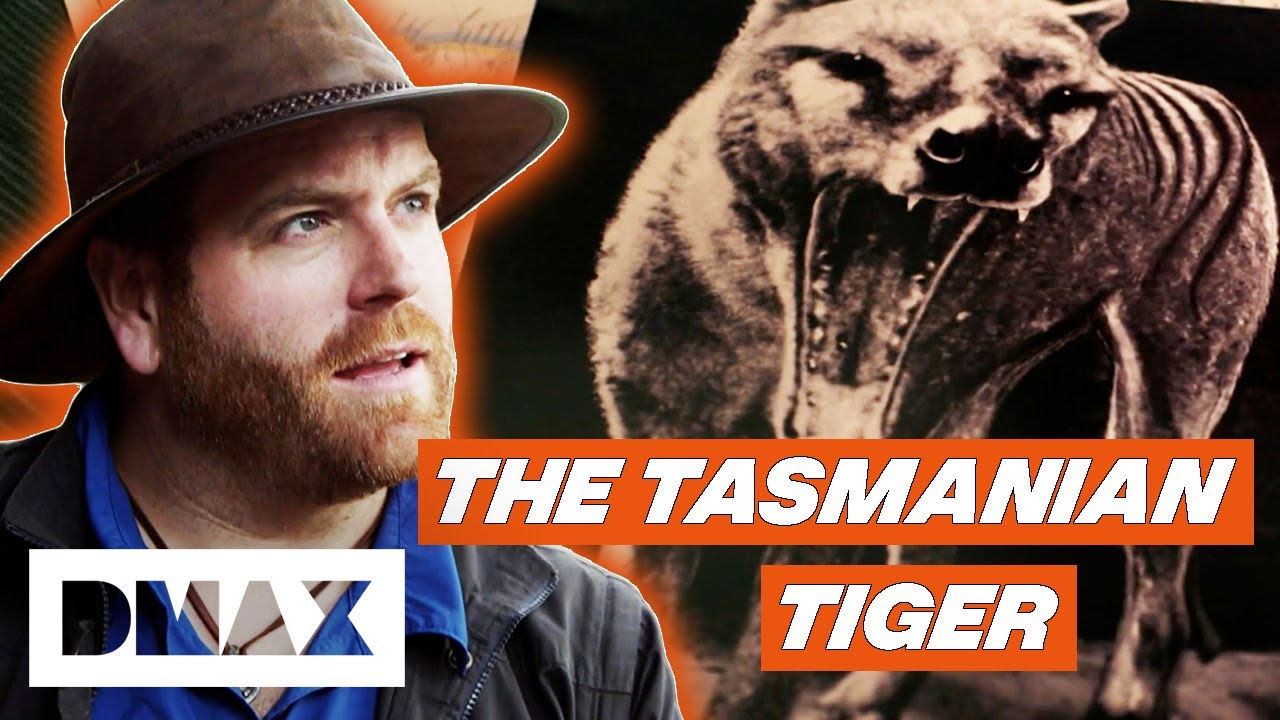
Bigfoot, the Loch Ness monster, Chupacabra, all cryptids, animals frequently seen but not yet proven to exist. Sightings are often the same. Someone catches a fleeting glimpse or snaps a blurry photo. But what if we knew the creature in question actually existed or at least did exist? Meet the thyloine or Tasmanian tiger. Once the apex predator of all of Australia, this carnivore was feared for its sharp fangs and terrifyingly wide jaws. It was brutally hunted to the brink of oblivion by European colonists. The last of its kind died on the island of Tasmania in 1936, snuffing out a species that had survived for 26 million years. But something strange is happening in Tasmania. Eyewitnesses are coming forward, adamant that the Tasmanian tiger continues to live on in the wild. A team of scientists are now chasing the latest in a string of sightings. And recently, shocking video has emerged from the Australian mainland that may drastically alter the search area for the creature. Is the Tasmanian tiger still out there? I intend to find out. So get ready for a hunting expedition to the land down under in search of what just might be a living legend.
I’m in northeast Tasmania where there have been numerous recent sightings of the Tasmanian tiger, an animal that supposedly went extinct 80 years ago. Locals like Andrew Orchard claim to have spotted the creature right here in the remote back country. Holy, look at that.
That looks like a Tasmanian tiger. I mean, look at the stripes on it. Yeah. The big solid tail on it and the ear. Yeah. Then you’ve got one. He’s running away from you. See the big fat feet on it? Yeah. I measured that sag. That’s knee high. All right. I’m getting I’m I’m I’m getting intrigued here now. This one here, the stripes and the facial marks just blend into all the canopy around it. This is crazy. These are some of the best photos I’ve seen. That’s a lot of evidence. more than more than most people, but they’re still not definitive. So, what what would you say to a skeptic? What would you say to a hardened skeptic who says there’s no way that this thing is actually out here? I say, “Spend a day with me and I’ll prove you wrong.” Can you Can you prove it to me? I can take you out there. I can show you where I found a lair with some cubs in it. Really? Yeah. All right. I’m all yours. Let’s go.
So, my next stop is to meet with a group called the Phyloine Research Unit.
This is a trio of researchers who are combining old school tracking skills, a knowledge of biology, and some really high-tech equipment to try to solve the fily mystery. And I’m meeting them at the site of some of the most recent eyewitness accounts. Chris, hey man, how you going? Good. How you must be Josh. Yeah, nice to meet you, man. The team’s up here in this clearing. Okay. So, uh, I’ll jump in and I can probably lead you in. Awesome. Let’s do it. Cool.
Straight on. Straight on, man. It’s muddy as I’ll get out of here. About to get a lot muddier, man. It’s a lot deeper through here. You’re not kidding. This looks like Tasmanian tiger country now. This is perfect habitat. Couldn’t be better. And there have been real sightings here recently.
Yeah. Some historic ones and then right up to this year. Great. Awesome. So, this is the spot.
Oh, yeah. Oh, yeah. Our muddy drive leads us to the TRU base camp where the rest of the team is waiting, looking like the Tasmanian ZZ Top. How’s it going? Good. Josh, uh, this is Bill. Hey, Bill. Nice to meet you. And this is Warren. Hey, Warren. Nice to meet you as well. A wildlife biologist, a tech expert, and an experienced bushman, the TRU team brings a skeptical and conservation-minded approach to their thyloine research. Why band together and undertake the search? Why do you think it’s important? We are directly responsible for the extinction of this animal. And so, if there is a remnant population, we need to find it to allow effective conservation of the species. Okay. Well, let’s get into it.
I really can’t overstate how absolutely rugged it is in here. This is no ordinary walk in the woods. Everywhere you look, really strange plants and you just don’t even feel like you’re on planet Earth anymore.
Dusk is upon us and we’re in the area of recent sightings.
If the phyloine really is out here, now is the time when it should be waking up to hunt.
Guys, this looks like a great area to break out some of the uh the gizmos that we’ve got in our bags here. We’ve got these sound blasters. It basically projects the sound. We’ve got a sound that’s engineered to sound like a thyloine bark. So, the idea is we send this out and we hope something answers. Yeah, absolutely. The team breaks out a massive parabolic dish that can pinpoint sounds more than a half a mile into the jungle. Once it’s rigged up, Bill activates the artificial thyloine call.
It’s amazing how much you can hear on these things. I can hear mosquitoes buzzing, birds across the way. I left the TV on in my hotel room.
rustling. I hear something rustling. I heard a bunch of birds reacting. Yeah.
And then some something rustling. Whatever we heard is somewhere in here. We’re losing light pretty fast. Yeah. Why don’t we switch to infrared? Yep. Maybe we go out there, check it out, see if we can find any sign of it. Yeah, absolutely. Let’s do it. Come on, guys. Night has officially fallen, so we swap over to infrared cameras for the remainder of our search. Okay, so what’s our plan? Use the Fleer infrared uh to try and get a heat signature. The Fleer is a thermal imaging camera that will reveal any wildlife hiding in the dark by illuminating the ambient heat it gives off. All right, let’s do it, guys. Come on.
Got some bones here, guys. Oh, look at that.
Bit of skull. What’s left of it?
This This here is pretty telling. It looks like something’s going smash through there. And that’s remnant sort of of the upper canine tooth of the predator, right? I reckon it’s being killed by a marupial. So either devil quall or something else. Something else. Yeah. Whatever did this in was certainly intent. Absolutely. So uh prey just got to find the predator. That’s right. It’s fall of bones. I guess they head off this way.
Oh, wait, wait, wait. Guys, come here. Come here. I just saw him high up there. Yeah, I’ve got a thermal. Oh, there it is. Yeah. Yeah, it’s looks like it’s got a white stomach and maybe a white tipped tail, so it’s got to be a a common wintail possum. We got a marupial at least. Absolutely.
That was a good spotting, man. Hey, keep your eyes open, guys. Come on. Get in the game.
On my trek through Tasmania in search of the philosene, one thing stood out most. Everyone I met desperately hoped that their ancestors didn’t completely kill off this unique native species. Of course, the hunt for an elusive and possibly extinct creature is bound to come with uncertainties. Like the video that Michael Moss captured on the mainland, I was hopeful we were looking at a Tasmanian tiger, but it’s too hard to make a positive ID, and it could be nothing more than a local fox. The scat on Andrew Orchard’s property failed to yield up testable DNA and so proved inconclusive. The prince from the cave compelling, but without a sighting of the creature that left them, it will also remain open-ended. But one thing is certain. If the Tasmanian tiger is still out there as so many people believe, it will take devotees like Andrew and Michael to keep the hope alive and professionals like the Phyloine Research Unit to track down physical proof.