Forget Skinwalker Ranch: This Place is Pure Evil
Forget Skinwalker Ranch: This Place is Pure Evil

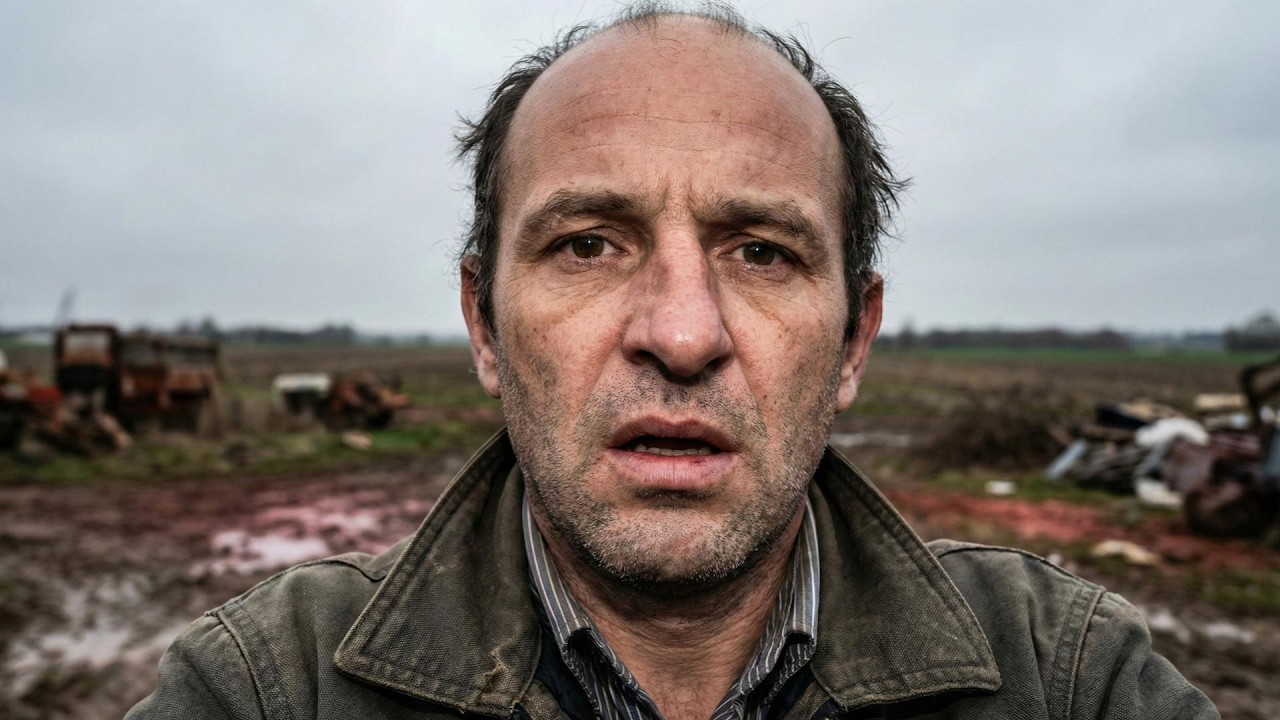
You need to steel yourself for the thing this man encountered.
It is the definition of a living nightmare.
In November of 2014, in the flatlands of central Indiana, an estate liquidator drove to a farm that had been abandoned for 11 months.
The previous owner had died without heirs, and the county needed the property inventoried before auction.
The liquidator brought two assistants.
They arrived on a Thursday morning.
By Friday morning, one assistant had vanished from his truck on the gravel driveway.
And the other had fled the property in terror, refusing to explain what she had seen in the farmhouse cellar.
The liquidator barely escaped.
He had found something in that house.
Something that had been there far longer than the previous owner.
Something that had claimed people on that land for over a century.
When he finally escaped, he discovered that seven people had vanished from that property since 1901.
Their belongings were still in the cellar, arranged by decade, each collection ending with a single photograph of the victim taken moments before they disappeared.
The eighth photograph showed his own assistant, standing in the cellar doorway, looking out toward the main cellar.
Something that was there in the image but cast no reflection, no shadow, and made no mark on the world of the living.
What you are about to hear is the account.
My name is Bridger, and this happened to me back in 2014 in Tipton County, Indiana, about 40 miles north of Indianapolis.
I worked as an estate liquidator.
My job involved assessing and cataloging the contents of properties when owners died without clear succession plans.
I would inventory everything, recommend what could be auctioned, what should be donated, what needed disposal.
Most assignments were straightforward.
Empty houses filled with furniture and memories.
Nothing more complicated than deciding whether a 60-year-old refrigerator was worth selling or scrapping.
The Keeler farm came through as a county referral in late October.
The owner, a man named Warren Keeler, had died the previous December.
No spouse, no children, no siblings.
His parents had been dead for decades.
The county had spent 11 months searching for any relative who might have a claim to the property.
They found no one.
The administrator who assigned me the job mentioned something that should have been a warning.
She said the previous liquidator had driven out to the property in September, spent about an hour there, then returned his retainer and refused to explain why.
She thought he had simply found the job too large for his operation.
I thought the same.
I took the assignment in early November.
The farm sat on 80 acres, most of it leased to neighboring operations for corn and soybeans.
The house was a two-story farmhouse built in the 1890s, with a detached barn and three outbuildings.
Standard Indiana farmstead.
I brought two assistants.
Mira was 26, had worked with me for three years, handled documentation and photography.
She was detail-oriented, thorough, not easily rattled.
Colton was 29, focused on heavy lifting and mechanical assessments.
He had been with me for 18 months.
We had done dozens of jobs together, including some difficult ones.
An estate where the owner had died alone and gone undiscovered for two weeks.
A hoarder house with structural damage from the weight of accumulated possessions.
Nothing pleasant, but nothing we could not handle.
We arrived on Thursday morning around 9.
The sky was overcast, temperature in the low 40s, wind coming from the northwest.
The farmhouse sat at the end of a gravel drive about a quarter mile from the county road.
No neighbors visible in any direction.
Just flat fields, bare after harvest, stretching to the horizon in every direction.
The stalks had been cut to stubble.
The ground was frozen hard.
The house looked neglected but intact.
White paint peeling on the porch railings.
Dead leaves piled against the foundation.
Windows dirty but unbroken.
A rusted weathervane on the roof pointed northwest and did not move despite the wind.
Colton noticed that first.
He pointed at the weathervane and asked why it was not spinning.
I had no answer.
The front door was locked.
I had keys from the county administrator.
A ring with eleven keys, none of them labeled.
I tried four before finding the one that fit.
Inside the air was stale and cold.
Colder than outside, which was unusual.
Houses typically retain some warmth even when unoccupied.
This one felt like it had been cold for a very long time.
The kind of cold that settles into wood and stone and does not leave.
No power, no heat.
Warren Keeler had died in the local hospital, not in the house, so there was no unpleasant aftermath to deal with.
Just an old farmhouse full of furniture, appliances, and the accumulated possessions of a man who had lived alone for thirty years.
The front room had furniture that looked like it had not been moved in decades.
Dust had settled into permanent patterns on the surfaces.
Cobwebs connected the lamp to the end table to the window frame.
But there were no bugs in those webs.
No dead insects.
Just empty silk strands, waiting.
Mira pointed out something I had not noticed.
The clocks in the house were all stopped.
A grandfather clock in the hallway.
A wall clock in the kitchen.
A small alarm clock visible through an open bedroom door upstairs.
All stopped at the same time.
3-17.
I assumed the power had gone out at that moment.
But later I checked with the county administrator.
The power to the property had been disconnected in January, almost a year earlier.
At 10 AM.
Not 3-17.
We started in the main living areas.
Kitchen, living room, dining room.
Mira photographed everything.
Colton checked appliances and structural elements.
I made notes on items that might have value.
The furniture was old but well-maintained.
Oak dining table.
Matching chairs.
A china cabinet with dishes that looked like they had not been used in decades.
The living room had a fireplace that had been sealed.
I asked Colton to check if the flue was still functional.
He opened the damper and shined his flashlight up into the chimney.
He said there was something blocking it.
Fabric, maybe.
Or paper.
Stuffed into the flue about 3 feet up.
I told him to leave it.
Not our job to clear chimneys.
By noon, we had finished the first floor, except for one door.
It was at the back of the kitchen, behind the stove.
A heavy wooden door with a deadbolt lock.
The doorframe was reinforced with metal brackets.
Someone had taken considerable effort to make that door difficult to open.
The key ring from the county had 11 keys.
I tried all of them.
None fit that lock.
Mira asked what was behind the door.
I said probably a cellar.
Old farmhouses like this usually had root cellars for storage.
She asked why someone would deadbolt a cellar door.
I did not have a good answer.
I told her we would address it later and moved upstairs.
The second floor had three bedrooms and a bathroom.
Warren had used the largest bedroom.
His bed was made.
His clothes were still in the closet.
A pair of reading glasses sat on the nightstand next to a Bible.
The Bible was open to a page in Deuteronomy.
I did not read the passage.
The second bedroom was storage.
Boxes stacked floor to ceiling, old furniture covered with sheets.
The dust on everything was thick and undisturbed.
The third bedroom was smaller, tucked into the corner of the house beneath the eaves.
The door was closed.
When I opened it, the air that came out was different, colder, and there was a smell, not decay, something older, mineral, like stone that had been wet for a long time.
The room contained only a single piece of furniture, a wooden chest maybe four feet long, pushed against the far wall beneath the window.
The chest was old.
The wood was dark with age.
There was a lock on it, but the lock was broken.
Colton came in behind me.
He asked what was in the chest.
I opened it.
Inside were photographs, old photographs, some dating back over a century based on the paper quality and image techniques.
There were seven photographs total.
Each showed a different person standing in what looked like the same location.
A doorway with a stone frame.
The images were formal, posed, the subjects looking directly at the camera.
I did not recognize the doorway.
It was not anywhere on the first floor.
The stonework was rough, unfinished.
It looked like part of a cellar.
Mira had followed us up.
She looked at the photographs and said they were probably family portraits.
I studied the faces.
A woman in Victorian-era clothing.
A man in workman’s clothes.
Another man, younger.
A woman in a dark dress.
A man in military uniform.
Another man in civilian clothes.
A young woman, perhaps early twenties.
Seven photographs.
Seven people.
Spanning what looked like six or seven decades.
Something about their expressions bothered me.
Not quite smiles.
Not quite fear.
Something else.
Something between surrender and recognition.
Mira took photographs of the photographs for documentation.
She said her camera was acting strangely.
The autofocus kept trying to adjust even though the images were stationary.
Colton said we should keep moving.
He did not like this room.
Neither did I.
We finished the upstairs by four in the afternoon.
The work had gone slower than expected.
We kept finding things that required additional documentation.
More boxes in the storage room.
More clothes in Warren’s closet than one man should have owned.
Some of them were women’s clothes.
Some were children’s sizes.
None of them fit Warren, who had been a large man according to the county administrator.
I added the clothes to my notes.
Maybe Warren had been keeping belongings of deceased relatives.
It was common with people who lived alone for a long time.
At five, we decided to break for the day.
We had booked rooms at a motel about 15 miles away.
The plan was to return Friday morning, deal with the locked cellar door, then complete the outbuildings over the weekend.
I was the last one out of the house.
As I locked the front door, I looked up at the upstairs windows.
The small bedroom window, the one that had contained the chest with the photographs, was brighter than the others.
Not light from inside.
More like the glass itself was reflecting something I could not see.
I stood there for maybe 30 seconds.
The brightness faded.
The window looked the same as the others.
Colton honked his horn.
He was ready to go.
That night at the motel, I could not sleep.
I kept thinking about the photographs.
About the locked cellar door with its metal reinforcements.
About the way the house had felt when we first walked in.
Cold in a way that was not just about temperature.
Cold like something was pulling heat out of the space.
I had my laptop with me.
Around midnight, I searched for information about the Keeler farm.
Warren Keeler appeared in a few local records.
He had bought the property in 1984 from a bank that had foreclosed on the previous owners.
Before that, the farm had changed hands several times.
I found records going back to the 1890s when the house was built.
I found something else.
A newspaper archive from 1901 mentioned a woman named Harriet Lowe, who had disappeared from a farm in Tipton County.
She had been traveling from Indianapolis to visit relatives, and stopped at a farm to ask for directions.
She was never seen again.
A record from 1917 mentioned a farmhand named Carl Brogan, who had worked the summer harvest and then vanished before collecting his wages.
A notice from 1927 about a missing person named Thomas Vance, last seen near a farm outside Sharpsville.
A report from 1942 about a traveling salesman named Glenn Deckard, who never returned from a route that included Tipton County.
A 1954 article about a woman named Miriam Foster, who disappeared while driving from Chicago to Louisville.
A 1963 missing person report for a young woman named Patricia Kelly, a college student who had been hitchhiking.
Six people.
Six decades.
All last seen in or near the same general area where the Keeler farm sat.
I could not prove these disappearances were connected to the property.
The newspaper archives were vague about exact locations, but six people vanishing from the same rural area over 60 years was not coincidence.
I should have walked away.
I should have returned the retainer like the previous liquidator and found a different job.
Instead, I drove back to the farm the next morning.
We arrived at eight.
The sky was darker than the day before.
Rain coming.
The temperature had dropped overnight.
The gravel drive was slick with frost.
I had brought a pry bar from my truck.
If the cellar key was truly missing, I would force the door.
The county had authorized me to access all areas of the property.
Mira seemed quieter than usual.
She said she had not slept well.
Bad dreams.
She could not remember them, but she had woken up cold.
Her motel room had heat, but she had felt cold all night.
Colton said the same thing.
Cold dreams.
Waking up shivering even though the room was warm.
I did not tell them about my research.
I did not want to scare them before we finished the job.
We entered the house.
The air was colder than the day before.
I could see my breath.
The three of us gathered in the kitchen.
I positioned the pry bar against the cellar door frame.
The wood was old but solid.
It took three hard pulls before the frame splintered.
The deadbolt tore free from the door frame.
The door swung inward.
Stone steps descended into darkness.
The smell that came up from below was the same smell from the small bedroom.
Stone and water.
And something else.
Something old.
I turned on my flashlight and started down.
Mira and Colton followed.
The steps were narrow.
The stone walls were damp.
Water seeped through cracks and ran down the surface in thin streams.
The flashlight beam bounced off the moisture and created strange reflections.
The cellar was larger than I expected.
Much larger.
The main space was maybe forty feet long and twenty feet wide.
The walls were rough fieldstone.
The floor was packed earth, hard as concrete.
The ceiling was low, maybe six and a half feet.
Colton had to duck.
The air down there was cold.
Freezing cold.
And still.
No air movement at all.
My flashlight beam swept across the space.
The cellar was not empty.
There were shelves along the walls.
Wooden shelves.
Handmade.
Running the entire length of both sides.
The shelves were lined with objects.
Personal belongings, arranged in groups.
I moved closer.
The first group contained a woman’s hat.
The style from the early 1900s.
A pair of button-up boots.
A small purse made of beaded fabric.
A lace handkerchief.
The second group had a pocket watch.
A leather satchel.
A pair of work gloves.
A tobacco tin.
The third group contained men’s clothes from a different era.
A cloth cap.
Suspenders.
A straight razor and a leather case.
Each group of belongings seemed to represent a different person.
A different decade.
The items were arranged carefully on the shelves, almost reverently.
Like someone had collected them and displayed them as trophies.
Colton asked what this was.
His voice echoed in the stone space.
I counted the groups.
Seven distinct collections.
Seven sets of personal effects.
I thought about the names for my research.
Harriet Lowe.
Carl Brogan.
Thomas Vance.
Glenn Deckard.
Miriam Foster.
Patricia Kelly.
Six names.
Seven collections.
There was a seventh victim I had not found in the archives.
Mira was photographing the shelves.
Her camera flash illuminated the space in harsh white bursts.
Each flash showed more detail.
More belongings.
A child’s doll with a porcelain face.
Reading glasses.
A bible with a worn cover.
The belongings ended around what looked like the 1960s.
Nothing newer than that on the shelves.
But Warren Keillor had lived in this house since 1984.
Thirty years.
And he had never mentioned any of this to anyone.
Never reported finding a cellar full of missing people’s belongings.
I moved deeper into the cellar.
The back wall was different from the others.
The stones were older.
More carefully placed.
And in the center of that wall was a doorway.
The doorway from the photographs.
Stone frame.
Rough cut.
Maybe six feet tall and three feet wide.
Beyond it was a smaller room.
Maybe eight feet square.
The ceiling was lower in there.
The walls were the same damp fieldstone.
But something was different about that space.
The air was heavier.
Thicker.
Like the room was pressurized.
I noticed something on the floor in front of the doorway.
Scratches in the packed earth.
Long parallel grooves.
Like someone had dug their fingers into the ground and been dragged forward.
The scratches led through the doorway into the small room.
Colton saw them too.
He asked what made those marks.
I did not answer.
I stepped through the doorway.
My flashlight flickered once.
The beam dimmed.
Then steadied.
The temperature dropped the moment I crossed the threshold.
My breath came out in thick white clouds.
The cold was immediate and absolute.
Like stepping into a freezer.
Mounted on the back wall of the small room were photographs.
The same seven photographs we had found in the chest upstairs.
But different prints.
Larger.
Maybe eight by ten inches each.
Framed in simple dark wood.
And there was an empty space on the wall.
Room for an eighth photograph.
I examined the photographs one by one.
My flashlight beam moved across the faces.
The first showed the woman in Victorian-era clothing.
Young.
Maybe twenty-five.
Standing in the stone doorway, looking directly at the camera.
The photograph I was looking at had been taken from inside the small room.
Looking out.
The woman was framed by the doorway.
Her expression was wrong.
Not fear.
Not calm.
Something between acceptance and anticipation.
Like she knew what was about to happen and had already surrendered to it.
The second photograph showed the man in workman’s clothes.
Same angle.
Same doorway.
Same expression.
All seven photographs were identical in composition.
Same angle.
Same framing.
Same impossible expression on faces separated by decades.
Behind me, I heard Mira gasp.
I turned.
She was standing at the edge of the small room.
Her camera lowered.
Her face was pale in the flashlight beam.
She was staring at something on the wall that I had not seen when I entered.
There was an eighth photograph.
It showed Colton.
Standing in the stone doorway, his back to the small room.
Looking out into the main cellar.
The photograph was old.
The paper was yellowed.
The image was slightly faded at the edges.
But it was unmistakably Colton.
Same face.
Same build.
Same jacket he was wearing right now.
Same expression as all the others.
I looked toward the doorway.
Colton was standing near the stairs, his back to us.
His flashlight pointed at the shelves.
He was examining the belongings.
He did not know we were looking at him.
The photograph was impossible.
It was clearly decades old based on the paper quality and the fading.
But it showed a man who was standing 20 feet away from me.
Alive.
Present.
Wearing the same clothes.
I looked at the photograph more closely.
The details were perfect.
The small tear in Colton’s jacket sleeve that he had gotten three months ago on a job in Muncie.
The watch on his left wrist that his wife had given him for their anniversary.
The way his hair fell across his forehead.
Everything matched exactly.
The background of the photograph showed the main cellar behind him.
The shelves with the belongings.
The stone walls.
The packed earth floor.
But the lighting was wrong.
The photograph showed the space illuminated evenly, like sunlight, even though we were underground and there was no natural light.
And there was something else in the photograph.
In the far corner of the main cellar, barely visible, was a shadow.
No.
Not a shadow.
A presence.
Something standing in a space that I could see clearly from where I stood.
Something that was not there now, but had been there when the photograph was taken.
The thing had no reflection on the wet stone walls.
It cast no shadow on the floor.
It existed in the photograph, but left no mark on the physical world around it.
Mira made a sound.
Not quite words.
I looked at her.
She was pointing at the wall.
At a space next to Colton’s photograph.
Another photograph had appeared while I was looking at Colton.
This one showed Mira.
Same stone doorway.
Same angle.
Same expression on her face.
The paper was yellowed and aged, like all the others.
Mira dropped her camera.
The flash went off when it hit the ground, illuminating the small room in a burst of white light.
In that instant, I saw something else on the wall.
A tenth space.
Empty.
Waiting.
I grabbed Mira’s arm and pulled her toward the doorway.
I shouted for Colton to move.
He turned, his flashlight swinging wildly, and saw our faces.
I pushed past him.
I took the stone steps two at a time.
I heard Mira behind me, her breathing ragged.
I heard Colton’s boots on the stone.
We reached the kitchen.
I slammed the cellar door shut behind us.
The deadbolt was destroyed, so I grabbed a kitchen chair and wedged it under the doorknob.
Colton was asking what happened.
His voice was loud in the kitchen.
He had not seen the photographs.
He did not understand.
Mira was crying.
She could not speak.
She just kept shaking her head.
I grabbed my equipment bag.
I told them we needed to leave.
Right now.
We would call the county from the motel.
We moved fast.
Mira was barely functional.
I had to take her arm and guide her to the front door.
Colton was still confused, but he followed without arguing.
Outside, the sky was darker.
The temperature had dropped further.
A fine mist was falling, not quite rain, not quite snow.
I helped Mira into my truck.
Her hands were shaking so badly she could not work the seatbelt.
I buckled her in.
Colton was in his own vehicle, a gray pickup parked behind mine.
I watched him start the engine.
Watched the headlights come on.
I started my truck and pulled forward onto the gravel drive.
The farmhouse receded in my rearview mirror.
Gray and silent against the gray sky.
We were maybe a hundred yards from the county road when Colton’s truck stopped.
I watched in my rearview mirror.
His truck just stopped.
No brake lights flashing.
No turn signal.
The vehicle simply stopped moving.
I slowed down.
Mira was watching, too.
Her breath fogging the passenger window.
She said we should keep going.
Her voice was flat.
Dead.
I stopped.
I could not leave him.
I put my truck in park and got out.
The gravel crunched under my boots.
The mist was thicker now, reducing visibility to maybe 50 yards.
I walked back toward Colton’s truck.
The driver’s side door was open.
The engine was still running.
The windshield wipers were moving, clearing mist that was not there.
The cab was empty.
Colton was gone.
I looked at the fields around us.
Flat.
Empty.
Harvested corn stubble frozen into the hard ground.
No trees.
No buildings.
No ditches.
Nowhere to hide.
No sign of Colton in any direction.
The gravel drive stretched behind me toward the farmhouse.
The mist was thicker in that direction.
The house was barely visible.
A gray shape against gray sky.
I heard Mira scream.
I ran back to my truck.
She was pointing through the windshield, her hand pressed against the glass.
I looked where she was pointing.
At the farmhouse.
Colton was standing in the upstairs window.
The window of the small bedroom where we had found the chest of photographs.
His face was pressed against the glass.
His breath fogging the surface.
His expression was the same as the faces in the photographs.
Acceptance.
Surrender.
Then he was gone.
The window was empty.
I got in my truck.
I put it in drive.
I did not look back again.
Mira did not speak.
She stared straight ahead through the windshield, her hands clenched in her lap, her face white.
I drove faster than I should have on the frozen gravel.
The truck fishtailed twice.
I did not slow down.
I reached the county road and turned toward the highway.
We passed through the town of Sharpsville, through Tipton, through Kokomo.
I did not stop until we reached the motel.
When I finally turned off the engine, my hands were shaking.
The mist had turned to rain.
It beat against the windshield in steady sheets.
Mira opened her door.
She got out of my truck without speaking.
She walked to her car.
She got in, started the engine, and drove away.
I never saw her again.
She quit the following week, refused to answer calls, moved to Arizona, changed her phone number, deleted her social media accounts.
I heard from a mutual friend two years later that Mira was seeing a therapist.
That she had nightmares every night.
That she had written down everything that happened but refused to show it to anyone.
That she had burned the pages.
The mutual friend told me something else.
Mira had said that she saw something in the cellar that Colton and I had not seen.
When she looked at her own photograph on the wall, the one that should not have existed, she saw herself standing in the doorway.
But in the photograph, she was not alone.
Something was standing behind her.
Something tall and thin with arms that were too long.
Something that had no face, just smooth skin where features should have been.
She said the thing in the photograph was reaching toward her.
Its fingers were almost touching her shoulder.
And in the photograph, she was smiling.
The same smile as all the other victims.
Acceptance.
Surrender.
Mira never talked about it again.
The mutual friend said she refused to discuss anything related to Indiana.
She would not say the state’s name.
Would not look at maps.
Would not acknowledge that part of her life had ever happened.
I sat in my truck for an hour after she left.
The rain kept falling.
The parking lot filled with puddles that reflected the motel’s neon sign.
I thought about what I had seen in that cellar.
About the photographs that should not have existed.
About Colton standing in that window, wearing the face of someone who was already gone.
I called the county that evening.
I told them we had found human remains on the property.
I did not know what else to say.
They sent investigators the next morning.
Sheriff’s deputies first, then state police, then eventually the FBI.
They found the cellar.
They found the belongings on the shelves.
They found the photographs mounted on the wall.
They found evidence linking the items to seven missing persons cases dating back to 1901.
Hair samples.
Fingerprints on the personal effects.
Initials carved into leather.
Enough to identify all seven victims.
Harriet Lowe, 1901.
Carl Brogan, 1917.
Thomas Vance, 1927.
Glenn Deckard, 1942.
Miriam Foster, 1954.
Edward Howell, 1963.
Patricia Kelly, 1963.
Two victims in 1963.
The sixth collection had belonged to a man named Edward Howell.
An insurance adjuster who had gone missing that August.
Patricia Kelly disappeared three months later.
All seven had been seen on or near the Keillor property before vanishing.
All seven had belongings in that cellar.
All seven had photographs on that wall.
The investigators found something else in the cellar.
In a corner near the stairs, wrapped in oilcloth, was a camera.
An antique camera.
A view camera with a bellows and a wooden frame.
The kind photographers used in the late 1800s.
The lens was intact.
The bellows were cracked with age.
Inside the camera, they found an unexposed glass plate, still in position.
Still waiting to record an image.
The camera should not have worked.
Glass plates had not been used for photography in almost a century.
But the investigators sent it to a specialist at Purdue University.
The specialist confirmed that the camera was functional.
The glass plate was sensitive to light.
If someone had operated the camera properly, it would have taken a photograph.
No one could explain who had been using that camera.
Or how.
Or why the images on the wall looked like they had been taken with modern techniques but appeared on paper that was decades old.
The investigators did not find Colton.
His truck was still on the gravel drive.
Engine running.
Door open.
His phone was on the passenger seat.
Battery almost dead.
His wallet was in his jacket pocket which was draped over the seat.
His wedding ring was on his finger.
But Colton was gone.
They searched the property for two weeks.
Ground-penetrating radar.
Cadaver dogs.
Every building dismantled and inspected.
They dug up sections of the fields.
They drained a pond half a mile away.
They found nothing.
Colton was declared missing.
The case was never solved.
The investigators showed me the photographs from the cellar before they closed the case.
Seven victims.
Seven photographs.
Seven sets of belongings.
There were no photographs of Colton or Mira on that wall.
Whatever we had seen down there.
Whatever had appeared while we stood in that small stone room.
Was not there when the authorities arrived.
Just the original seven photographs.
Arranged the same way they had been arranged for decades.
The eighth space was still empty.
I gave my statement four times.
To the sheriff.
To the state police.
To the FBI.
To a criminal psychologist who was building a profile of whoever had collected those belongings over a hundred and thirteen years.
I told them everything except the photographs of Colton and Mira.
I did not know how to explain what we had seen.
I did not think they would believe me.
The investigators focused on Warren Keeler.
He had lived in that house for thirty years.
He must have known about the cellar.
Must have seen the photographs.
But Warren had died of natural causes in a hospital.
There was no evidence he had harmed anyone.
No evidence he had even known the people whose belongings were stored beneath his house.
The prevailing theory was that someone before Warren had been responsible.
Someone who had used the property to kill and then store trophies.
The timeline suggested the killings had stopped in 1963, over twenty years before Warren moved in.
Maybe the original killer had died.
Maybe they had moved away.
Maybe they had simply stopped.
The farmhouse was demolished three months after the investigation ended.
The county declared the land contaminated.
They did not specify with what.
They sold the eighty acres to a corporate farming operation that uses it for soybeans.
No structures.
No workers on the ground.
Just machines programmed to plant and harvest and plant again.
I stopped doing estate liquidation.
I could not walk into an old house again without thinking about what might be hidden behind locked doors.
Without wondering what was preserved in cellars and attics.
Without seeing Colton’s face pressed against cold glass.
I work in an office now.
Inventory management for a distribution company.
Warehouse tracking systems.
Barcode scanners.
Climate-controlled facilities full of organized shelves.
Boring.
Safe.
Surrounded by people at all times.
I think about that cellar sometimes.
About the photographs that appeared on the wall while we stood there.
About the empty space that was waiting for an eighth frame.
Warren Keeler lived in that house for thirty years without being taken.
He never went into the cellar.
The investigators found evidence that the deadbolt lock had been installed in 1984, the same year Warren bought the property.
He had sealed that door and never opened it.
Maybe Warren knew what was down there.
Maybe he found the cellar when he first moved in and understood what it meant.
Maybe he spent thirty years in that house knowing something was beneath him.
Something that collected people.
Something that recorded their faces in photographs that should not have been possible.
The investigators found Warren’s journals in the house.
Thirty years of daily entries, written in small, careful handwriting.
Most of the entries were mundane.
Weather.
Farmwork.
Meals.
Television programs.
But scattered throughout the journals were other entries.
References to sounds coming from beneath the floor.
To cold spots that moved through the house.
To dreams about standing in a stone doorway while something approached from behind.
Warren wrote about the cellar door seventeen times over thirty years.
Each time, he wrote the same thing.
Still locked.
Still quiet.
Still safe.
In December 2013, three days before he was admitted to the hospital, Warren wrote his final entry.
It said, I can hear them down there.
All of them.
They are waiting for me.
I will not give them the satisfaction.
He died of a heart attack two weeks later.
The doctor said it was sudden.
No warning signs.
Just stopped.
Maybe Warren thought he was safe as long as he never opened that door.
Never stepped through the stone doorway.
Never gave it a chance to take his photograph.
He died in a hospital in Indianapolis, surrounded by doctors and nurses.
Miles away from the farm.
Whatever was in that cellar, it could not reach him there.
But we opened the door.
We went down the steps.
We walked through the stone doorway and stood where seven people had stood before they vanished.
Colton’s photograph appeared on that wall.
Mira’s photograph appeared.
The paper was old and yellowed, but the images were fresh.
Like the cellar had been waiting for us.
Like it had known we were coming.
I do not know what took Colton.
I do not know where he is now.
I do not know if he is dead or something else.
Something worse than dead.
I know that I walked through that doorway too.
I stood in that small stone room and looked at the photographs.
I did not see a tenth frame on the wall, but Mira saw something.
She saw the empty space.
The one that was waiting.
Maybe it was waiting for me.
The farm is soybeans now.
Machines work the fields in programmed patterns.
No one lives there.
No one walks that land.
But sometimes I wonder if the cellar is still down there.
If the foundation stones are still buried beneath the surface, waiting.
If the photographs are still mounted on the wall in that small stone room.
Waiting for someone else to find them.
I drive past Tipton County sometimes on my way to other places.
I never take the exit.
I never drive down the county road that leads to where the farmhouse used to stand.
But I see the fields from the highway.
Flat and empty and endless.
And I know what is buried there.
What has been buried there for over a century.
Something that collects people.
Something that takes their photographs and keeps their belongings and waits for the next one.
Colton was the eighth.
Someday there will be a ninth.