Risky Experiment Captures New Information (Season 6) | The Secret of Skinwalker Ranch | History
Risky Experiment Captures New Information (Season 6) | The Secret of Skinwalker Ranch | History

DYLAN: Hey, guys. How’s it going?
ERIK: Welcome to the ranch, guys. I’m Erik Bard.
I’m Dylan. Nice to meet you.
Dominique. Nice to meet you.
ERIK: Gentlemen, we’re so glad to have you out to help with our investigations.
Absolutely.
TRAVIS: For six years, our team’s been working to figure out all the strange things we’ve encountered on Skinwalker Ranch.
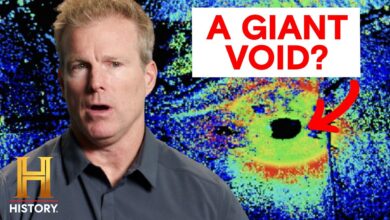
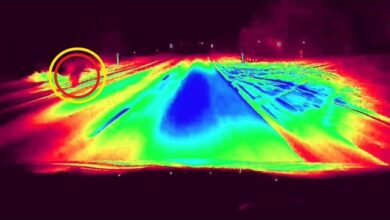
So today, we brought a team from US Kites out to help us learn more about one phenomenon that’s pretty much at the top of that list. TRAVIS: According to the data we’ve collected from numerous lidar instruments, we believe that there is a gigantic bubble-shaped feature on the ranch that is invisible to the human eye. It’s centered at the triangle and encompasses a huge area of the property, both above and below ground, where we’ve seen all kinds of things, such as possible evidence of a black hole-like phenomenon and tons of UAPs. ERIK: We’ve had just about everything out here, you know? We’ve had helicopters, you know, fixed-wing aircraft, of course, drones, rockets.
-TRAVIS: Plenty of rockets. -ERIK: Plenty of rockets.
But we’ve not yet had one of these Helikite platforms out here.
Okay.
TRAVIS: We don’t know how, but whatever this bubble is, it seems to have thwarted almost every investigative tool that we’ve used to figure out what the heck it could be.
Last week, Jim Royston’s lidar drone even seemed to get stopped right at its southern boundary.
So today, we’re hoping to figure out how it could do that by using a specialized piece of equipment known as a Helikite. ERIK: Now, why do we call it the Helikite?
Well, it’s a combination between a helium balloon and a kite.
How long can we stay aloft?
As long as there’s helium in that balloon.
-Oh. -ERIK: Okay.
DOMINIQUE: It’s actually a piece of military equipment.
Wow. Well, we’ve got some instruments that we want to attach to this Helikite.
TRAVIS: What excites us about the Helikite is that we can attach our instruments to it and then let it hover in the air right inside the bubble’s barrier to help us collect data on it while we run a new experiment.
ERIK: Yeah, I want to get out there to the east field canyon -and get started. -All right.
-TRAVIS: I say we get with it. -DOMINIQUE: Yeah, let’s go.
TRAVIS: Since we first detected evidence of the bubble, we’ve been running experiments inside of it to verify its dimensions and see what other strange things it might contain. But today, we want to see what happens when we attempt to penetrate its boundary with different instruments.
So, Thomas is going to tow the Helikite out to the east field using a UTV, where it will hang several hundred feet high, right in the eastern wall of the bubble, collecting data with several of our instruments that are attached to it. JIM: This is a good setup.
TRAVIS: These will include a GPS tracker, high-speed cameras and a signal generator that will continually broadcast a frequency at 1.2 gigahertz. All right.
Yeah, good.
ERIK: Okay, Thomas, be advised, you are approaching the boundary -of the bubble. -THOMAS: Copy that. ERIK: Okay if you’ll stop right there, let’s see what we’ve got.
Copy that.
ERIK: You are now right at the inside boundary of the bubble. Leave it in that position for the duration. THOMAS: Copy that. TRAVIS: Once the Helikite was positioned right in the eastern barrier of the bubble, we wanted to get Jim’s drone launched before I started firing rockets.
All right Jim, have at it.
JIM: Hold on.
-TRAVIS: It’s telling you errors? -JIM: Yeah, hold on.
I can’t take off.
How is putting a balloon up in the sky keeping you from launching your drone?
JIM: Who knows?
I’m resetting everything.
It’s crazy.
TRAIS: Wow, look at that.
Something’s happening.
Oh, dude! I’m– This is crazy.
One of my receivers is picking up -a 1.2 gigahertz signal… -JIM: Whoa.
…that we are not broadcasting.
This is just insane.
This is the signal we’re transmitting, and suddenly, this line to the right of it appeared right as the Helikite passed right into -the barrier wall. -JIM: And that’s where I got my error.
TRAVIS: That’s insane.
ERIK: That is very interesting, ’cause we’ve been talking about what may happen whenever a physical object passes through that boundary.
That’s really interesting.
TRAVIS: That’s crazy. Right when we get the Helikite up in the air in the bubble barrier, we detect another duplicate 1.2 gigahertz signal, and Jim’s drone won’t even fly.
Did the Helikite making contact with the bubble trigger all of these things? All right, I am going to go get that rocket ready.
If that was the case, we wanted to see what would happen when I launched a rocket through its eastern barrier.
Hey, Erik, Thomas, I am ready to do the first rocket launch. Copy that. We’re watching.
We will be watching, too.
Rocket’s hot.
In five, four, three, two, one! ERIK: It’s going the wrong way.
Looks like it’s going north.
TRAVIS: I don’t understand that.
We’re trying to penetrate the bubble with rockets and Jim’s drone. But somehow, whatever this thing is, it appears to stop them from going through its eastern barrier.
But how can it do that?
ERIK: You ready to discuss our experience with the maiden voyage of our Helikite?
Yes.
TRAVIS: The next day, after processing the Helikite data, Erik called us into the command center for a debrief on everything that happened during the experiment.
Yes. You know, we have a few things to discuss, but I want to start with some information that you have to share, Jim. I guess this is -your display, right? -Yeah.
ERIK: It’s my understanding that you experienced some difficulties with some interference with the drone itself during the experiment with the Helikite.
Yeah, let me jump up there.
We’re looking at this boundary that’s kind of somewhere in this range, right?
That’s the bubble.
So, Thomas, this is where the Helikite was before you started moving it to the barrier of the bubble.
Mm-hmm.
So, this is the actual home point of the drone.
We get ready to go, and as we start moving the Helikite down into the boundary, all of a sudden, we’re seeing this weak satellite signal.
Which to me is very interesting data because I get 21 satellites, so that’s plenty enough GPS satellites, if you will, to take off and fly, no problem.
But the actual satellite signals are so low, the drone -can’t take off. -Wow.
TRAVIS: That’s crazy. As soon as the Helikite got into position at the barrier of the bubble, Jim lost connection to 21 satellites. That kept his drone from taking off. Was it the Helikite’s interaction with the barrier of the bubble that triggered it?
Did you see any of these issues prior to moving -the Helikite? -No.
Something about the Helikite going in that barrier inside the bubble stimulates it or something, ’cause then I’m having problems once it’s in there.
Got it.
TRAVIS: I think whatever this bubble or barrier or dome is, that it’s blocking the external signal somehow.
And adding to your point, blocking and possibly responsive to what we’re doing.
That duplicate 1.2 gigahertz signal showed up when that Helikite was exactly on that boundary that we’re talking about.
That’s a good point. Yep.
So, as if this isn’t weird enough, I’ve got some other things that happened during the– -Hey, there’s more? -Oh, there’s more.
-(chuckling) -There are some… some interesting hits in the high-speed cameras that we mounted to our science platform on the Helikite.
Okay, so here we have the embossed effect being used to help bring out any movement, anything going through the field of view of the camera.
To be clear, this is high speed, 120 frames per second.
Let me know if you see anything.
-SAM: Oh, yeah. -THOMAS: Looked translucent.
What did you see?
-Movement in the upper middle… -Okay.
-…to the side. -So, let’s go back.
SAM: Right there.
ERIK: Okay. We are looking at at least four– TRAVIS: At least four dots, maybe five.
Yeah. Okay, so, let’s dive in on this part of the, uh, video frame.
And so, I’ll back us up.
Okay, now I’ll play through at the normal rate.
All right.
There it is.
TRAVIS: Okay, so if it’s moving really damn fast, if it’s anywhere further than right next to the camera lens.
THOMAS: Can you frame advance just -a couple frames? -Okay.
There’s one, two, three.
THOMAS: It goes behind it.
ERIK: Wow.
THOMAS: So, we know it’s not a bug…
-That’s important. -…in front of the camera.
-Yeah. -Yeah.
That string is out -away from the platform. -ERIK: Absolutely.
That is just unbelievable.