Josh Gates Hunts For The Stolen Treasures Of Ancient Rome | Expedition Unknown
Josh Gates Hunts For The Stolen Treasures Of Ancient Rome | Expedition Unknown

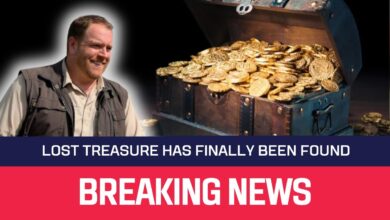
In 410 AD, Rome’s luck runs out when the barbarian king Allaric and his Visigothth army storm the gates. The Goths loot eight centuries of imperial treasures, grabbing gold, silver, and astonishing artifacts accumulated in wars across the ancient world.
But shortly after his triumph, King Allaric dies in southern Italy and is reportedly buried in a riverbed with these priceless relics. Inside one of the city’s priceless collections of rare documents, I’m meeting with journalist and historian Francesco Sishi. Wow, this place is gorgeous. Yes, it is. Well, Rome history, right? Right. Everywhere. Yes. So, let’s talk about all Alaric. This is a character I think many people in the West probably haven’t heard of, but he’s a pretty sizable figure when it comes to the history of Rome, right? Yes.
Because it was the first to suck this city, Rome. Right. You have to understand that for 800 years, Rome had not been sacked. And in that meantime, it had looted and plundered all the treasures, all the best things of the world. You name it, right? You name it. anything the ancient treasure of Egypt, the ancient treasure of Babylon, Jerusalem, the menora, everything was there. So Allaric plucked all the best treasures of Rome. It is the greatest lost treasure of all time. And so the question is, the only question where is it? We have a book which tells us with quite some certainty where at least part of the treasure is. Really? Yes.
Okay, let me show you. This is the Gatica is the history of the goats. The Getica states that after looting Rome’s treasures, King Allaric heads south toward Africa. But his luck runs out and he dies near the southern Italian town of Cusenza, where he’s said to be buried with much of the treasure.
It says that he was buried in a place near Cosensia, which is a city that exists even today in southern Italy in the region Calabria. Uhhuh. It says that is buried beneath a small river, the river Busantos. And he’s buried under it. Under it. They diverted the river and they buried him and they killed all the slaves who did the work to keep the place hidden. Uhhuh. So is it a dead end?
No, I don’t think so because now new technology is available and the new search is underway and I think it is the most promising ever that has been done. Recently, Mario Auto, the mayor of Cassenza, launched the largest search ever for all Alarik’s tomb and treasure. Can you connect me with the people that are digging? Absolutely. I can call my friend the mayor. You know the mayor of Cassenza? Well, I’m from that area, right? Italy. Everyone knows everybody in Italy. Well, of course. I love this. I got friends in high places. Thank you so much. Thank you. Amazing.
Thank you for showing this to me. Thank you. Thank you. All right. First question. Why are we here?
So basically this site clearly matches the descriptions that King Enrique was buried at the foot of a hill where a river used to pass, right? And if you can hear it. Yeah. So there’s a river over there. River passing over there which actually used to be much wider and it used to cover all this area. This was all river. This was all the river. All this farmland was underwater.
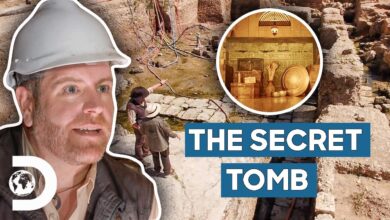
Yes. So we we actually did some analysis using LAR. Using LAR. Yes. Lidar is a technology that uses lasers to create a 3D topographic map. It can penetrate foliage to reveal evidence of where the ground has been dug up or shifted in the past. And we can see in the in the later result that we have an anomaly here, right? These this bumps these these bumps. Exactly. Wow. Look at that. There’s something there. Yes. And so what do you think that is? This shows that here there was some sort of an activity. The ground has been dug up. This is the anomaly we’re trying to look for. Okay. So, we’ve got a place that matches the description. Exactly. And technology telling us that something could be here. That something could be here. Yes. I’m in the middle of a field in the south of Italy, hunting for the treasure fil tomb of a Visigoth king. We’ve just surveyed the terrain using an electrical scanner, which seems to have made a discovery. Oh, what’s that? Wow. What is that? What is that? We have an anomaly here. That’s an anomaly.
Great. Yes. So, let’s dig. Take a core and we’re going to see sort of a cross-section of the subsur. Awesome. All right. Here comes the core. They crack open the cores and lay out the samples in a tray. Beautiful. Next, we’ll dig through the dirt for proof that this was once part of the river and to determine if the anomaly we imaged could be the tomb of King Allaric. Okay, George, where the sand? Sand. And does this feel like material that was at one time underwater? On the riverbed? Yes. This is This is all sand that comes from the riverbed. So, we’re definitely in a river layer. Exactly. Okay. Knowing this was a riverbed is an encouraging sign that the tomb could be nearby. And this this depth, this is close to the right time period for all. See? Yeah, easy. Okay.
Oh, Josh. Okay. Something. What is that? Oh, it’s it’s copper. Looks like copper. Yeah. Oh, it’s marked. Look at that. There’s a design on it in there, too. You see that? Yeah.
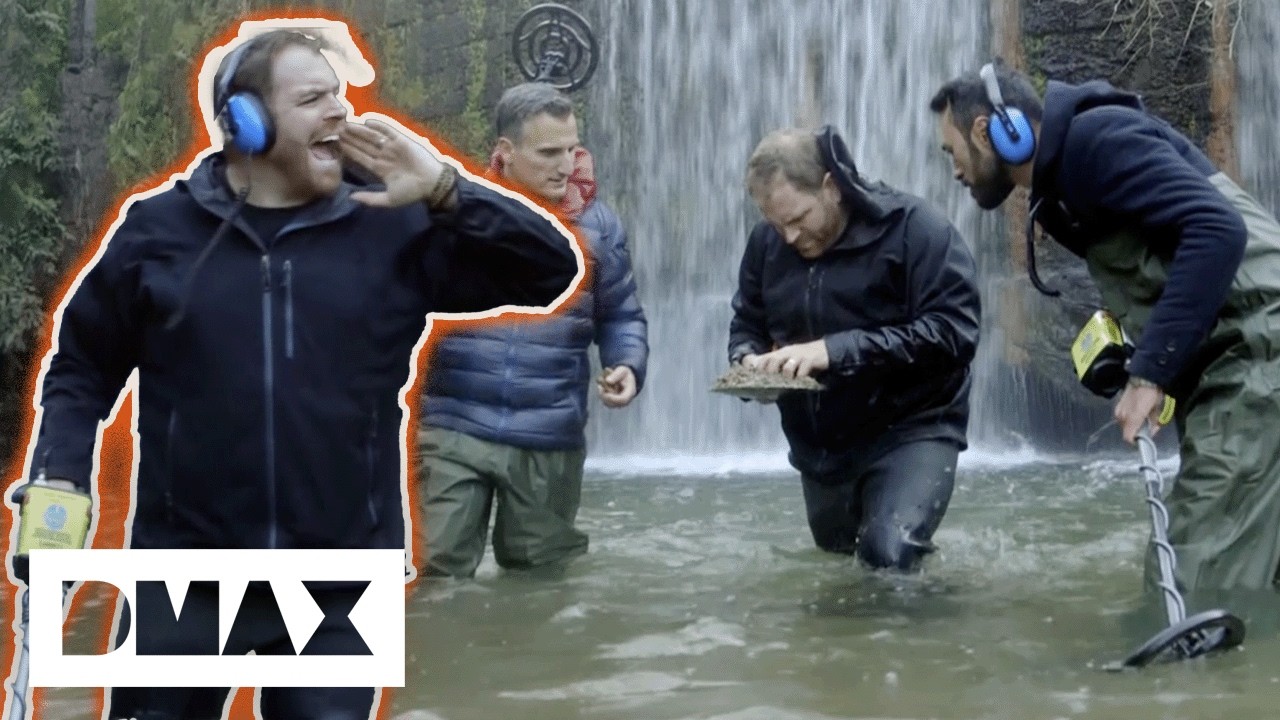
It’s beautiful. What do you think this was? Could have been a piece of a brooch, a belt, for example. Right. Right. Right. The markings on it are amazing. And do you think this could be from the fifth century? Could this be that old? Couldn’t even be older. Wow, that is stunning. To find a fragment of an artifact like this inside a core is rare indeed, and it will need to be cleaned and studied further. Back on Terrairma, we rejoin Joseph at the river and use metal detectors to sweep directly below the cave.
which turns out to be right on the money. Hey guys. Guys, I got a hit right here. Wait, hold on. Let me get right on it. Hold on.
Right there. Here. Put this on. Andre and I trade gear so I can dig while he mans the metal detector.
There.
You hear it? No, I think you have it. I have it. The metal isn’t down there. So, whatever set off the detector is definitely on this shovel.
Oh. Oh, look at that. Ceramic. You got It’s old. Yeah, it’s not metal. I don’t know what’s setting off the thing with the ceramic. More ceramic. It’s all that feels. It’s very old. It’s strange though that How are you still getting I don’t know. Something else is setting off the metal detector, but it’s in the same layer as a very old ceramic. So, that’s a good sign. Exactly. The old pottery is an incredible find. Solid proof that there was human activity. Perhaps even something ceremonial right around here. But ceramic isn’t metal. And that means our target is still in here.
Hey, look at that. Hey, see that little small fine piece of metal. Look at that. It’s a point. It’s a point. It’s a point off of something. Yeah. Off of what? A blade. A blade or a head. Whatever it is, it’s very old. That’s awesome. That’s great. Yeah, I like it. It’s amazing. It’s amazing. It is very old for sure. It could easily be from the time of Eric. Easily, right? Easily. Yeah. That is cool.
This river is like a time machine. So it tells us that in the past people were here, right? Even King G could be here. Right here. Right here. It’s just going to take I think time. Time. Okay. Well, we got time. Yeah. Let’s dig. Come on. We continue searching the river until the sun sets over the hills. Reeling from the historic artifacts we found, Joseph and Andre are eager to return and see what else might be buried at the base of this waterfall.