Josh Gates Hunts The Truth Behind The World’s Deadliest Lions
Josh Gates Hunts The Truth Behind The World's Deadliest Lions

The number that I’ve read of people that were killed here is set at 135.
These attacks continued night after night. Two different lions.
They feel like it’s a ghost coming from the darkness.
Oh my word. Look at this. This is a lion attack. Very clear. Could these lions be around here right now? Yes. Scary.
Oh. Oh, lion. Oh, there’s two.
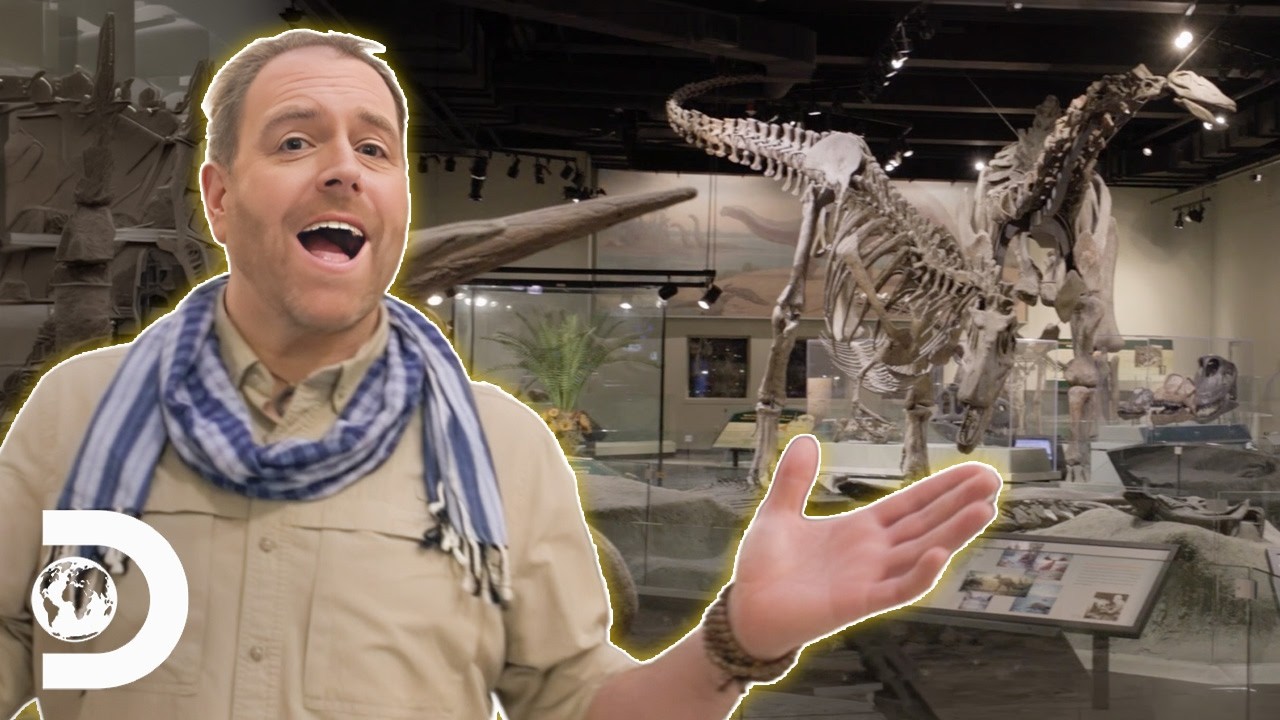
Where’s the other one? [groaning] Welcome to Chicago’s Field Museum, one of the world’s greatest and largest institutions devoted to natural history. Within these walls is the visual story of life itself, told through 40 million artifacts and specimens. Let’s go. There are dinosaur skeletons like ferocious Sue the T-Rex, the world’s coolest knife drawer, and oceans of precious gems, not to mention some flying reptiles [music] from Michael Kiteon’s leftover nightmares.
But among the crown jewels of the collection is something even more terrifying. a pair of serial killers who have been fascinating museum goers for more than a century.
Deep in the Hall of Mammals, I come face to face with the infamous man-eaters of Tsavo.
The cute and cuddly stars of the Lion King. They are not. Back in the 1890s, when the British were trying to build a train line across East Africa, these two Hannibal Lecters of the Animal Kingdom terrorized a camp of railway workers, reportedly killing and consuming a staggering 135 men. The two beasts eluded capture for nine bloody months until finally, British Colonel John Henry Patterson managed to track them down and kill them.
He then famously claimed to locate their den, a cave filled with human bones. Patterson eventually sold the lion’s pelts and skulls to the Field Museum here in Chicago, where they became a sensation. Today, these once lethal [music] cats are still shrouded in mystery. Why did the lions become man-eaters? And how did they get away with murder for so long? Also, how much of this incredible tale is even true? Starting with their legendary den, which for nearly a hundred years no one was able to rediscover. This cave full of human bones had been searched for for 100 years unsuccessfully. Yeah. And our team undertook three searches for it. And if you’re interested, we could take a hike. Am I interested to see the den of the maneaters? Yes. Very. Lead on. Julian leads me to rediscover the so-called maneaters den. But this is no trip to the zoo. To get there, we’ll need to hike through wilderness without any fences to keep us safe. People looked for this cave for a long time, right? Yeah. The photograph he took of this cave during the reign of terror was taken about 1898. So Josh, welcome to the maneaters cave. That’s it.
There’s no question. That’s it. That’s it. Josh lost for over a hundred years. And we’ve got Patterson’s iconic photo here. And look at that. Yep. Look at that. You can see how these cracks line up. Diagonal cracks [music] on the right. Yes. That little step up right there is exactly the same. And then we have this horizontal fracture on that rock above. No question.
Yep. This is the maneater’s den. And and and we’re standing right now [music] very close to where Patterson himself was standing taking that photo. Lions do not use dens. But wait, this is like a famous expression, the lion’s den. It’s not based in current observation. Current science has not documented that. What? We’ve just been to the cave from Patterson’s book, the the maneater’s den, right? But if lions weren’t living in that den, because you’ve totally shattered my worldview about lion’s dens. Yeah. How did those bones get there? They got there from hyenas scavenging the humans that were killed by these two Savo maners. This is an example of what that cave represents. Hyenas have accumulated the bones. Hyenas are smaller wolflike carnivores who can hunt on their own but are primarily scavengers that grab the remains of prey that other predators kill. Those are the the kind of bone that would have been brought back like the ones you see here, right? So, hyenas dragged those human remains in there after the lions made the kills, right? Patterson comes along, discovers the cave and just assumes this is where the lions were living. Yeah. A very reasonable thing to do. So, in terms of this mystery about, you know, the the credibility of this story, it does hold up. Patterson did find the cave as you’ve now rediscovered. It was full of bones. The one thing Patterson missed, the twist, right, is how those bones got there. Right. We know the lions killed them. Got a cave full of bones. The lion’s den.
1 plus one equals two. Yeah. Julian, good to see you, man. Welcome back to the Field Museum. Always happy to have you here. This is my uh my buddy, colleague, and godfather of this research program, Tom Noski. Awesome to meet you. Welcome to Chicago. Hey, thank you very much. Pleasure.
Tom Noski, chief preparator at the museum, is a leading expert on the Tsavo maneaters and has been studying the killings with Julian for years. So, I understand there’s new discoveries at hand here, right? So, this isn’t just an exhibit and a display. These are research specimens. And in recent days, even we’ve learned some things that we’d really like to share with you if you want to come upstairs with us. I’d love to see it. Yeah, let’s go. I see a broken tooth. Yes, a badly broken tooth. And in fact, both of these lines have [music] damaged teeth. Okay. So, they may have had some serious toothaches. So, Josh, if you had a damaged tooth like this and you were in pain, what would you choose to eat? Uh, I would probably be eating very soft foods, I take it. I would be on an applesauce, mashed potatoes diet, probably. So, in the case of lions, humans are an easier prey source. Here we have it. One possible cause for the lion’s behavior. bad teeth, perhaps hereditary, that sent them in search of soft food that wouldn’t fight back, aka us. Wow.
We are the applesauce of the animal kingdom. I think so. Definitely. So, incredible. And it’s their poor dental state that’s also responsible [music] for the team’s latest revelations. So, one of the really exciting discoveries that we [music] found is that we noticed the teeth were broken and we looked inside. All right. cuz this is hollowed out. That’s right. And uh we found kind of a hard plug of some kind in a debris. We started rooting around to remove it and and this is what we found.
After we were able to pry it out and get it out of the way, [music] we found beneath that was a core of compacted hairs. Hairs of what? Well, let me show you. Okay, sure. Based on what we found in the samples, animals are not the only thing that they ate. Let’s take a look here. Oh, and what is this? This is a human hair. This is human. This is just really astonishing because it’s probably all that remains of an individual, of a person that was killed by this lion. Yeah. Very powerful. It is very powerful. Yeah. Wow. I just cannot believe that this kind of evidence has just been sitting trapped in this tooth all this time right here in the museum. that was just sitting there kind of hidden in plain sight. How these lions were driven into this activity. I think that there was really no alternative for the lions. He was either dead or starved to death. It’s so crazy, you know, 126 years later. You’re making new discoveries here. This is a big revelation.
More discoveries to be made with the Lions of Tsavo. Incredible. Well, thank you so much for your time. I appreciate it, Tom. Thank you so much, Julian. Good to see you again. A pleasure.