Clues That Change Everything | The Curse of Oak Island
Clues That Change Everything | The Curse of Oak Island

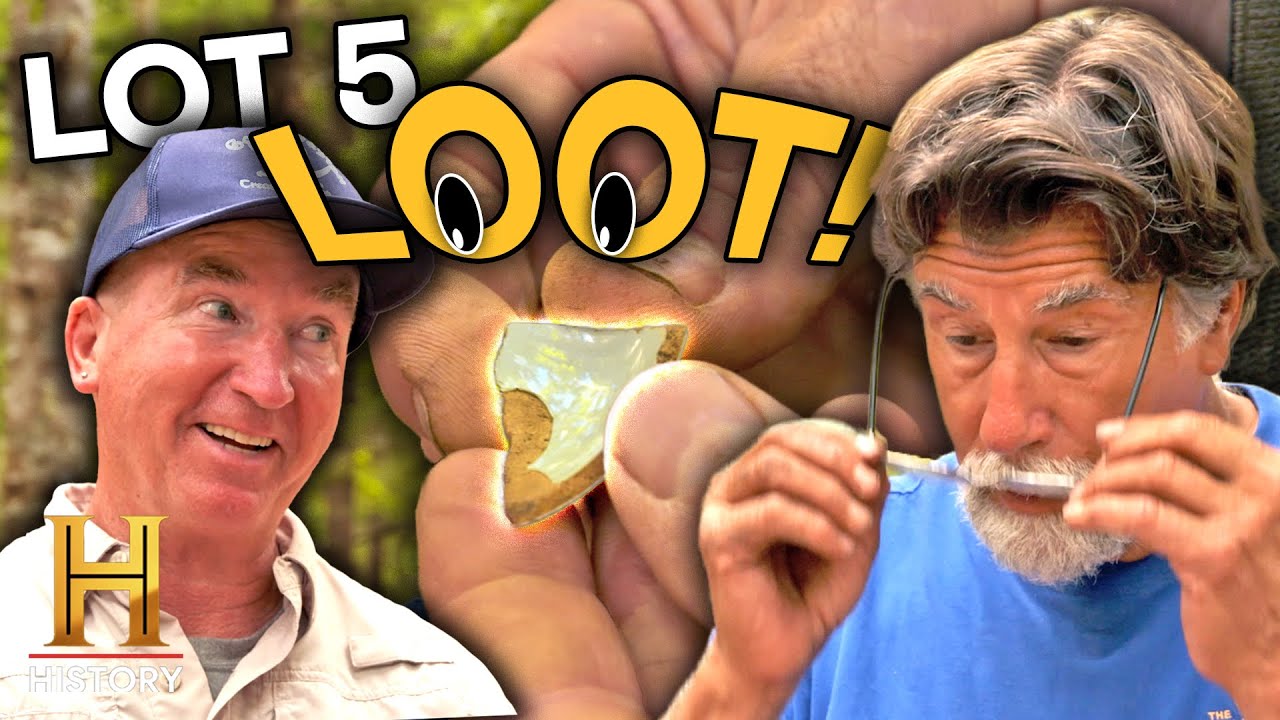
Big day, Rick. I’ve been waiting for this day for a very long time. I can’t but agree, Gary.
>> Rick Lina, metal detection expert Gary Drayton, and archaeologist Lear Nan anxiously arrive on Lock 5, located on the western side of Oak Island.
>> Larry, this [music] must be exciting for you.
>> Yes. It just bothered me to not have access to it >> to to have that part of the story missing. M >> and we’ll just add to Robert’s legacy.
>> Mhm.
>> That’s the whole point of this continuing the work that he did for many, many, many years. The lot is a mystery. Let’s let’s see what we can find.
>> Okay.
>> When we take down the sign, we realize that it is indeed our responsibility at this point to carry on Robert’s work.
>> This is in the [music] past now, mate.
to the future. Let’s get started.
>> Am I ecstatic, over the moon to be able to go dig on a lot that has eluded us?
The opportunity for answers 100%. You could equate it to being given the keys to the family car when you’re 15 or 16.
>> I didn’t think this day would ever happen.
>> It’s very, very cool. All right, let’s see what we got waiting for us here.
Right.
See what this one sounds like.
Oh, I like the sound of that.
See how wide it is? But that’s the center of it.
It’s rocky, man.
Let’s see if that did anything.
See if I can pinpoint it.
Oh, [laughter] >> survey marker. Yep. That’s a survey marker, mate. Survey says don’t dig on top of it. Okay. So, the next targets are down here, mate. And we go in further into lot five. Okie do.
Robert Young did exhaustive work on his property. He worked intimately with Fred Nolan, but he did not have the sophisticated equipment that Gary has.
So, could something of immense value still be hiding on lot five? Absolutely.
This is better, mate. We’re getting more into lot five.
Now we stand a chance of finding something good.
>> Okay, I’m going to hold you to it.
>> Okay.
>> Oh, that sounds better.
>> It does, doesn’t it?
>> Yep.
>> Just there.
Well, it’s nothing rock. It’s just too rough land to be farmland, isn’t it?
Yeah.
See if you moved it.
Yep. Yep. I think you moved it.
>> Oh, look at that. Look at the patina on that. Oh my god, my hands are shaking, mate.
>> Turn it over. That’s a cooked coin by the look of it. Hm.
>> Yeah, that’s what they did back in the day.
They cut them in half or cut little bits off [music] for change cuz that’s why they cut coins, especially ammered coins in half. And >> this [music] is freaking gorgeous, mate. And that ain’t no mil coin, mate.
>> No.
>> To me, mate, [music] this looks like an ammered coin. Obviously, it’s not a mil coin. It’s too thin.
>> And if it is ammered, mate, it goes way back.
That is old.
>> Dating back to the first millennium BC, hammered coinage was the first known method for creating metal currency in human history by placing a small blank piece of metal between two patterned surfaces known as dyes. Repeated hammering would create the stamp or assigned value on either side of the coin.
>> It’s bloody fantastic, mate. But what makes this find potentially important for the team is that the process was replaced by the invention of machines in Europe during the 15th century. This means that it could be more than 500 [music] years old.
>> This is a type of fine that you would pull up in Europe somewhere. And that’s what makes this so special.
>> That’s treasure, mate. [laughter] >> That would be Yeah.
>> Brilliant, mate. This is special. We have got to bag this. This could be very, very important. Wow. That’s a little mini piece of art that there.
Okay. Get that seal. You know where that’s going, mate. That bonafide top pocket find, mate, if ever saw one. How about getting it right back to the lab and finding out what it is.
>> I’m good with that.
>> See what the techie machines tell us.
Following their discovery on lot 5.
>> Just the people we want to see.
>> Rick and Gary arrive at the interpretive [music] center to have it analyzed by archaeologist Lair Nan and archaallurgist Emma Culligan.
>> Sometimes when we’re in here and we’re just standing and Gary and Jack or Gary and Peter come in, right, and what do we always say? Oh, they’re smiling.
[laughter] >> That’s a good sign.
>> That’s a very good sign. Especially about this item, Gary.
>> Well, we just come from lot five, mate.
And pulled up a nice top pocket find, mate. Don’t worry, it’s still in the bag. Check that out, mate. See what you think of that.
I’ve come the glasses.
Oh, it’s thin. Yeah, it looked like a button at first, but it’s not.
Nope.
Oh, don’t keep me in suspenders, mate.
What do you think?
>> It’s a cut coin.
>> That’s what I thought as well.
>> The patina’s [music] great.
>> Yeah, we couldn’t tell whether it looked like copper or silver.
>> Yeah.
>> I mean, I’ve seen a lot of coins. I’ve actually found Ame coins in England and obviously I found a lot of Spanish ra.
>> I just don’t know what I’m looking at.
>> Well, We can XRF it. That will tell us for sure what this metal is.
>> Yeah, that’s what we’re hoping you can do, mate.
>> All right, Emma. [music] >> I’m hoping it’s silver.
>> Yeah.
To gain more information on the possible origin of the coin, Emma will use [music] the X-ray fluorescent spectrometer or XRF device, which can identify the types of elements and [music] metals that make up its composition.
>> Right now, I’m just going through each peak and identifying all those elements.
>> It’s preserved like it’s silver and it looks like it’s copper.
>> Well, we will soon find out.
All right. It looks mainly copper, some tin, some iron.
That little tiny bump right there is arsenic.
>> So, is it arcynical bronze?
>> Yeah, it would be like an arcical bronze.
>> Wow. So, it’s old.
>> Yeah. Kind of like 1500s and kind of trickled out.
>> Yeah. Oh, >> by 1700s, [music] you wouldn’t have seen it whatsoever.
So, it is old.
>> Yeah.
>> We don’t see arsenic bronze past a certain date. And coins of that size are usually like 16th century pre those dates. [music] >> Yeah.
>> Yeah. Yeah. You remember the other >> our cynical copper little guy. [music] >> The cynical bronze that was found on lot seven. And this is a couple of lots over lot five. Not too far away from each other.
>> Mhm.
Two months ago, Gary and [music] Jack Begley discovered a bonder token on nearby Lot 7, which also contained our cynical bronze and was determined by coin expert Sandy Campbell to potentially predate the 16th century.
>> It’s 500 years old at least.
Is it possible that the team has just unearthed another critical puzzle piece that could help them determine the origin of the Oak Island mystery?
>> You can eliminate for the most part English and Spanish. Yeah. Right.
>> I don’t think it’s English or Spanish.
>> So that takes it into >> Yeah.
>> some pretty interesting territory.
>> We have fingerprints though that certainly suggest 1500s.
>> Mhm. So, it’s starting to craft or weave some sort of texture towards a story component, right?
>> Yeah. I like it when we can add artifacts to the thing and really strengthen our argument that there was early [music] activity here.
>> Our cynical bronze dating from as early as 1500. That’s an aha moment. That’s [music] quite remarkable. What does it mean? You know, it’s like I’m up here with Wow. Fantastic. 1,500.
Unbelievable, right? Little piece of something telling us that. And then I’m down here like, but what does it mean?
It’s all good news.
>> Bot five, lot seven are now turning up some really esoteric metals, and we need to find out why.
>> Mhm.
>> So, there’s a lot of work to do, but you and I won’t do it in here, right? So, I think we should go back out, find more.
>> Okay, mate.
>> All right.
>> Good luck, guys. Thanks. Cheers.
>> I got high hopes for today. There is a sea of flags.
>> How many How many are in there?
>> Uh 42 flags, mate.
>> Really?
>> Yeah.
>> Rick has joined up with metal detection expert Gary Drayton on lot 5 located near the middle of Oak Island.
>> Those flags to me say one thing. Let’s go find some stuff.
>> Okay, Mike, you lead. After purchasing lot 5 just [music] two weeks ago, Rick, Marty, Craig, and the team have already made a number of incredible discoveries, including tools and a musk ball that may predate the 16th century. However, [music] they also found a handforged halfcoin that could be one of the oldest finds ever [music] made on Oak Island.
Okay, here’s the first flag, mate.
>> Oh, yeah. So, good.
>> Well, we’ll see what it is. Just there, mate. That depression.
>> Having already flagged a number of metal targets earlier this morning. Gary Drayton has now received permission from archaeologist Lar Nan to dig them up.
>> I don’t want to dig too too aggressive.
That is crazy deep.
I’ll try pinpointing it and then grabbing it out then.
That is a little screamer of a signal.
There it is. Here we go.
What the heck is that? It’s thick and heavy. You know what that is? The look of it. This looks like some kind of bladelike tool. This has got all the characteristics of [music] being something really old.
>> Another potentially ancient tool. Is it possible that Gary and Rick [music] have found more evidence that people were conducting an operation on Lot 5 long before the discovery of the money pit?
>> Okay, we’ll bag it.
>> If so, [music] who was it? And what were they doing in the middle of Oak Island?
>> If it’s a tool, why is it that deep?
[music] That makes no sense.
>> Exactly. Yeah, >> perfect candidate for XRF.
>> Yeah, it’s going to be exciting finding out what it is.
>> Okay, mate. Let’s get to [music] the next flag.
>> Okay, now I’m getting another target.
Let me see if I can pinpoint [music] it.
No, we’re not far away. It’s somewhere in here. It’s in this little area here.
Yeah, deeper down.
Got it.
It’s in Miami.
>> All right.
>> What is it? It’s in here somewhere.
Is it pottery?
I think it might be.
If it’s pottery, it’s a a weird design.
It’s pottery glazed. Brilliant.
>> Oh my goodness.
>> We’ve never seen that before. No. way the hell down there.
>> Yeah, >> maybe you should look around in there for more pottery.
>> We’ll take a look.
There actually is.
>> All right.
Oh my. Bigger pieces.
>> But look how degraded it is.
>> Yeah, it is, isn’t it?
>> It’s not the same as that other piece.
>> There’s more, too.
>> Keep digging, Rick.
>> Actually, there’s quite a bit more.
>> Wow. That’s some nice pieces of pottery.
And [music] And this looks like fine stuff.
Wow. This is beautiful. I want to know right away how old that is. [music] >> Yeah.
>> Yeah. I think we should stop. Let’s get Lar over here. Yep. That’s a great idea.
>> Hey, and there’s the expert.
>> What an interesting spot.
>> Oh my heavens.
>> On lot 5 located on the western side of Oak Island. Archaeologists Larard Nan and Helen Sheldon along with Craig Tester join Rick, Marty, and Gary Drayton to inspect a number of potentially [music] important discoveries.
>> Got a lot of iron, but now we’ve got some fantastic pottery out there.
>> Yeah. Yeah.
>> And I don’t think we’ve seen this style of pottery before.
>> See what you come up with.
>> That looks like [music] polar.
There’s a series of standard designs.
You can actually date the designs.
[music] These definitely because of the decoration.
>> Okay.
>> That’s called press molded. And this sort of press molding started in 1740.
>> Well, that’s good.
>> Yeah. The type of ceramic itself is 1720.
>> Wow.
>> Early 1700. That’s pretty cool.
>> Yeah. It’s English.
>> Oh, it’s English.
>> Would the British military have this type of pottery as well?
>> Oh, yeah. Sure. It was a It was common.
Yeah.
18th century English pottery dating back more than 50 years prior to the discovery of the money pit. Because the team has previously found evidence of an 18th century British military [music] operation on Oak Island, could it offer more evidence that someone of English origin was connected to the 228-year-old [music] mystery? Or were they looking for something that had been buried here centuries earlier? So, is this type of pottery a sign of wealth or no?
>> It wasn’t the cheapest pot pottery around.
>> No, because of the decoration.
>> Yeah, it was highly decorated.
>> I mean, you’re interested in taking a further look, are >> Yeah, that’s what I thought. We stopped in order to allow you to do your work.
>> I think we can find an [music] edge with all those rocks. A small >> You need room to work.
>> A small unit’s not going to work.
[music] >> There could be actually anything down there because it I’m using a surface metal detector that’s fairly deep. Well, okay. We’ll turn this one over to the archaeologist.
>> Introducing Miriam to lot five.
>> Cool.
>> On lot five, archaeologists Leard Nett and Helen Sheldon welcome their colleague Miriam Amiro back to the island.
>> So, how are things going? [music] >> Good. She has come to assist the investigation of an area where a number of 18th [music] century British artifacts which predate the discovery of the money pit by half a century or more were discovered just one day ago.
>> So it’s looking like we have a rockfilled excavation of some sort. Yeah.
>> And all the artifacts have been fairly early like there’s no mixing of modern in with them. So that’s good.
>> Yeah. This is really interesting.
>> Yeah.
A rockfilled feature, one predating the discovery of the money pit? If so, what was its purpose? And what else might it [music] contain?
>> We’re just getting a hint right now with the artifacts and the rocks that perhaps we’re [music] into something um substantial and important.
>> Still going down. We haven’t reached the bottom yet. So maybe if Miriam could jump in there and work on that side and I’ll keep going here. Okay.
>> And then maybe Larair could screen.
>> I will screen. Yep. Yeah, sounds good.
I think I may have something here.
Let me get it out.
[snorts] We’ve never found this before. I mean, it looks blue and white, tin glazed.
>> That’s old.
>> It is old, but it’s delicate [music] stuff. We have to be really careful.
Wow.
>> Called Delftwware. I’m not sure what the starting date for that. Certainly mid700s.
So it would be English.
>> Nice.
>> Yeah. So that’s a first for the island.
We’ve never found tin glaze before. So two ceramic types have come out of here that we’ve never seen anywhere else on the island.
>> Two early ceramic types.
>> Two early ceramic types.
>> Nice. Very nice.
>> That’s really awesome. Yeah.
>> Yeah. Put that in the bag gently.
The really bizarre thing to me is that this is a lot we know nothing about. We certainly know of no occupation [music] in the 1790s and all of a sudden we’re transported back to the middle of the 1700s. So it changes the game completely as far as I’m concerned.
>> Wow. Look at this.
>> Oh.
>> Oh wow.
>> Look at that.
>> That’s not something we find every day.
>> No, it isn’t. It’s copper. It’s a copper nail cuz all the green, right? Cuz iron nails go rusty. So you get the rust deposit on them.
>> It’s pretty heavy duty. It’s really squat.
>> Yeah. Feel it’s got heft to it, too.
>> Yeah. Look at a rose head.
>> Oh, it’ be nice to clean that up. It’s hand forged.
>> Uh yeah, which kind of suggests boat building, isn’t it? [music] With copper nails >> cuz it’s resists corrosion.
>> Yeah. In salt water. Over the past decade, the Oak Island team has unearthed a number of ship related artifacts such as wood fragments and decking spikes in the swamp that have ranged from as late as the 18th century [music] to as early as the 3rd century AD.
Could this copper nail be related to those discoveries?
>> What’s going on in Lot 5? Right.
>> I’m convinced that lot five is something significant either just historically or maybe in our treasure hunt.
>> So, it makes this area extremely important and extremely interesting for us to figure out.
Wow. You can almost see a clear line right where your right foot is >> here.
>> Yeah.
>> Yeah.
>> I mean, it’s turning out to be really something else. It’s looking like some sort of [music] fairly large feature that we have going on here. Yeah.
>> Any find on lot five at this point, especially anything that again is predepositional.
Yes, it’s exceedingly interesting. I think there are some very [music] good clues as to what may have happened on Oak Island that are still underground on lot 5. And we’re nowhere near done. I think there’s more yet to be revealed.