TOP 10 Oak Island Discoveries You Weren’t Supposed to See!
TOP 10 Oak Island Discoveries You Weren’t Supposed to See!

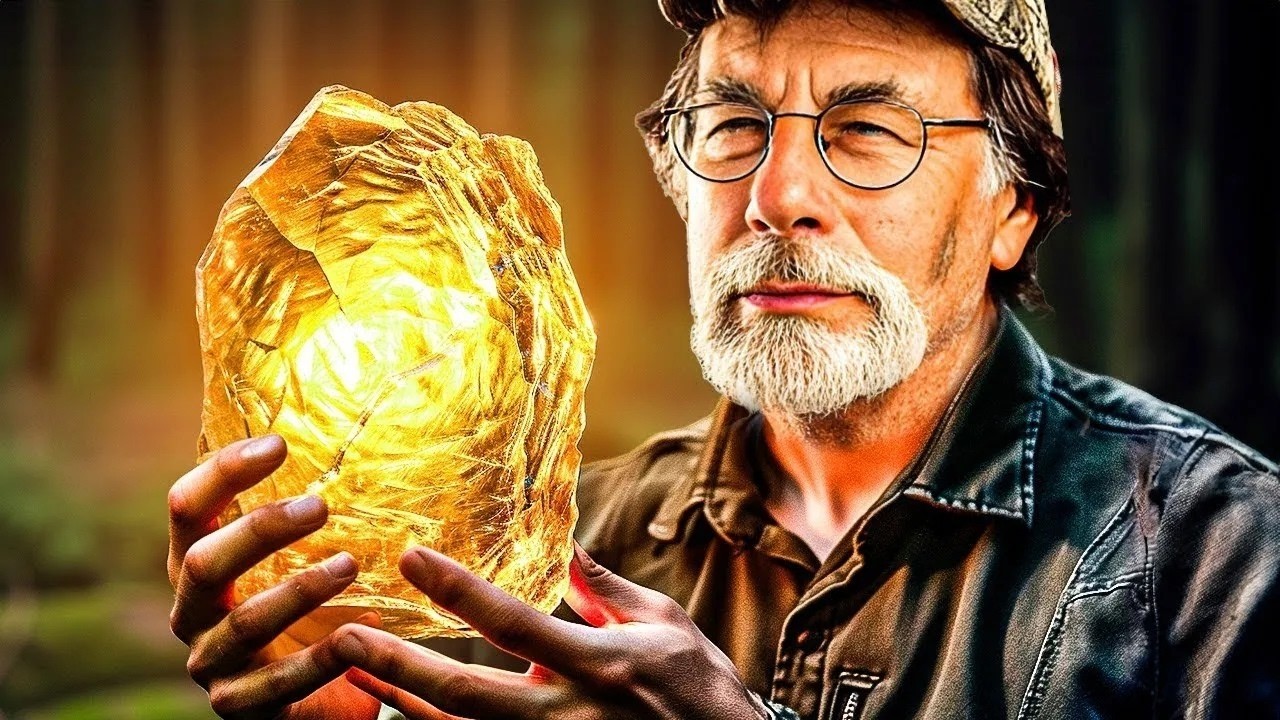
The stakes are high, and the anticipation is off the charts as we join forces with the Oak Island crew to dissect every angle of this mind-boggling find.
Yes, the legendary Rick Lagina, Tom Nolan, and their fearless team.
Brace yourselves for a jaw-dropping revelation as they unveil a surprising discovery in the uncharted territory of Lot 13, nestled just northeast of the ominous swamp.
The unknown and the quadrilateral might just be the keys to unraveling Oak Island’s deepest mysteries.




Get ready for a front-row seat to the action as we break down the details of this astonishing discovery, speculating on the potential clues that could rewrite the island’s history.
Number One: Blue Clay Layer
Tom Nolan, Rick Lagina, and their team are getting ready to dig again on Oak Island.
On Lot 13, which is close to the swamp, they are looking for important signs.
First, they examine the quadrilateral, a strange arrangement of rocks.
As they dig, they discover blue clay, similar to the clay found near the Money Pit in 1804.
This blue clay sealed the opening so that water couldn’t get in.
The team also finds burned wood in the clay, which makes them think that something important happened there.
People speculate that the same people who constructed the Money Pit and were in charge of the swamp may have also created the quadrilateral.
The team asks Dr. Ian Spooner, a geoscientist, to examine the site.
Dr. Spooner agrees that the clay layer was not formed naturally and concludes that someone intentionally altered this area.
He thinks the quadrilateral might have been used as a wall to keep water out, and the large rocks may have served as a cover.
This finding makes us wonder what kind of structure might be hidden below and what important things might be inside.
Number Two: Metal Staple
While digging, the team finds a large metal staple.
They ask Carmen Legge, a metal expert, to examine it.
The staple wasn’t used as an anchor.
Carmen says it was used to change the direction of ropes or pulleys.
It may have helped move and position large rocks.
He says the staple was handmade and may date back to the Middle Ages.
This discovery adds to the puzzle of the quadrilateral and makes it more likely that a rope-and-pulley system was used to build it.
The team talks to Emma Culligan, an archaeometallurgist, to learn more about the staple.
Emma uses an X-ray fluorescence spectrometer to analyze it and finds that it is mostly iron with other elements typical of medieval furnace technology.
This supports Carmen’s belief that the artifact is very old.
The team can’t wait to find out what’s beneath the staple and learn more about the purpose of the quadrilateral structure.
Number Three: Stone Well, Lot 26
The team plans to pump water out of a 900-year-old stone well on Lot 26 to learn more about it.
There are hints about who built the well and what important things might be inside.
The well is especially interesting because Dr. Spooner’s recent water tests showed high levels of silver, which could indicate the presence of valuable materials.
Archaeologists Jack Begley and Helen Sheldon arrive at Lot 26 to begin the investigation.
They plan to remove the water and carefully sift through the debris, placing everything on a tarp for examination.
Finding datable material in the debris would be valuable for gathering information.
To begin, they activate the pump and start clearing the well.
The team believes the well is one of the oldest man-made structures on Oak Island.
It is thought to date back to the 11th century.
The well and other features, such as a paved area in the swamp and the so-called ship’s railing, suggest there may be more discoveries waiting to be made.
Emma and Helen later sort through the material recovered from the well.
At a sorting station, they carefully inspect every item.
They find a metal object that resembles a nail but appears to have been intentionally shaped and broken.
The metal contains a high amount of sulfur, suggesting it was made in an older, lower-temperature furnace.
Because of these characteristics, Emma believes the object may date to the 1700s.
The experts decide to use a CT scanner to obtain a closer look at the artifact.
They discuss the possibility that the object predates the discovery of the Money Pit in 1795.
The metal is heavy and rusty, but remarkably well preserved for its age.
Further analysis is planned to determine its age and possible connection to the well on Lot 26.
Number Four: The Knights Templar
At the same time, a group led by Oak Island historian Charles Barkhouse and researcher Corjan Mol travels to Liverpool, Nova Scotia, to investigate stone carvings that may be connected to Oak Island.
They meet Isaac Rouse, a local landowner who believes these carvings are related to the Oak Island mystery.
Corjan is excited to see the carvings because he has encountered similar symbols in Portugal.
The carvings resemble markings associated with the Knights Templar, a medieval Christian military order.
Corjan has previously identified possible connections between Oak Island and the Knights Templar, raising the possibility that the order may have hidden treasure on the island.
The researchers examine a carving known as the Broad Arrow symbol.
The mark may have existed for centuries, perhaps dating back to the 1400s.
Traditionally, the Broad Arrow was used to indicate ownership by the British Crown.
However, the carving found near Oak Island differs from the standard version, suggesting it may have another meaning.
According to Corjan, it resembles a symbol known as the Goose Paw, which has been linked to Templar stonemasons.
During the Middle Ages, Templar builders and stonemasons used similar marks while constructing churches throughout Europe.
This discovery raises the possibility that Templar builders may have been present in the region.
The researchers also point to other carvings found on Oak Island and nearby locations, including the Overton Stone and sites near New Ross.
These symbols are believed by some researchers to share similarities with Templar markings.
The team discusses the theory that Oak Island may be connected to the Knights Templar, who existed between the 12th and 14th centuries and have long been associated with legends involving hidden treasures and sacred relics.
The experts compare these carvings with symbols found in Portugal at sites built by the Templars.
Several of those carvings closely resemble the markings discovered near Oak Island.
One symbol, known as the Goose Paw, depicts a webbed goose foot and was reportedly used by medieval builders working on religious structures throughout Europe.
The researchers believe these symbols may have served as markers indicating the presence of specific groups or builders.
The discovery of these carvings strengthens the theory that there may have been historical links between Oak Island and medieval European explorers or builders.
The team remains cautious but excited about the possibility.
They agree that further research is needed to fully understand the meaning of these symbols and whether they are truly connected to the Knights Templar.
There may be hidden codes or messages within the carvings that have yet to be deciphered.
The researchers plan to continue investigating these symbols in future expeditions.
They believe the carvings could reveal valuable information about early visitors to Nova Scotia and Oak Island.
The team understands that these findings may be crucial to solving some of Oak Island’s long-standing mysteries.
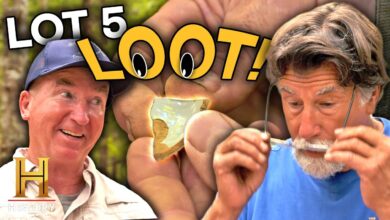
Number Five: Lead Artifact, Lot 5
The investigation continues on Lot 5, located on the western side of Oak Island.
This area has produced numerous intriguing discoveries that contribute to the search for the island’s secrets.
Among the most significant findings is a stone structure believed to date from the same period as the famous Money Pit.
This provides valuable context about human activity on the island in the past.
Old tools have also been uncovered, offering additional evidence of historical occupation and construction projects.
While carefully searching the site, Gary Drayton and Jack Begley make another remarkable discovery.
Gary, an expert metal detectorist, identifies a signal beneath the ground.
After excavation, they uncover an ornate lead artifact.
The object immediately attracts attention because of its intricate patterns and decorative design.
Upon closer inspection, the artifact bears similarities to trade tokens used in ancient Rome.
Such tokens were employed in various commercial activities and provide fascinating insights into ancient economies.
The team is intrigued by the possibility that this object could have connections to ancient cultures.
Its discovery adds yet another layer to the already complex history of Oak Island.
Number Six: The Roman Coin Theory
The discovery of the lead artifact leads to broader discussions about other ancient objects found on Oak Island.
One particularly notable example is a Roman coin reportedly discovered in the same general area.
This finding has fueled speculation about possible ancient connections to the island.
The presence of artifacts from different cultures and historical periods raises questions about who may have visited Oak Island centuries ago.
The team understands the importance of carefully documenting and analyzing every discovery.
They record detailed information about the lead artifact and compare it with known examples of ancient trade tokens.
By consulting experts and conducting further research, they hope to determine its origin, purpose, and historical significance.
The possibility that Oak Island contains artifacts from multiple civilizations only deepens the mystery.
To gain a better understanding of the object, the team brings it to the laboratory for detailed analysis.
Rick Lagina, Craig Tester, Gary Drayton, and other team members gather to inspect the artifact.
The lead object features ornate designs and two drilled holes.
Despite its detailed patterns, no obvious images or inscriptions can be identified.
The team is puzzled as to why such elaborate craftsmanship would appear on what seems to be a simple token or coin.
Recognizing the need for expert assistance, they arrange additional testing.
Scientists will examine the object’s composition, manufacturing techniques, and potential cultural significance.
Laboratory analysis provides an ideal environment for conducting these investigations.
The lack of clear symbols on the artifact only increases the mystery.
The team discusses possible explanations and considers a range of historical and cultural contexts.
As they continue their research, they remain open to multiple interpretations.
Every new discovery could bring them closer to understanding Oak Island’s past.
Number Seven: Discovery on Lot 13
On Lot 13, located more than 400 feet north of the triangle-shaped swamp, another intriguing discovery is made.
The team uncovers a group of stones that appear to hold significant meaning.
Researchers believe these stones may reveal additional secrets and potentially lead to further discoveries.
Rick Lagina, Marty Lagina, Craig Tester, Tom Nolan, and the rest of the team return to investigate the Great Quadrilateral, one of Oak Island’s most unusual features.
During the 1990s, a team member named Fred created a diagram suggesting that the arrangement of large boulders may have existed for a very long time.
The current excavation focuses on the northeastern corner of the quadrilateral.
Previous investigations in this area uncovered artifacts and unusual clay deposits that pointed to human activity.
The team believes this section may contain important clues.
As they carefully excavate the site, additional evidence of past human presence begins to emerge.
Artifacts are recovered from the ground, providing indications that people occupied or used the area long ago.
These discoveries include objects that may have served practical purposes and could help researchers better understand the site’s history.
Each artifact adds another piece to the growing puzzle surrounding Oak Island.
Number Eight: Anomalous Clay
While continuing their excavation, the team notices something unusual.
They encounter a layer of clay that appears out of place.
This unexpected clay deposit strengthens the theory that the area was intentionally altered by humans.
The team recognizes that this anomalous clay could provide valuable clues about the purpose and history of the Great Quadrilateral.
Its presence raises important questions.
Why was the clay brought here?
What purpose did it serve?
And who placed it there?
The more evidence they uncover, the more convinced the team becomes that significant human activity once took place at the site.
The discovery fuels their determination to continue investigating.
With artifacts in hand and new signs of human intervention becoming increasingly clear, the team presses forward in hopes of uncovering the truth behind the mysterious structure.
Number Nine: Charcoal Lump
As excavation continues, Gary Drayton’s expertise in metal detection once again proves valuable.
While carefully examining the walls of the excavation, he notices a small lump of charcoal embedded within the formation.
The discovery immediately captures the team’s attention.
Charcoal can provide important information about the age of a site through radiocarbon dating.
Scientists can analyze the carbon isotopes within the material to estimate when the charcoal was formed.
This information could help determine the age of the surrounding structure and provide crucial context for understanding its origins.
The significance of this discovery cannot be overstated.
If the charcoal can be accurately dated, researchers may finally establish whether the quadrilateral is ancient or more recent in origin.
The results could dramatically reshape current theories about the site’s purpose.
The charcoal also adds another layer of intrigue to the ongoing investigation.
Every new discovery seems to generate even more questions.
As the team carefully removes the charcoal sample and prepares it for testing, excitement grows.
The results could represent a major breakthrough in understanding the history of Oak Island.
Both the team and viewers eagerly await the findings that this small piece of charcoal may reveal.
Number Ten: Piece of Iron
While excavating in the clay, Billy Gerhardt and Gary Drayton uncover another fascinating object.
Hidden within the deposit is a curved piece of iron.
The artifact immediately attracts attention because of its unusual shape, weight, and appearance.
Upon closer examination, the team notes that it resembles a fragment of a cannonball or military-related object.
This discovery is particularly significant because it aligns with previous findings associated with weapons and musket balls recovered on Oak Island.
Together, these artifacts strengthen the possibility that military activity may have occurred in the area.
Earlier discoveries had already suggested the presence of armed groups or defensive operations.
The curved iron fragment adds further support to that theory.
Its size, weight, and shape provide valuable clues about its possible purpose.
The team wonders whether the object could be connected to historical conflicts, defensive structures, or transportation of military equipment.
To answer these questions, they plan to conduct additional testing and consult with experts.
Researchers will compare the artifact with known historical examples and examine records that may help identify its origin.
Their goal is to determine how the object fits into Oak Island’s larger historical narrative.
The discoveries of weapons, musket balls, and now the curved iron fragment continue to build an intriguing picture of the island’s past.
Each new find contributes another piece to the puzzle.
As the investigation moves forward, the team remains open to new possibilities and eager to learn more.
The significance of the iron fragment cannot be overlooked.
It raises important questions about who was present on Oak Island and what activities took place there centuries ago.
The team promises to continue investigating and to share any new information that emerges.
If you’re fascinated by mysteries, history, and treasure hunts, don’t forget to subscribe to our channel for more captivating content.
Hit that subscribe button and stay tuned for our next exciting adventure.