Picking the Big Apple: Tech Treasures in NYC | American Pickers
Picking the Big Apple: Tech Treasures in NYC | American Pickers

We’re going to meet Dick and his wife Jan. Dick was a pioneer in selling and repairing computers with his business techsve and he also spent 30 years collecting antiques that are related to technology.
>> Hey. Hey.
>> Hi.
>> How you doing? You Jan?
>> I am Jan.
>> I’m Mike. We meet Janet. Super sweet lady. She takes us inside.
>> I’ll introduce you to Dick, my husband, who managed to collect all this stuff.
This guy’s collection is supposed to be the motherload of early 20th century technology, not just computers.
Apparently, he’s got everything.
>> There’s my husband, Dick.
>> Hey. Hey.
>> In 30 years, Dick has decorated every nook and cranny of TechServe with 20th century technology leading up to the Apple computer. We were the biggest independent Apple computer dealer in America.
>> Really?
>> We were the Apple store before there was an Apple store. No, I’ll be darn.
>> He started out fixing TVs for all the people in his neighborhood when he was a kid.
>> So, you watched him go through all this?
>> Oh, well, it was in my apartment. I would come home from work. There’d be guys walking back and forth using my bathroom.
>> And before you know it, we had a little side business going of fixing Macintosh computers. And it just grew by itself.
We expanded year after year until we got this space, which is enormous space.
>> Looks big.
>> And uh our lease is up.
>> Okay. And the world has changed. These change has been pretty profound. First of all, computers, they become appliances, very reliable appliances.
They do everything that most people want right off the bat, and they keep doing it. Couple that with the fact there are six Apple stores in walking distance of us now.
>> So, you guys are closing after all these years.
>> Yeah.
>> Uh yeah, we’re keeping our corporate division and small business uh division, but uh the store not a good economic model for us anymore. I can’t tell you how many people have been coming by the store since they’ve heard it was going to close. Former employees who said, “Thank you for giving a clueless 17-year-old his first chance.” >> Yeah.
>> Techer became a really great hangout.
Kids would come every day after school and they’d get a Coke from the vintage Coke machine. People would come to just hang out and people watch. We’ve had marriages and babies come out of Tech Serve. Working in a small business is like living in a small town. Everybody knows each other and you’re all grown old together. The hardest part about closing the retail side of his business is saying goodbye to his employees.
>> It’s sad to to close this chapter. It’s sad. Plus, Dick has always been an insane collector of everything.
>> So, you’ve got a lot of stuff that you’ve collected.
>> Let’s go see.
>> Okay. Yeah.
>> Frankie and I have picked chicken coops, pig sheds, barns, attics. I’m going to take you down to Dick’s man cave.
>> All right. This is kind of nice. There’s no bat crap, pig crap, raccoon crap, possum crap, and uh vulture crap, um mouse poop. It’s just easy peasy.
There’s just none of that. Whoa, Frank.
Look at this.
>> Wa. So, he takes us downstairs to his conference room. It’s like he’s converted into his own personal museum.
>> I love this one. Look at this one. The orange one. You picked that up. The dowser. That’s an Ericson phone.
>> Design and technology have always gone hand in hand. This is an Ericson phone.
Collectors call them Cobra phones.
What’s the value of that?
>> $85.
>> $85.
>> 60.
>> 75 >> 70.
>> All right.
>> It’s a good little piece.
>> First sale.
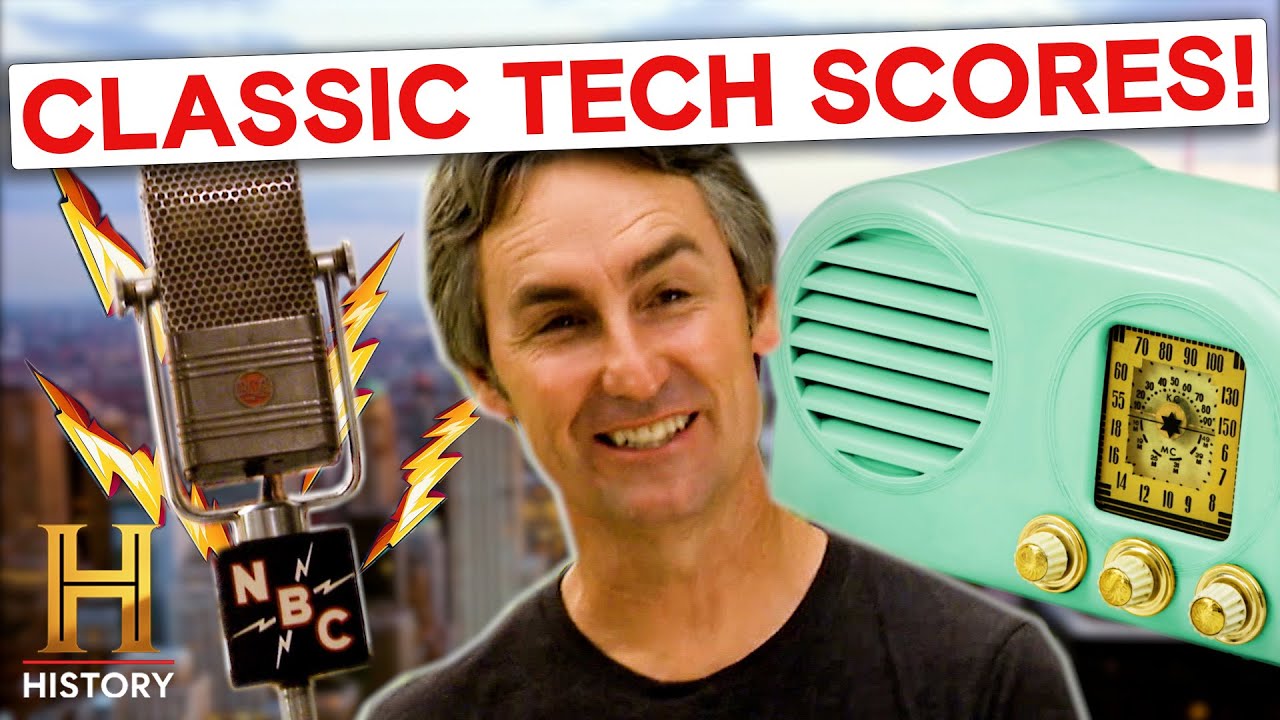
>> All right. Now, I got to ask you. I’m kind of a microphone guy. This thing grabbed me as soon as I walked in the door.
>> The NBC.
>> That’s probably the most famous microphone in in graphic art.
>> Pretty substantial piece.
>> Yeah. In our history, in our photographic history, you see so many images of those classic microphones.
>> Sinatra.
>> Yeah.
>> This is the ultimate. This is it.
>> That’s the mic.
>> The mic.
>> Check this out. Look, >> it’s from NBC.
>> Oh, it says NBC on it. Okay.
>> So, it’s got some history.
>> RCA.
>> And it’s got this groovy record that could be yours.
>> I love that record. I think it’s getting down.
>> I thought it was David Boy for a second.
>> Pretty groovy. They’re ribbon mics. What What does that mean? There’s a ribbon suspended between a magnet and when the metal ribbon vibrates from sound, it produces an electric current in a coil.
Ribbon microphones. To this day, people collect them not just for their aesthetic beauty, but for their sound.
That ribbon had a very warm sound, particularly for vocals. Uh sound that you really can’t replicate. All the microphones today are like condenser microphones.
>> What are you thinking on this? Or are any of these something that you would sell?
>> Uh yeah, this goes anywhere from 17 to 4,000. So, how about like these two?
Get the NBC’s together.
>> Um, let’s put the little brother behind.
>> We had 700 on this one.
>> I’d like two for this.
>> 2K for that.
>> Yeah.
>> So, how about 2500 for the two?
>> I’ve never bought any microphones of this caliber because the opportunity has never presented itself. But being around musicians in Asheville, having a store there now, you know, I can appreciate stuff like this. What do you Let me ask you this. What do you value this at?
You got the record, too.
>> The record, too.
>> The record comes into the deal, too.
>> Seeing all the stuff flying by.
>> This is a beautiful record.
>> I’m shaking your hand.
>> I’m singing.
>> Since you’re throwing everything in, I’m shaking your hand. These RCA mics from the 1930s to the 1940s are very iconic microphones. When a collector is looking at a microphone like this, they’re not just thinking about the great moments in music. They’re thinking about the incredible moments in history. Tell me about this. Tell me about this piece.
This is uh a one-of-a-kind homemade radio. In in the early days of radio, people uh very often made their own radio from from schematics. This is an example of somebody’s craftsmanship. I think it’s a piece of art. Now, kids are into the, you know, coding and the computer. But back then, people actually built physical things themselves. People would get directions to how to build a radio. They collect these parts and then think, now how would I put this together to express myself? I think somebody wanted to create something beautiful and they did. That radio is I think is a very personal expression. Even the wires you you made sure the wires are meticulously bent. So it’s a it’s a treat to the eye. They loved it so much they built it in a glass case which I think is is just great.
>> It’s showing off their craftsmanship.
>> That’s what it is. Yeah.
>> Have you ever fired it up?
>> No. If you want a radio that works, there’s a store down the block called Radio Shack. No, I’m not I’m not an advocate of uh making things uh work.
>> That’s what you do.
>> No, I’m sorry. Making antiques making antiques work because when you do it, you alter them. You made you’ve modernized them. You’re putting in new components. The whole idea to me of something that’s antique is that history.
>> So, what do you value that at?
>> 850.
>> Yeah.
>> It’s the most beautiful radio I own.
>> He’s as proud of it as the guy that built it. That’s a price that I’m going to have to think about.
>> Tell me about this. Where’d you get this at? Uh, I have no idea when I bought it what it was. That’s why I love buying things that I don’t know what they are.
>> Sometimes Dick would buy something and he’s like, I don’t know what this does.
>> Like a little mechanical doit. That’s my favorite thing. I’ll get that and I’ll try and figure out and eventually I’ll get there.
>> It’s impressive.
>> It’s a steam motor.
>> What do you got to have for it?
>> 200.
>> 200. And you’re at 850 on that.
>> Why don’t you give him a deal on the two pieces to get >> Let me stand over by you. I’ll trying to move on these things.
>> How about uh 950? That’s giving you eight on this and 100 and a half on that.
>> Yes. Sold.
>> You got it.
>> All right.
Now, they’re taking us around the block to their apartment to see the rest of their collection.
>> Well, welcome to our happy home.
>> This is the first time I’ve ever been in a New York City apartment.
>> They’re all like that.
>> They’re all this big.
>> This is pretty big. Enjoy it.
>> This is pretty spacious.
>> No, they are not this big. Usually >> the first thing you notice when you walk into this loft is a wall of radios.
>> We met at a radio station originally, WBAI. We worked there.
>> So that started the radio collection.
>> That started our radio inspiration.
>> So the three radios that stand out here the most are the Cadelin radios.
>> Catadelin is the material that it’s made out of. A lot of people confuse Bolyte and Catalyn. Bely came out in the early 1900s and it wasn’t until the late 1920s that Catalin came out. Now, Catalin offered a lot more colors. The process was more refined. And what basically killed Cadelin was Lucite. The best one you’ve got, the one with the white knobs. That Catalin, >> I think the retail on that’s like 600.
When you look at these Catalin radios now, you’re blown away by the colors and the shapes. But imagine looking at them back then. They were state-of-the-art.
They were futuristic. The red, the blues, the greens, the butterscotch. You can see how the color here >> sure >> is much brighter than here.
>> It’s pretty though, isn’t it?
>> It’s pretty the way it is. So, it’s 600 bucks retail on this. Would you do 450?
That leaves me a little bit of room on that.
>> Yeah. Okay, let’s do that.
>> Today, the centerpiece of anyone’s home is this massive big screen TV, but back then it was a Cadlin radio.
>> Well, this was so >> nice to meet you. So nice to meet you.
>> Good luck with the move >> and the downsizing. you know, they’ve got a big job ahead of them. You know, they’re going to have a lot of stuff to move out of there.
>> Yeah. Good luck.
>> This is going to be another chapter in their life.
Um, you know, I’m sad about closing the store, and I’m sure I’ll miss it, but I guess nothing lasts forever. Things change, times change, and I’ll change.
>> See you later.
>> Bye.
>> And I think we’ve been a great part of our community.
>> I’m very proud of that.
>> That was fun. That’s it. Um