Skinwalker Ranch Archaeologist, Chris Roberts: Mt. Wilson Ranch, Xenoarchaeology, and MORE!
Skinwalker Ranch Archaeologist, Chris Roberts: Mt. Wilson Ranch, Xenoarchaeology, and MORE!

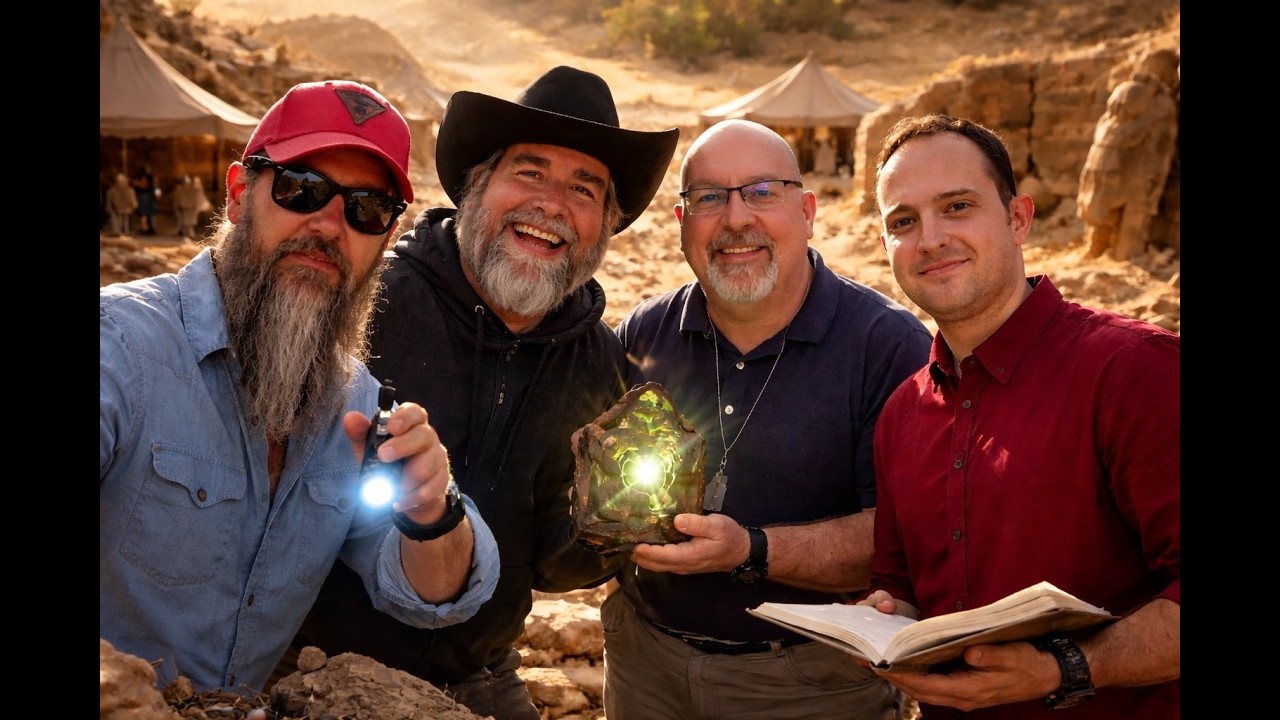
Welcome everybody to the soul of the unexplained. I am your host Jim Kellgard. That’s right, Jim with two M’s. Why? Well, that’s my mama dropped me on my head a couple times. So, I guess that kind of makes sense. We won’t talk about me being a Raiders fan because that’s that’s just further confirmation of the fact that I’m not quite right in the head. But that notwithstanding, let me welcome uh my awesome uh group of co-hosts here.
Starting with the man, the myth, the legend, Mr. John Stratton. How are you, Johnny?
>> I’m doing pretty good today. How’s everybody else doing?
>> Doing fantastic. Doing fantastic. And of course, I got to give a big shout out to my very dear friend, Mr. John Nyberger, the greatest bass player to ever grace the stage at Phamicon. John, how are you, sir?
>> Doing well. Doing well. Happy to be here.
>> Good. Good. Are you adjusting to uh not having the Broncos to to watch on TV anymore?
>> Well, there’s still all the offseason news now, so you know. Ah, >> right on.
>> Now everyone’s talking about draft stuff.
>> Usually when football makes the news, it’s not good.
>> Yep. Absolutely. So, of course, we want to welcome our guest of honor today, somebody who we’re really excited to be uh joining us here on the Soul of the Unexplained. For the very first time ever, the uh I I guess we could call him the man, the myth, the legend as well, because it would apply to some of the work that he does. That would be Mr.
Chris Roberts, who of course is the archaeologist that uh splits his time between not just Skinwalker Ranch, but also Mount Wilson Ranch, which uh we’ll have to talk a little bit about that as well. But Chris, welcome. We are so happy to have you here. How are you doing, buddy?
>> Oh, thank you. I’m I’m doing good. It’s good to see you guys. So, yeah, enjoying the winter and hanging out here.
>> Right on.
>> Up in the basin.
>> Are you guys >> enjoying the winter?
>> Yeah. you guys getting hit with snow up there.
>> Are we getting hit with snow? Uh no, actually it is uh it was 58 degrees yesterday >> and it’s pushing that today. Uh we’ve had a very mild winter. Uh it’s probably going to be a drought again. Um this summer and we’ve had very little snow uh very little freezing and it is it is like better than spring right now versus the Northeast. It’s really nice out here right now. We could be getting a lot of work done if we if we wanted to.
>> Sure. Sure. It’s kind of kind of the same way here in uh of course where I’m at on the uh the Wasach front here in between Salt Lake City and whatnot. It’s been I think it almost hit 60 yesterday and like you were saying I think it’s supposed to get close to that today here in in uh the Salt Lake area where I’m at.
But, uh, Chris, of course, we first got to, uh, to meet you, uh, this last week, this last year at Phenomicon in 2025, and our subscribers and viewers got to see you for the first time on The Secret of Skinwalker Ranch during season 6 of the docu series. So, I guess to start off, Chris, just tell us a little bit about uh what it is you do and how how did you come to get uh involved in archaeology?
>> Uh, well, uh, gosh, that goes way back.
Um, I decided I want to be an archae I wanted to be an archaeologist in um, high school. So, I realized I needed to have some type of profession and I loved roaming the hills and looking at uh, looking for and looking at old things and just exploring. And that was what I just kind of went with when it was time to decide. Uh, that’s what I wanted to do. I mean, of course, I loved Indiana Jones, who doesn’t, and all the adventure shows in that realm. Um but that was what I really wanted to do and it was the aspect of actually protecting the sites is what I wanted to do. Uh when I realized what you could go into with cultural resource management and how you can do uh energy and infrastructure projects and then at the same time you’re protecting the resources. So, I looked at it um as an aspect where I could be on the inside versus the outside um and help protect the sites from the inside when we build something. And I so I went to college to do that. Went to uh UCSB in Santa Barbara, California. Um I’m originally from California, but I was up here in the basin when I decided that I I we moved up here in about 78. Um 1978 my dad moved us up to Vernal. And so it was these hills out here where Skinwalker Ranch is where I got my love for history and prehistory and then uh went back down to California for college and then came back up here after working down there for a while um after college in the uh 90s early 2000s.
then moved back up here, roaming these hills around the UA Basin um for like oil and gas development and you know went to uh a graduate school at Utah State and then continued on with archaeology as well as other uh environmental compliance work that where I deal with all kind of resources, cultural resources, paleontology, biology, but just general compliance on projects where we’re protecting everything in the environment. that you’re going to deal with in developments um and and applying that so that we can get infrastructure built or energy projects built while also protecting the resources.
>> Very cool. So, did when you were coming up through college, did you get to go on any uh exciting digs like like out in Vernal or that area for like you mentioned paleontology? Any any dinosaur digs or anything like that that you ever got to go on?
>> Uh not not dinosaur stuff. I kept mine all in the realm of archaeology and a lot of it was down in California. Uh, but I did get to do some work out on the Channel Islands, um, Catalina particularly, um, as well as, uh, Anacappa Island, and then I did a lot of work right in the Santa Barbara area where we’re dealing with Spanish colonial work at the Santa Barbara Prescidio, which is right in the heart of downtown Santa Barbara. So, I had a pretty good thing going there. Uh, where you’re dealing with prehistoric, protohistoric, historic period. Uh, everything was coming into there in the in the 1800s. It was very interesting time to learn actually historic archaeology, not just prehistoric. Um, and so it was really really cool to look at that and I kind of became a lab rat um in analysis of historic artifacts, prehistoric artifacts. I did a lot of lab work um rather than walking the field looking for the sites um but a lot of lab work at at that time. But those are kind of my, you know, my favorite times, probably going out on the islands and finding things out there and and documenting those things. And then in in the Utah area, I’ve covered a lot of the reservation. Uh we had giant mega um archaeological crews out surveying for all the different um oil and gas development they had out there in the early 2000s. So, I’ve seen a ton of it out there and a lot of really awesome sites, just middle of nowhere. Nobody even knows about them. Um just beautiful stuff whether it’s uh historic ute or prehistoric or archaic or paleo. It’s a lot of beautiful stuff out there.
>> Fantastic. It’s it I I love the winter basin is one of my favorite places to to be. I I’ve lived in Utah now for about uh let’s see 30 31 some odd years now. I think it’s crazy. But but uh yeah, there’s so so much uh great history that’s out there. a lot of the ancient cultures you can still of course you got things like Makakei Ranch that are out there uh the petetroglyphs there’s all kinds of great petetroglyphs and stuff and then of course we we mentioned the the dinosaur stuff with with Vernal and and whatnot out there but um one thing I was kind of curious about in reading your your bio with uh uh for your appearance upcoming appearance at Phenomon 2026 it mentions xenobiology I’d never heard that term before what uh what exactly is xenobiology I mean I can Sure. Zeno kind of would mean like foreign or something.
>> Well, xenoarchchaeology.
>> Yeah.
>> So, not not xenobiology, >> uh, but xeno archaeology. So, what that is essentially is archaeology of the strange. Zeno means strange.
>> Oh, okay. So, what we’re dealing with, and this goes back to actually what we’re dealing with at Skinwalker Ranch, um where we’re finding um the ceramic material and other materials coming out of the mesa that are in an area that they shouldn’t be in or they shouldn’t be hundreds of feet in and below, you know, 70 feet down, hundreds of feet into the mesa. They should that material shouldn’t be there. And then it’s coming back as an anomalous material that uh something I can do generally which I was talking about is I can identify ceramics pretty much on site. I can tell you what it is, who who made it. Um and then we can get analysis from there. Um but this stuff, you know, the stuff that we’ve described in in season 6 is is very hard to categorize um and and doesn’t fit just anything. And when we had season six, we were analyzing it and looking at it and trying to put it into a, you know, a box, which is what you do in archaeology, right? Everybody’s written a paper on a different kind of ceramics, marbles, beads, whatever it is, right?
You you’ve got somebody’s made it. It’s been documented either during history when they manufactured it during the written record when they documenting these things or after the fact when you look at prehistoric things when it’s all has a place to put on the shelf call it what it is what time period it comes from where it comes from in the world but what we’re finding with this where it’s located it it’s strangely located at a depth it shouldn’t be um and again we’re not in the mesa yet with with only the drilling going on which everyone saw in season 6 where we we haven’t found it in situ which is in place right that’s when you that’s really how you find out what an archaeological site holds is is how everything is laid out on the ground and that’s what is missing from a lot of different sites where people claim really incredible things where but there’s prevenience uh which is where you find something u not necessarily provenance which is where something was made like art like some art from Italy or something but provenance is where you find it and you find it in place in situ. So we haven’t got to that point.
We only have the depth under the mesa and into the mesa for these artifacts at this time but they’re coming up very anomalous. So it’s essentially xenoarchchaeology is the study is the archaeology of the strange where you’ve got these things that um you’ve got the label that people have given things of uh out ofplace parts right which you guys have heard of which has a stigma that goes along with it. Well, this is just more of an honest way to look at it where you apply archaeology to these things and and these different artifacts, whether it is people that have have found these different artifacts go, well, this shouldn’t be here. It’s dating to 2 million years ago, this iron thing. But, well, let’s look at that. And that’s essentially xenoarchchaeology, the study of the strange. But also, you have within it, um, which I gave a presentation on the ship about this. You might have stuff that is so old it it doesn’t it doesn’t have much more than a signal or a very small remnant that you can’t truly identify to the cultures that we know. Or it might be coming across like what we’re finding at Skinmarker Ranch with an electromagnetic signal. All right. And and when you find it in place, it may still have that signal, but this material that we’ve shown has is strangely magnetic. It has other properties that I’m not able to divulge at this time. Um, and as you saw under the SEM, it may have some properties there that are very very strange that it should not be doing. And so >> basically when we were at our final meeting um and um some of the folks we were talking to that were talking about ceno archaeology and it was like that’s actually what you’re doing. You’re not just doing archaeology, which is kind of the known archaeology realm of what you do where we have prehistoric, we have historic. We’re dealing with something that could be either uh very old or strangely out of place or something.
When we deal with all the different hypotheses you have about Skinwalker Ranch, about what could be there. So, it just puts it in a different category where you might apply different tools to it and and different sciences to it that you don’t do at a normal archaeological site. and you look for different things because generally you wouldn’t get into um excuse me, I got to turn around for a second. You don’t get into unless you’re dealing with a nuclear site, you’re not going to do a prehistoric archaeological dig and break these out, right?
>> Right.
>> Unless there’s risk of uranium, uh you know, you’re not going to break out those kind of tools. And there’s other tools you could apply. So we want to apply these at every level because you might be finding something that is very ancient. So it kind of just allows for a little broader range of what you might be dealing with and the questions that everybody asks. And they can this can go back to the uh such as the like the archaeological wars that Graham Hancock is in um and Flint Dibble is in, you know, that they show on Joe Rogan where you’re dealing with this this established, you know, academic archaeology versus people that are asking other questions. Well, this is a realm that you can actually try to apply and answer those questions without a cut off and without it being a conspiracy that um you know they’re covering things up. You just look at it. So, it it broadens it to where you can include other um other tests and other data into what you’re looking at. So, >> that is essentially absolutely fascinating.
>> Yeah, it’s re it’s really interesting.
Um, I’m getting some crazy feedback right now.
>> Yeah, me too.
>> Is that me?
>> Sorry, my microphone’s been acting really weird. I don’t know why.
>> I keep muting myself and anytime I unmute myself, I get technical difficulties.
>> Oh, goodness. I I was going to ask something about that. Sorry. Um, >> yeah, go ahead, Johnny. I I would kind of describe xenoarchchaeology as being more of like a novel science, something that’s still new, developing, and really not quite a settled version of science yet. Do you think?
>> Let me tell you, it’s not something that you’ll study in a college.
>> Absolutely.
>> Yeah. Generally speaking, archaeology, there’s not a class on it. It’s what you would apply if you went to a supposed um craft site. If you went to a crash site, you would not be applying just archaeology. You might have an archaeologist there, but you need to be looking for more than just the material that you’re familiar with. Um because it it it could be something that you don’t recognize actually. you know, they they’ve talked about these crash lights in different in different books, uh, where they, you know, they end up littering them with aluminum tin cans, you know, after they leave in order to disguise in case they left anything else behind. And, uh, one thing with this material that we’ve pulled out, it is very reminiscent of actually, uh, the sandstone and the mudstone and silt stone that’s come out of the mesa. In fact, all the other guys wouldn’t have recognized it. They would have thought it was just a rock until you actually know what you’re looking at when you’re looking at something manufactured that nature can’t make. Um, and then that’s when all the tests came in that are so different than anything natural. Um, but that’s where you just so you apply that across the board. And what I want to do and and applying this at both Mount Wilson Ranch as well as Skinwalker Ranch, look for these different anomalous things and and be open to the u questioning and the hypothesis that there could be something that we don’t necessarily know about or understand or know the nature of, but it is something that’s not natural.
So >> I think you’re a trailblazer. You’re a trailblazer and didn’t even know it. I’m reading a sci-fi series right now set thousands many thousands of years in the future and they have xenoarchchaeologists as a major part of the story.
>> Do they?
>> And I I don’t think I’d ever heard that term and then when it came up earlier like holy crap that’s that’s an important part of this series.
>> Yeah. People have tried to also, you know, there there was a paper written a long time ago uh that, you know, you could call it uh archaeology when you go to Mars or something like that, but that would more or less you would be a exocheologist because that’s off our planet. Zeno is strange to us here.
>> Going to Mars and being an archaeologist, you’re just an archaeologist looking at Martian things or for Martian things, you know, not human things. Uh xenoarchchaeology is strange on the earth. Um, and yeah, it is it’s a it’s a new thing. People don’t talk about it. It’s not going to be on anybody’s resume. And I think the only place that where it’s being practices at Skinwalker Ranch.
>> Yeah.
>> Where we’re looking it’s not on resumes yet.
>> Not yet. Yeah. Yeah. But we’re we’re looking for the prehistoric and the historic, which is which is the reason I went to Skinwalker Ranch, right? To preserve their sites, to let them know what they had. Again, it’s Brandon’s ranch and and he could he could do what he wants with it. He wants to preserve everything that he has there. So, I was doing that for him to give him his inventory so he knows what to work around to avoid and also inform the story, right? Because it tells the history and the prehistory of that area. And man, it is rich. It is really, really rich. Really intriguing.
Uh there’s so many story lines that haven’t been talked about yet. Um >> yeah. So >> would you consider crash reconstruction to be really kind of part of archaeology in this sense?
>> A crash like a crash site reconstruction meaning >> like aviation crash, mechanical crashes.
Would that be something that the tools of that research would apply? one very interesting thing that I just I just thought of um years ago I was sent a sample. So I have um um I think my my uh call name on Instagram or something is Pearl Snap Chris and that’s Pearl Snaps as in Pearl Snap shirts, right? So that goes back to another story where I promote Americana and and alternative country music and also sell vintage Pearl Snap shirts. But yeah, >> because of that. Yeah. So because of that, >> Isbell, man.
>> Oh yeah, he’s fantastic. Drive by Truckers. Um, >> you know it.
>> But so early on in that, that was in the early 2000 when I started doing that and I have thousands of pearl snap shirts.
But I had someone send me a sample because I’m an archaeologist and do historic archaeology and also know the history of fasteners and snaps. They sent me what they found that uh may have actually been Ameilia Heheart’s crash site snaps from her jacket or shirt. And I identified what they were, sent them back to them, and that was for the Tigar um project uh that they’re doing. And and that was pretty fascinating to where uh it is a it is an aerial crash site from the 30s, you know. Um, so very interesting that that could that could be a real thing. And then you go ahead and apply it to uh let’s say Roswell or Aztec or uh whatever other site we want to say something may have crashed at in the past, then that’s archaeology. That’s generally historic archaeology. However, you’re dealing with materials possibly with materials that like arts parts that well, no one’s seen them before. You can’t say if that is like they’ve tried to say, well, that might be a byproduct or it might be a fuel rather than part of the hole. So, you don’t know what you’re dealing with, whether it’s the hub caps or the steering wheel. Um, you don’t know how to identify that. And so, this is just part of well, how do you identify something? And this is what this comes from archaeology. How do I identify something that isn’t natural?
And that’s that’s what you do. And that’s what you really look for when you’re just identifying um flake stone or ground stone. You look at that stone. And I could be given a hundred rocks from people that aren’t trained in how to see it. And those are um well, we call them AFRs, which is just another effing rock. Um, and what it is is a rock that looks like it might have been flaked or it could have been flaked in the road, mechanically flaked, but not by a human. Or it could have been ground in a river over millions of years and it’s still got rind on it. But you look for certain signs that tells you it was touched by a human, meaning it was modified by a human. And those are the things you look for where you can prove that it’s well this is it’s still natural even though it might resemble an artifact or was it actually touched by a human? But right now applying that in xenoarchchaeology well we don’t know who touched what we’re even even looking at who made it. And so it has to be very open to again looking at all kinds of different materials. But if you can peg it as natural, right? If you can find any signs on it that this is natural, this is natural, this is natural, um then it then it takes it out of the realm of being manufactured. But if you’re going down that path and checking all those boxes where this is unnatural, this is unnatural. Well, this could occur naturally. However, all these other boxes are checked which take it out of that realm. And then you’ve got to keep looking at it to where we’re not just going, “Nope, it’s natural.
I’ve never seen it before.” And throw it aside. And that you would apply at a crash site like Roswell or anywhere else or down in Brazil or wherever it is wherever there might be any of this these materials still left. Then you apply not only archaeology but xenoarchchaeology to that to look for things because you’re also not just looking for um actual material but signals of the material or of something having been there because you it may have been a long time ago. You know, we look at >> you look at our history as humans and how far back it goes into the history of the earth and we’re pretty egocentric to think that well they’re all just coming here now, right? When you got to go well back in prehistory um you know maybe these things when you talk about biblical times and biblical sightings of of different things. Well maybe those were um stories about those happening.
But then let’s go back to a time when there were no one. There was no one here to write that down or to draw it on the rock wall. And that’s billions of years that this earth was here. So you might be looking at something that’s not just in prehistoric time when you get back, which is, you know, wonderful history of of prehistoric and paleoindians and all of that in North America is fantastic for our history. But when you go with geological history and you’re going back as the time of the dinosaurs or even further um that you’ve got to look at things really really closely uh to find any any resemblance of any of that. So right on. So, to kind of segue that into uh Skinwalker Ranch, Johnny, I believe you uh you you you wanted to kind of kick off the the Skinwalker Ranch uh rabbit hole here. So, uh Johnny, I’ll turn it over to you to get that started.
>> Always throwing me on the spot. Yeah.
Yes, sir.
>> Well, as as we’re getting into Skinwalker Ranch, you can’t get into Skinwalker Ranch without talking about our, you know, the first time going to Skinwalker Ranch. So, can you tell us a little bit about what that was like for you and what that impact may have been?
Uh yeah. So let’s see. So I uh I met Tom and Candace. Uh this was a story um where we met at a nearby um like secondhand store in Fort Duchain. And by chance I was coming there to help uh my wife had purchased something. and Candace was working there that day and and um I was going there to help load it up into my trailer cuz it was a big a big armwire type piece and then Tom came there to also help and then he just happened to notice um my hat which was oh this hat right here uh the band Lucero I was wearing that uh great alternative country band you should listen to um and he was like Lucero I love them and I was like I love it if somebody recognizes that so we can talk music. So we started talking a little bit of music and then it went from there to that I do archaeology and that Candace does anthropology and archaeology and then they asked us um you know are you guys you guys like uh um you okay with the supernatural or anything like that you know um and we’re like yeah I kind of like it. Um why? And they said, “Well, we, you know, we’re caretakers at this uh, you know, this ranch. You ever heard of it?” You know, Skinwalker Ranch. And I was like, “Yeah, I’ve heard of it. I heard of it.” You know, it had been years since I had thought about it. And then, uh, right behind me was the book on the bookshelf, The Hunt for the Skinwalker, which I had read that previous, this was, you know, over 10 years prior, probably read that book.
Um, and actually went, you know, the outskirts of the ranch. But so they they invited us to dinner. And it ended up taking a few months because I worked a lot of times on the road to get together. Um, but it was probably six or eight months later that they invited us, Heidi, um, my wife and myself to go to dinner there. And so we were talking about it and, you know, when when we were at this at the store, uh, junk in the trunk, um, I asked them, I said, “Does anybody been doing, you know, who’s doing your archaeology there?” And Candace said, “Nobody.” you know, we we should be doing it. And again, I think this is during uh season 3, you know, and she’d been doing what she could there. And I said, I’ll do it.
You know, it’s private land. So, given that, if you guys understand the laws, they don’t have to do anything. They don’t have to protect any sites. They don’t have to worry about anything um as far as prehistory goes there or history.
They could just blow it out and not worry about it. Well, I said, I’d love to come and survey for you. And so I was getting a team together and so they invited us to over to talk about that um and and to have dinner. And so you know we got ready went over there and I it was pretty exciting. It was like finally we get to go behind these gates we’ve heard about for so long. And um so you know went in and my wife thought it was pretty interesting. She thought this is some place we always going to go is is kind of what she said to me. Um, and we went in there and and were uh, you know, checking it out, looking at the mesa on the on the long drive in once we got in the gates and then came up to the homestead and came in and they welcome welcomed us in. Very loving people, caring people. came in and then, you know, mixed up a cocktail and started playing foosball and talking and and making dinner and um while dinner was, you know, cooking on the stove, they started showing us around Homestead One and then we’re talking um and then it said, you know, they said, you know, hey, you know, we’ve been thinking about it. We’d like you to come out and do do these archaeological surveys out here.
Um there was a point um where uh Tom was showing me something in one room and and Candace and Heidi were in another room and uh it came up about um some ancestry of my my wife and then uh another story that I can’t go into right now uh happened um at that time uh which was pretty uh surreal at that point. Um, so we just spent our our first visit inside Homestead One visiting and then had a really, again, we filmed about it, but probably the most um intimate and insane encounter uh with some things there, some objects there um that uh are very uh deeply embedded in um my wife’s uh industry, heritage, and um and so it was very uh just kind of blew our minds uh about that. And then um you know, she was sitting in sitting in a chair, not even having touched a cocktail, but felt, you know, beside herself uh with just what what had just kind of happened. It was it was pretty crazy time. And we ended up filming about it. It’s not something I think I have permission to necessarily go too far into um at this time. Uh but uh it was pretty pretty incredible. And then probably within another 3 or 4 months uh I came out there with another uh archaeologist and we started walking the place uh with Tom and Candace and just kind of started at the south end uh walking through the ranch, you know, doing basically it’s pedestrian survey.
just walk back and forth through the sites um and documenting it of what they had and I I’m probably about 50% through with the whole ranch at this time. Um things got a little bit sidetracked when we started finding material when we started doing that. But that was kind of the first the first visit and then the second visit was well getting on getting on the ground and walking and and finding things.
>> Fantastic. And what uh so did you find that when you finally got physically onto the ranch, did it kind of live up to its expectation? Did was uh I mean it sounds like the ranch kind of did say at the very least, “Hey, how you doing?” or something, but >> it said it said a lot more than that.
>> It was like a big hug. Um you know, it it was interesting. It had >> it has a lot of what I expected to see but then it and that’s so for that first year of of surveying things of surveying the property walking through we’re walking through all the sage brush all the trees you know you don’t you don’t go around the trees you go right through them and look for anything in there and there was some really good stuff found in there um that I that I would expect to find in that area um what we found Later once we started filming once they they invited me to film with them and that was basically um the executive producer Jason Shook said hey why don’t you um why don’t you come and uh look at the spoils and let’s set up that let’s screen it a little bit better than we’ve done in the past you can look at everything we’ve gotten out before cuz it was still on the ground and you can see what’s coming out with these new uh borings that we’re doing.
So we set that up and started doing that and then from there I it was supposed to go to where I was doing these other things to talk about the prehistory there. But there is fantastic stuff um that coincides if you yeah I mean you know Chrisell and and he and I have worked together closely ever since I got on the ranch where uh we got in contact with each other. He had been documenting um really diligently and awesomely uh a lot of what was out there, where he found it, pictures of it, and and all the information I really need to take his data and actually put it together with what I was currently finding. So, we didn’t lose anything from then, even though some of the artifacts are actually gone because it just disappeared when the they changed hands.
Something some were lost that were that were left there. However, I have the pictures of them. I can identify them and I know where they came from and they were all surface finds. So, so we really haven’t haven’t lost a lot of the data, but that in conjunction with new finds during um filming and off season when I’m just going out uh you know, I’ll go out and walk with uh security and Eric or whoever wants to go walk. We’ll go walk and and and do some archaeology and find sites, find artifacts, show them what I maybe found before. Uh, and there’s spectacular archaeology out there that shows an incredible prehistory which we filmed, we filmed some on, we’re supposed to film more on, so I can’t say too much about it, but it is now that I’ve seen uh what is out there, it is like I call it a candy land for archaeology because it has a little bit of everything out there and it’s fantastic. And that was the best way I could say it because it’s like over here there’s a little bit of this, over here there’s a little bit of this and then oh why don’t we find some xenoarchchaeology stuff in the mea like what’s missing? there’s nothing missing um where there’s such a rich history there um that again hopefully we’ll we’ll get a chance to go deeper into it uh with this next filming and I can really really give the prehistory of Skinwalker Ranch its due um and its respect and telling what is going on there because it’s pretty incredible and again I’ve seen so much of the basin that I I know what’s already what’s out there and I know that it is a it is a very sensitive targeted location for certain activities versus other areas cuz you can walk you can walk a lot of places and not find an artifact. You know, there’s not artifacts everywhere and it just happens that humans congregate in the same areas over thousands of years for some reason.
So, it’s rich there and it’s rich in other places, but there’s Yeah, there’s a really interesting mix. Again, we’re telling some of the story and we have more to tell with the upcoming um season 7. You know, there was a lot more found.
There was stuff even found in the last couple of days that I’m like dying to tell people about. So, >> the really great stuff.
>> The ranch is kind of the gift that keeps on giving, isn’t it?
>> It it it really is, you know, and that’s what’s great. You know, erosion is an archaeologist’s friend because you go out there and let’s say we’re filming in a certain location on the site and you get everybody walking around and you’re really not doing anything but walking around, but you’re breaking that surface. You’re breaking that crust where there’s no vegetation. And then here comes the rains, right? And that exposes some more of the prehistory without having to excavate and new things are sitting right there on the surface. we’ve been out there and there’s a place where I’m not seeing anything and then two months later there’s something there and it it didn’t magically show up. It just eroded and and showed me some more to the story because there’s really I there’s a lot um just a lot a lot to tell and hopefully and there will there will be quite a bit more told again coming up hopefully. I’m not sure when it even premieres, but uh there’s there’s a lot more to tell. And then there’s even more that we just don’t get a chance to get to. You know, maybe we can even do that on the insiders or something. I get some get some releases and be able to just do nuggets there, you know, of of really rich prehistory that’s going on.
>> That’s a great idea.
>> Insiders.
>> I would like to do it. Oh, it’d be fantastic, >> you know. Yeah, that’s a good time for a plug to remind people if they’re not already a member of the insiders, >> you know, not sponsored, but we’re all members. We’re all somewhat active. I’m I’m probably the least active one here, but you know, if you’re not already a member, go check that out. Sign up for insiders. It’s worth the small investment.
>> And to to find out where to >> to find out where to do that, folks, just go to www.skinwalkeryranch.com/insiders and that will tell you all about it.
There’s basically two tiers of membership. There is one that you can go monthly, which I’ve been a member since the beginning of the insider program and I’m still doing the monthly thing, which means I don’t have my exclusive insider t-shirt. Damn it. But, uh, you can also do a yearly, uh, membership, which does get you that really cool insider t-shirt and all kinds of great perks. Uh, like we’ve talked about before, you get chances to do Q&As’s with the the team at Skinwalker Ranch, and it’s just one of the best online communities of people like me, John, and Johnny that have we just have curious minds, and we’re we’re so fascinated by this this amazing phenomena that occurs out there at Skinwalker Ranch. So, we’re definitely major endorsement for the Skinwalker Ranch insider community and the insider team. It’s uh one of the best investments I’ve ever made and I I mean that most sincerely. So So definitely.
>> Yeah.
>> Yeah. I’m just getting started getting involved there. You know, they kept me I think they kept me a secret for a year, year and a half or something and I was only getting used to it, you know, last summer to even be involved at all. Um and now I’ve got a space on it. um Chris’s digs and I’m going to start putting some things up there that I can talk about and I can go deeper into the analysis of what has been shown um or other things or or whatever even the insiders want to hear about. We can deep dive on that kind of stuff. Um so I think the insiders is pretty cool and and you they’re the insiders are part of the investigation. I mean, I I’ I’ve literally seen Eric reading from the insiders and thinking about that and we talk about the things everybody does to where in in my opinion, you never know where the next idea is going to come from or information or whatever it is like who’s going to play a part in this investigation because it could be anybody, you know, and and I realized that on the cruise too as well as people and their ideas and what they think about and and that everyone plays a part in this and if you just get involved at that level, it’s there there might be a reason you get involved and it’s it’s to give your take on something and who knows where that might lead.
>> Could not agree more. Could not agree more. So Chris, tell us uh of of the time that you spent on the ranch, have you ever uh encountered any kind of strange phenomena that that uh goes hand inand with a lot of people that have been onto the ranch? any any UAP sightings or anything like that that uh that you can tell us about that uh you might have seen?
>> Uh I’ve seen absolutely nothing. So, and I think I think the ranch is playing a joke on me. Um what it did what it showed us the first night we were there basically was enough. and then what it what it presented to me out of the mesa which some of the things we’ve talked about and then there is a plethora of things that I haven’t talked about um because there just was never enough time on film to get to those things but from the ceramic- like material to more metal very interesting metal that came out and the nickel and then there’s a list of other things that I’ve analyzed that um h have to be presented and and some of them will be presented. I think that that’s what the ranch shows me, material things, because that’s what I need to be shown. I don’t think a light in the sky is going to make me think anything differently. I’d love to see that werewolf. That would be awesome. Um, but I don’t think I’m going to. Um, >> careful what you wish for, you know.
>> I was going to say Johnny might have worried. Yeah, I’m okay with seeing the how growler out there.
>> I mean, it’s cool.
>> Yeah, but and I’ve been through the trees at I’m running through those trees at night looking for things, you know, chasing the rockets or whatever. I I I’m thrilled by it and but I’m there to protect the site itself. I I consider Skinwalker Ranch a site as a whole. Um and and I’m there to protect it and so maybe it understands that, but it hasn’t shown me anything. The closest I came was I was after hours sitting talking to um the producer Jason Shook and I had to leave. I left the ranch and 10 minutes later he texts me and said he left about one minute after I did and was standing outside looking up and there was an orb floating there for like 5 minutes and he was looking right at it and I really do want to see one and I missed it just by that much and uh so maybe I’m not going to get to see one maybe I will. I’m always looking up at the sky now and you know even when I’m not there cuz I I live in the UA basin. I’m I’m looking over the same sky basically. But I haven’t seen anything yet. But I do know I know people that have. It’s crazy.
Really crazy what people have seen.
>> Yeah. The r the ranch is really uh I guess the big thing that I would say is any anytime I encounter somebody that says, “Oh, it’s all just fluff for the TV show. There’s nothing really truly extraordinary out there. I mean, it’s all just it’s scripted and all that stuff. Now, now we all know better. We know that it’s not a scripted show and we know that just by the the fact that you guys are gathering the data that you have have gathered, not just with the archaeology stuff, but the stuff that Eric and Travis and everybody else on the team has been able to document and the various sensor platforms that have captured truly amazing anomalous things.
Mhm.
>> So, it’s it’s something that um you know, for me where where my journey began with it was I I first heard about Skinwalker Ranch shortly after I moved to Utah here. So, this is going back to I moved out to Utah in ’94, but in 96, I want to say it was either the the Desireette News or the Salt Lake Tribune ran a story on the Sherman family, who of course we we know all about them. Uh they’re the ones that are spoken about in the Hunt for the Skinwalker book. And so I remember reading that story and being really fascinated. And then the book, The Hunt for the Skinwalker, came out along about 2006 or thereabouts. And I read it cover to cover and was just blown away. And then years later when they start the docu series and John and I were kind of of the same frame of mind when we heard that they were doing a docu series because I’m one of these guys that I look at all of these like ghost hunting shows that are on Discovery and TLC and I’m like oh that’s that’s all just it’s sensational. It’s just kind of kind of crazy stuff. And so I thought the hunt for the skin or the u the secret of skinwalker ranch was going to be kind of in that same vein. And I’m so happy that it wasn’t. Skinwalker Ranch, the docu series in particular, is there’s there’s nothing else out there that is like it. And um I’ve I’ve been fortunate enough in these last several years to get to know a lot of the people that work at the ranch to get to be, you know, friends with Caleb and with Travis and uh with of course Jay Stratton and Chris Bartell who’s one of my favorite people. Chris, got to give a big shout out to Chris uh tall drink of water that he is. And um and of course getting to meet you at Phamicon last year was great as well, Chris. So that was uh that was quite awesome. But um but I’ve I just uh I I think that this is really what happens at Skinwalker Ranch. And what I mean by that is the the the research that is going on there is truly on the cutting edge of science. And not maybe just the cutting edge of science as we’re learning, but also on the cutting edge of archaeology, right? because we are learning things and and and that’s I guess the the big thing that’s always frustrated me about mainstream academia is that they seem so quickly to want to close the book that anything could potentially change. It’s like you know they’re they’re just very rigid in how they view things and it’s like no humanity there cannot be civilizations that existed in the United States prior to this time that would have you know uh and that would have had these these kind of items found in their culture. And it’s like a lot of times what we’re hearing now is that the archaeology that’s being discovered by a lot of independents, it is starting to to show a lot of these great things. I mean, just right there in the UA basin, if you’ve lived there for any length of time, like it sounds that you have, there’s all kinds of legends out there of, you know, not obviously just the the the Aztec gold, you know, Montazuma sending the uh his his gold northward and uh but also there’s a lot of, you know, there’s a lot of LDS uh religion uh history out there like the the Lost Roads cave and, you know, uh Book of Mormon culture that allegedly may have gone on in that area at that time. So, but all kinds of really just fascinating stuff and the the fact that you get to see some of that firsthand. It’s just it’s got to be exciting. I mean, I I I always wanted to be I I had an interest in archaeology until I learned that I would have to confront snakes, and I don’t like snakes. Spiders don’t bother me, but snakes snakes is a deal breaker.
Unless I can bring a a sidearm and, you know, dispatch the snakes, cuz I do not.
>> Are you saying you’re Indiana Jones? Do you need a whip?
I would need something, man. Big big shotgun to get rid of those snakes, man.
>> Yeah, snakes uh shut people down. I think there was a site I was on on doing a survey in California and everyone was running into rattlesnakes everywhere and we probably saw 50 within about 30 minutes. And so we all went back out.
We’re done here. We’re not going in here. The snakes can have it. Um and uh so you get you get used to them. Um especially those little pygmies are pretty fun. They’re feisty little guys that are out here. Um, I had to fight somebody for a mea on a messa top once.
Two two pygmies uh about this long and they’re the size of a worm, but man, they were mad. Um, >> but regarding that, you know, all the stuff you the legends out here uh and uh the stories, you know, the lost roads minds, I am, you know, almost first person with that that that legend actually goes back into my my wife’s ancestry as well. Um, >> nice. the um my my I guess my children’s great great great grandfather or Aaron Daniels who knew Caleb Rhodess who saw the minds.
It’s his journal writings that are in the book. So I’ve looked at all of that and and I mean he again this is basically my family’s ancestry. If these are true documented journal writings um then he’s seen those things and they’re right up here and I’ve looked at a lot of that different stuff. It’s very exciting stuff. Um, you know, the stuff at Skinwalker Ranch covering such vast stuff with the technology that those guys are are are looking at where you’ve got Omnitech there looking at different things. You’ve got what Eric comes up with, which is incredible tech. All the different ideas and applying it. You know, you’re talking about academia. Um, they have a finite budget. they they they don’t mess around a lot of different things and and so they can only do certain things and they they might go from the known to the unknown, but they’re not going to go very far.
But there are people even within that not not necessarily that realm of academia, but they’re talking about maybe we didn’t dig deep enough. And that’s kind of the thing where I’ve got with my slogan of we we dig deeper. Why?
Because well, no archaeologist is going to sit there at a bore hole that’s 70 ft under a bedrock mea and 250 ft in and think you’re going to pull an artifact out. Right. And I So I was sitting there basically going through the motions of yes, I’m going to do the best I can. I’m going to screen this and I am going to look for artifacts, but I don’t expect to find anything more than maybe a neat magnetic rock, right? Or something that might glow. Um a cool mineral might come out. But I expected everything to be natural that came out of the mesa. And so when it happened that we found the material, I was well, first I thought that they were hazing me because I thought somebody threw something in here and they’re just seeing if I’m looking in in the spoils at all and not earning my pay. Uh, which was pretty low. Is pretty low. um or the you know somebody threw something in there in order to get one over on everybody but it didn’t it was deep within there and I know that because there were buckets that I had set aside that no one had touched and I found more in those and looking at these when I you do um analysis when you have fragments and we have uh you know multiple fragments which you saw in season six well you analyze those and you analyze them together and different things that I’ll talk about in season 7 that how how they come together that you can see how they were what their in how how they were in the mesa meaning their environment that they were in their erosional or depositional environment.
Um, so we’re going way deeper on anything and applying LAR countless times, GPR countless times, other studies, other tests, all this really tons of uh funding thrown into looking at uh the paranormal, you know, I mean, they they talk about it, you know, this government funding or whatever, but Bigalow was looking at the paranormal. He was looking at crazy supernatural stuff. he was doing seance type things there trying to contact the other side all these different crazy things you know that’s what they’re looking at and it’s all together in the UAP but to be together with a team where we’re actually taking this at very serious scientifically and trying to apply all the scientific methods to this place to find out what is truly going on is really neat and then to actually extract material.
So, it’s not just video footage. It’s not just things on cameras, sites, lights in the sky that you’re trying to analyze, but we actually have material evidence of things that aren’t just prehistoric that are just that are anomalous. It’s very exciting to be to be doing that. Um, so but the yeah the way academia looks at at at the history again there’s I think it’s a site in Texas where they’ve is it in Texas they they’ve admitted that maybe originally they weren’t digging deep enough and that goes that goes with budget. You basically go to a certain point and you’re like there’s not going to be anything below this point. Well I’m going to go one more 10 cm level and that’s it. And as long as it’s negative, that’s where you stop and then you move on to your next one because you don’t have a big budget to just keep going and going and going down on the earth. But if you look at if you go to deep time and and deep deposition um and erosion, things are going to be buried a lot deeper. Um, if it really is beyond, if you could say a cataclysm or something, you’re going to have a very deep horizon of nothing, right? And then underneath it, you might find that next lever layer, excuse me. So, it’s just to be open to that question, you know, what if what if there is something down there? And again, so they went with their methods into the mesa.
Well, we’re dealing with this cave right here. People have these ideas right here. We found this with the GPR right here. Let’s go around it to put more tech in to determine it. Well, what if there’s something in the spoils? Let’s start looking at it. And then they found the metal. And then they found the green jelly. And then it’s like, well, let’s actually look a little bit closer. Let’s put an archaeologist on this. And then we found a lot more stuff. Again, some of it’s only been talked about. It’s pretty It’s pretty crazy. It’s pretty surreal. Again, the um the night we found things. I think that that was a turning point for everybody where there I couldn’t sleep. I haven’t slept right since then generally and a lot of other people were that way where it really kept us up at night to where we’re going, wait a minute, these aren’t just lights in the sky. And this is actually material. It’s hard evidence. You know, it’s pretty pretty amazing to be sitting here at this point going, “Well, what if?” Well, let’s keep let’s keep digging, you know, just keep digging.
Let’s see what we got.
>> And it’s it’s that what if that keeps driving you, right? I mean, just the the the possibilities of what you could potentially find as you go deeper into that messa and get more of the uh the sensor equipment and stuff in there. I mean, I I I can’t even imagine what those moments are like when you have one of those big discoveries and then it’s like, you know, this is amazing, but you know, as as Travis likes to say, the more we learn, the more questions we have, you know, and it’s it’s just uh it’s really um I can’t imagine what that’s what that’s got to be like to experience that in in first person.
That’s got to be cool.
>> Yeah. Uh there’s um man an an amazing correlation of things that are going on.
Um you know, one thing they never talk about are uh uh synchronicities that go on. Um and and that’s something that’ll never be touched on the show, but man, it’s it’s it’s incredible the amount of synchronicities that go on, but the correlation of different data um off the site is really incredible. And there’s other things that I’m I’m, you know, I’m studying things on the site. go back and study people that have been at the site, the books they write, the other documentaries, the docue series and and and other episodes because there’s not like a vast um volume of every encounter everybody’s had, you know, that that I can just read and digest, but I have to look at it from a um an archivist and an archaeological viewpoint of how does this relate in prehistory? How does it relate to the prehistory? Are do these uh actual prehistoric sites that are on the site relate to the orbs that are in the sky or other experiences that people have? What’s the the proximity to each one? And so I’m looking at all of these different things with um a historians or an archaeologist’s eye of how do do these relate? And that’s something um you know we’re we’re working on now. But I’m finding even even more things that I don’t think people have have seen and different analyses on different sites that are that are at the ranch that are pretty pretty spectacular. And again, I’ve seen a lot of uh the rock art around the basin. You know, I’ve been all over 9 Mile. One of my greatest uh times was when I found rock art in Nine Mile that no one had ever found before.
you know, a panel right right by the great hunt and it just happened to be one that somebody missed and I was like, “Finally, I’m not re-recording the site.
I’m writing a new site record. You know, this one’s mine with my name on it.” And that’s a fun thing for an archaeologist to do. Um, but to be finding this stuff, to be putting it together, to paint the picture of history and prehistory at the ranch, it’s it’s phen a phenomenal opportunity. and thinking of opportunities that I’ve had when I, you know, was going through the spoils and I’m rinsing it and it’s you’re trying to actually do it in cadence with them bringing the spoils out and so I could get it cleaned up and it’s kind of quick and camera time and all this kind of stuff. It’s really hard to do and so and you got to be fairly quick but that really doesn’t give didn’t give me the opportunity to sort all the artifacts, right? or or sort through all the all the residue, all the rocks. I got all the dirt off of them and then I make a look. But you’ve got to let it dry. And then you actually do need to have it in a laboratory where you’re looking at a closer, you have the proper lighting, you have um maybe a magnifying glass, uh maybe a microscope to really look closer at different things. And out in the bright sunlight with cameras on you, you know, they’re looking for a shot. It’s a little bit a lot of pressure actually.
Um but so but I realized the opportunity I had.
>> I wasn’t doing this um >> you know just to get this site protected and move on to the next one and protect this site which is what you do in cultural resource management where you’re like well let’s avoid this let’s not avoid this one. Let’s get the data out of that one. Okay there’s no more data to get. You can go ahead and destroy that site. We have an opportunity at Skinwalker Ranch with Brandon loving the prehistory and so much backing behind it of what he wants that it’s an opportunity of a lifetime to be able to document what is going on there because they could say we’re not going to do any of that and you’re not going to get that data and then to have someone apply it to the borings in the mesa and go we’re actually going to have someone look at this and we might have something really really strange there that could possibly change >> history as we know it, right? That that that’s an opportunity that truly is a question. I have to take it really seriously. And that’s why once I got into Homestead One and turned it into an arc lab that I had to not go through the spoils um from each layer uh which was like these 30ft layers basically of the of the bore. Um I had to go through it not once, twice but three times >> because if there was something I missed, right, it mattered that much. So that I had to not just prove that I was identifying a flake or I was identifying another piece of the ceramic material or piece of metal. I was identifying that every single rock that came out was either natural or unnatural or modified or something strange. And if it was strange, I put it aside. If I couldn’t call it sandstone or or iron oxide, you know, or gypsum, then it got put aside to analyze it closer. And that’s where we came up with a lot more artifacts. So it’s the opportunity basically of like well it’s just another prehistoric site and and that just is more data to add to more data. You know we already know people were here in prehistory and it goes back to so far and you’re not really generally going to get a ton of data out of an archaeological site. Um but this opportunity is we don’t even know what this site means. You know is it something from the 60s or 70s? Is it a testing thing? Is it a crashed UAP from who knows when? Is it somebody put something in there back in the historic period? We don’t know what it is and what if something was covered up. We just don’t know. So, we have to take it really, really seriously. And every every stone counts to know what it is.
>> Yeah. And I I think the the fact that Brandon has brought you onto the team just speaks volumes of how serious Brandon is and like you said wanting to preserve the the heritage and also just preserve uh and being good stewards of of the ranch of the land that’s out there. I mean there’s how many times do we hear from people that say, “Oh, just take some dynamite and blow that some up.” You know, speaking about the mesa, right? And it’s like, well, that that’s kind of like not at all how you preserve anything. Yeah, let’s let’s take some, you know, quarter six of dynamite and Yeah. No, I don’t think so.
So, it’s it’s um it’s it’s good for for for me from from my standpoint as being a fan of uh of the docu series and just of the overall research that you guys are doing out there to hear that you are going to such great lengths to make sure that you’re not just documenting stuff as you go, but preserving as much of the uh of the stuff that’s you find out there at the ranch as well. and you know trying to uh you know be as non-invasive as you can when when the situation requires for it but also you know just letting letting the science and the data lead you along the way as I think where it really needs to be and it’s so so uh makes me so happy to hear that you guys are all all doing that from from the top down and that’s just that just speaks to what a great organization you guys have out there at the ranch from uh from Brandon on down and it was really really cool to see you brought onto the docu series last year. It was kind of cool to to see that they now have a full-time archaeologist there uh while the research is going on there to have somebody to say, you know, hey, you you let’s let’s take a closer look. We may want to look at these spoils. You never know what might be in there. And so I I think it’s only uh I think it’s only a great thing and I think it’s going to yield some truly extraordinary results uh as as you guys keep going forward in that uh investigation out there. So any uh John or John, do you have any questions about Skinwalker before we move on?
>> No, I just wanted to make the comment that when you go into archaeology, it seems like, you know, when you’re going out when you’re at a site at a dig, you might run into some things that are unexpected, but you generally kind of know what you’re in for. It seems like a place like the ranch is well you might know what you’re in for as far as stuff that ought to be there like some of the artifacts that you would expect to be in that type of area and then you come across something truly anomalous that has absolutely no business being there like that that kind of has to enter your mind now you’re like okay not only look I’m looking to catalog the interesting things that we expect to be there or might occasionally see but you also have to keep an eye out for something that has no business at all being there and and and like you mentioned, being able to recognize the the small pieces of ceramic, if someone else had been looking through that, they might not have even have noticed those.
>> Yeah. And so that does matter at every at every turn of the activities that we do out there, every bit of the dirt that is moved um in any way. We have to document it prior to doing it while doing it. And I have to look at what’s coming out to see is there something that’s can just be prehistory as we know it, right? Or something that’s strange.
And if it’s something that’s strange, if we can’t identify that it’s just natural and understand how it got there, um then it has to be documented closely because it could be something that we, you know, that we see is is somewhat natural. Um but why is it at this certain location and you just don’t know what what it could be? Um you know, having these guys Yeah. back uh the idea of documenting the prehistory is that is there and having it was Jason Shook that said come out and do the screening. We wouldn’t know what we know now without that and get these clues, right? We’re only getting clues. We do have to get in there um into the mesa to really see it. We got to find it in situ in place. We can’t just blast it. At least not like that because you never know. one of those stones, you know, they were higher up on the mesa at one time and they may have been may have been outward facing and they may have some inscription on them or they may have some rock art on them and then if we blow that rock up and and don’t capture that then we lo have lost some information or if we do destroy an artifact. So, it has to be an archaeological excavation to actually get into the mesa, but and it just has to be very meticulous because that’s the only way we’re going to prove anything. We could blast that messa and get in there, but if we just blow things up and blow things apart, it won’t stand up to scrutiny. And that’s what you have to find. You have to find it properly and you have to document it properly. And that’s something we can play with when you look at the lost roads mines or you know all those things that deal with the mountains up here.
Nothing has ever been documented up there in situ in place and documented properly. It’s all been sitting on somebody’s coffee table or somebody’s story down at the coffee shop. And there is no documented evidence of that being up there. Whether Aztecs, Monizuma, the Spanish, there’s no documented proof of it. I would love there to be, but all there are are books and stories at this time and artifacts that have been out of place of where they’re supposedly had been found. And then you’ve got the, you know, the tree glyphs and things like that, but there’s not the true evidence.
And I would love to document that. I would love to be one. If you find something, call me. We’ll document it properly and and prove that it’s there.
Uh because the things that supposedly have been up there haven’t been documented correctly and they they never have to this point been documented correctly honestly and once someone has seen something it’s quickly lost.
Someone either takes it away or it just disappears somehow. Um >> and and we can’t prove that >> you know but it’s a it’s a rich history and again it’s it’s in my my wife’s family’s ancestry for me to be able to prove that. I mean, my my children’s, you know, blood has seen those uh things up there if they really exist, if they do. So, I’ I’d love that opportunity, but you have to do things properly. Um I mean, one of the reasons I got I wanted to do this, you know, with Candace and Tom and say, “Hey, let’s let’s document there.” Is to protect the prehistory, which is why I got into archaeology. And it was to promote that people need to protect the prehistory, not just, you know, go and find artifacts and loot a site. That doesn’t help anything.
Everything has to be in place. It has to be mapped in place. The artifact itself sitting on someone’s coffee table is basically meaningless. We all know that Clovis was out here. But if you if you had a Clovis site and you had a point over here and you had something else over here and over here, it it would be the most amazing site to be able to document that and that’s what you get your information from. So it’s actually I want I like to talk about how you do document things and that if you do find something take a picture of it take a GPS point and then go tell an archaeologist so it can be documented correctly. You know if it’s on private lands on your own that’s your own property that’s your own thing but it’s on public lands help people understand the prehistory um and you know don’t promote the looting thing and everything. So that whole thing because it’s a big thing that people do. They collect, they pick things up and it the stuff will never be seen there again and we’ll lose that opportunity to learn about um human history, you know, which is what we really do need all the artifacts for, but not in, you know, a mason jar on a shelf somewhere. Need them in place or in a museum. And then we can study them and academia can look at those things um and and write these things down and learn more.
>> Well, after we we wrap up today’s show, Chris, I want to talk to you about uh something that uh Roger, the uh the gentleman who unfortunately can’t be with us today. He’s our regular he’s our fourth member of our team here and uh the co-creator of the podcast with me.
uh some stuff that he and I have happened upon in the hills of the Uentas that uh spec specifically tie in to your family history. I think that uh I would love to bring you up to speed on and tell you a little bit about. So we’ll >> I’m dying to hear.
>> So we’ll we’ll talk about that after we finish up here. But speaking of uh Robert Bigalow, who you mentioned a short while ago with Skinwalker Ranch, >> he was connected he was connected with another property that you have also uh spent some time on. And of course that would be Mount Wilson over there in uh it’s kind of like the Nevada uh type area as well. What uh what what can you tell us about your your your uh adventures out there on Mount Wilson Ranch?
>> Yeah, Mount Wilson Ranch is great. So Jeff McBurnie owns owns Mount Wilson Ranch. It’s over by Po, Nevada. Outlaw uh you know, gold mining, silver mining area, Wild West. Uh pretty interesting.
His ranch is incredible. Um, as far as archaeology and history goes, you know, it’s got its own saloon on it. They’ve got like motel rooms. You can go there and stay there. The prehistory is really, really interesting. They were handed down artifacts and it might have been in a cache uh where a collection of basically ceremonial um obsidian points, really intricately made, not broken, beautiful. You’d almost think they’re like recreations, but they’re fantastically done. And Jeff has actually found them in Situ himself. Um, one of the pieces. So, I do know that they were they were out on on there because I was looking at I’m like, >> are these recreations? Cuz they’re amazing. I mean, they’re this long, you know, a handful of them that big and they’re beautiful. You’ve got all kinds of different obsidian. Um, and there were a lot of them were found in a certain area down by what they call the meadow at his site where there is some stones there. you actually can feel the energy at least and I don’t do that an energetic thing. You can feel an energy there and they were found right by there. Um, and they call that the portal area. Um, but it was owned by Robert Bigalow. He bought it right around the same time that he bought Skinwalker Ranch. He rarely talks about it. In fact, I think he’s only talked about it once on a podcast um on an interview um with Jeffrey Michishlov um and I just happened to catch it and that he talked about it. So my history there was to come down and help him identify what his archaeology was there, Jeff himself, so he would know what sites he has there.
Um, and he could protect his sites or and he could have tours there and he would know what stuff he has and what things date to. Um, and that’s why I went there. There’s a uh great um cave.
They call it the shaman’s cave that’s up the slope from there going up to Mount Wilson. It’s a little little walk aways from there. It’s got a very interesting energy about it too and some really intricate artifacts that are um associated with it as well. But Mount Wilson has a really strange thing going on. They kind of think of it as like almost like the sister site to Skinwalker Ranch. Things have been seen there. Uh they had it on the Beyond Skinwalker ranch and the guys saw some weird things. They saw some strange eyes and everybody got scared on the film crew. Um and but Jeff is more than welcome for anybody to come there.
That’s the great thing about it is anybody can go to Mount Wilson. You can’t go to Skinwalker Ranch. So you can go there and stay with Jeff. You can test things out. They’ve seen things in the saloon. Um but the the artifact collection there, the history there is is pretty amazing. the historic period.
Uh, really, really interesting there. I went there to tell about the prehistory there and was on the Sam and Colby, a movie they made. I didn’t know it was going to be a movie till after we filmed there. I thought it was going to be like a podcast thing and then it ended up being like a feature film. Um, and told them about the prehistory and there’s something there’s something there. If you watch that if you watch that, which they don’t they don’t have it at the theaters anymore. They released it at theaters and they don’t have it even on YouTube. I have like a sign in um to to watch it again, but they they came to the ranch, you know, wanted to check it out and were kind of almost like associating it with Skinwalker Ranch. And I told them this this isn’t Skinwalker country, you know, that’s Navajo. This is Pyute. It’s a different area, but there is something there. and they over the days they were there, they connected with something and they got a message back um that I thought was very interesting that I’m seeing a theme running through a lot of people’s messages that they get. Um and you know, Robert Bigalow was scared away from there. Um they tell the story of him seeing this towering figure. I stayed in the same hotel room that or motel room that he stayed in there just to see if anything would happen and he had some shadow figure that came above him that was like a shaman and told him to get out. He left um and so he was scared away from there but you know maybe he was in looking at Mount Wilson Ranch and Skinwalker Ranch for the wrong reason. I don’t know. Um, but basically Sam and Colby came away and it was a message that I think has a lot of merit and it was basically we are we are all one and take care of this world. You know, it was it was almost like an environmental message to me. Um, that’s a very simple one and it has a lot of merit because because they they went into it like trying to scare and thrill everybody talking about skinwalkers and different things and I was, you know, and and maybe do these different things that are are are sensational and spooky. You know, they do ghosty things. Um, >> right.
>> But that’s really not a scary message.
it it well it is a scary message if you really think about what it means you know it means it means protect the earth and change your ways because all of us could change how we treat the earth um and that means the animals and that means the vegetation and the dirt itself and everything else that’s on this earth because we only have one and I think that that was really interesting and and so I came away cuz I didn’t they went up and they got that message at the at the shaman’s cave where they put on headset I can I’ll send you guys a link so you can see it. Um, they put on the head.
One guy put on ear muffs and then another guy was asking questions. Not ear muffs, but it makes a sound where he can’t hear the other guy and the other guy asks questions and then you hear something maybe through a radio frequency and then they you say what it is and it all came together as that kind of a message up in the shaman’s cave.
And I didn’t see that until the movie.
And and to me it was so dramatic because it was such a simple message that people know, everybody knows and they just ignore it as simple as recycling, right?
And not using plastic bags. Um people ignore that message. So, it’s not a spooky message, you know, and it’s not telling you anything more than, you know, there is a protective energy there and that they call the shaman and maybe it’s from prehistory and it’s saying protect the earth and maybe that’s the same message that other people get in other places. I think that it does come across. Um that, you know, we we maybe don’t prize our world as much as we should.
>> Um you know, we’ve looked out in space.
There isn’t another one like it, you know, that we can see or that we can get to. Um and I think that that might be one of the messages that’s coming across um from Mount Wilson Ranch. I think it’s really interesting. I think everybody should go there, especially people that are interested in Skinwalker Ranch because you can have um you can have your own experience there. You can do your own investigation there and see what’s going on. But the artifacts are fantastic. I mean, they are museum quality. Um I do believe they’re ceremonial. So, I do think that it’s a ceremonial site in nature um at this location where they were found. um in prehistory possibly.
We need to get them do some obsidian hydration on them to actually get them dated, but I don’t want to do that because they’re such beautiful pieces.
Um but I think they’re actually ceremonial because they span the when you look at when you look at projectile points, the way they’re constructed and their shapes determine the period they come from. Basically, you’ve got different temporal periods that demonstrate when they were they were created and when they were used, and then they go from bigger to smaller kind of over time with spear points to atals to bows and arrows. Um, and these ones are all gigantic spear points that were probably most likely made in the archaic period, um, or later. Um, but they resemble different periods and they were all found together. So I think that in that way they were ceremonial that they were being created to show different time periods but they were all created nearly at the same period in a cache for like an offering like a shaman’s offering. Um but I can’t say more because I didn’t find them in place. I haven’t found one myself in place and I only know that they were found on the ranch because Jeff found one himself um in place. the others, most of the others he was given or inherited from uh people that were there before because he bought it from Bigalow himself and then afterwards those artifacts were given to him. But it’s an incredible place you should all go check out. It’s it’s on my list of places I want to go to. I overall I wasn’t a huge fan of the Beyond Skinwalker Ranch series, but the episodes they did where they focus on Mount Wilson Ranch were really really fascinating and really really interesting to me. And you know, I’ve talked to people that have been there and they all basically substantiate, you know, a lot of the things that they talked about on Beyond Skinwalker Ranch.
So, it’s it’s definitely on my list of uh of places I want to go to. And and my understanding is that you actually have to go by uh uh Area 51 to get there. And of course, I I’ve been out to Rachel, Nevada, and that whole area before. And I I’ve been looking for an excuse to go back. So, I might uh might be able to convince my wife to go with me.
>> Looking at excuse to go back to Area 51.
>> Is that proof you came from there?
>> Uh, guaranteed not. No. Nope.
>> You get you get you get near Area 51.
It’s a great place to go and check out and you can consider it like a uh paranormal retreat. Very welcoming, very nice place to stay. I mean, it’s the saloon itself. Just to go there and have a shot, you know, and and hang out with Jeff for a little while is worth worth the trip. Uh, it’s a beautiful place to go. Very, very different environment than Skinwalker Ranch. Um, I yeah, can’t recommend it enough.
>> Awesome. Well, I’m I’m definitely going to look into that one. So, uh, of course, you know, me and John here, we’re we’re members of uh the Hitchhiker band with Travis Taylor and and John’s dad, Jay Stratton. So, of course, we’re big music fans. And when I got to meet you at Phamicon this last year, Chris, I found out how big of a music fan you are. So, uh, let’s let’s just kind of shift gears a little bit and talk about, uh, talk about music and your your passion for music. And, uh, earlier you’d mentioned, uh, some of the alternative country and stuff. And I got to tell you, my my son has turned me on to some really cool, uh, indie artists.
And I don’t know if you ever heard of him, but there’s one, uh, Shawn James.
You ever heard of Shawn James?
>> That’s that’s one I that’s that’s one I highly recommend you look at. And then Zezy Ward was another one >> that turned me on to, but I’ve also um you know Jason Isbel uh and uh the drive by truckers. I mean there’s just so many >> um I just I’ve really kind of gone down that rabbit hole where I’ve examined and uh check out some of the the alternative country stuff and I I’m loving it. So So what are what are you listening to these days? What what kind of music are you you know what’s what’s your music background? what are you what artists did it for you? You know, let’s let’s uh let’s kind of start there.
>> Okay. Well, I mean, it all it all starts with Elvis back in the day. I’ve always been a big Elvis fan. Um and then it was interesting cuz I probably went straight from Elvis to Aussie and Black Sabbath.
Um and and that’s kind of my early upbringing. Um you know, and hearing a lot of classic country, but it was Elvis, then it was Aussie, and then it was Crew, and it was all the different metal bands in the 80s. I have a big place in my heart for them. love love Sabbath. And then at a time when, you know, in the ‘9s, in the mid ‘9s, I started hearing alternative country, which is >> not rock country and not radio country.
It’s more of punk country. Um, >> a little bit looser, right? You’ve got maybe it’s almost like a rock song with a telecaster and a fiddle in it and a little bit more of a country beat. Um, and I loved it. And this is, you know, Uncle Tupelo, Whiskey Town, Old 97s. Um, you know, it came on early on. You had these other bands that that that came on, uh, you know, where you’d have, oh gosh. Um, the sound that just reminded me of a little bit of metal in there, you know, a little bit more of a metal feel or a punk feel to it. And it wasn’t radio country. And I heard it and it was just refreshing to me. Um, and so I loved just fell in love with those bands and then at the same time um realized uh something I’d always kind of dressed in, you know, pearl snap shirts since I was a little kid and uh that it became a thing where uh everybody was wearing their old vintage pearl snap shirts. You know, this is like Graham Parsons if you go back to cosmic American music uh back in, you know, the 60s. Um, you know, he’s like the I would say he’s the father of of alternative country. Um, and that sound where they’re taking pop songs but making country, not not Nashville country, but different country, not Texas country either. But that’s kind of the the forefathers, you know, you got Steve Earl in there. And um, and so that’s kind of where that that came from. And I just fell in love with that music. And it really was a place where, you know, when I think back to the the8s and and the metal I was listening to then, a lot of those bands kind of stopped playing.
And it was like almost a continuation where I’d love to go to live bands and they were starting to come to Santa Barbara and uh and California where I was at earlier than that in the in the mid ‘9s. After I graduated, you know, high school, I was back down in Southern California and these bands started touring around there. I started seeing them and that was kind of where alternative country came into play. And then again early 2000s I was like this is such a great music and it was really a little bit underground. And I was like, I’m going to start a website and it was pearlsnap.com.
And uh I was going to promote alternative country music. And then I was like and I wrote I was like, well, I’m an archaeologist, so I’ll write down the history of pearl snaps. And then I so I did the history of fasteners all the way back to like Greeks and Romans um when they were using daggers to hold their sheets together. And um and did that and and then I started selling vintage pearl snap shirts, right? just old western shirts whether they had the embroideries or not and defined how you when they were made the original ones that started you know back in the 40s you know with Rockmound HRC you got your nudie suits that you’d see Elvis wearing or Rory Rogers wearing or Graham Parson’s wearing those are nudie suits um and and I loved the history of that and I basically wrote the history of of alternative country a long time ago um because it was just so interesting to me and I loved the bands and then more would come out, but they just have a couple year stint, you know, maybe two or three years they they do these albums. They’re fantastic bands. Um, >> but then some are still together and then they morph into others like Uncle Tupelo, right? What that turned into Wilco and Sunbolt, right? Yep.
>> Uh, which you got two great bands out of it, but you still can’t beat Uncle Tupelo in my opinion. You know, you can’t beat No Depression as far as that album goes. Or Early Whiskey Town before Ryan Adams went solo. That was better than anything he did solo. Um, and I just I love the alternative country, not Americana, but alternative country.
There’s a difference and it’s really the backbeat and it’s the way the attitude of it. There’s a lot of current ones that I love now. Um, I think the best one right now cuz there’s ones that fall into alternative country, but I think there’s a band called the Drop Teens out of Texas. Uh, they’re fantastic. Um, and they I think they’ve got a new album coming out, but they’re ones that I really love. There’s other ones that have Lucero. I I’d mentioned they’ve been around for a long time. They were early, you know, they were probably around 98 99 when they came out. They’re still together. Uh and um and that’s how you know I got the Skinwalker bands, but I love Lucero, different bands. Uh Todd Snder, if you know him, he just passed last year.
>> Um right, >> you know, more on the folky side, but he’s still alternative country um in my eyes. But those are kind of the bands that I love that deal with alternative country. You know, there’s a lot of different ones um that fall within that realm that I I I probably could list 50 bands uh that that I love that have fantastic albums that hardly anybody’s heard. Um >> there’s one stands out that I just was fantastic. They were probably around for two years >> and gone named uh Truck Stop Darling.
You just look them up. their absolutely awesome alternative country albums and I don’t even know where these guys ended up. They just came on the scene, disappeared uh because the scene is just kind of fleeting uh as far as that kind of music goes.
>> But yeah, currently I mean that’s the stuff I listen to. I uh you know play and write music um you know in that in that realm of things um as well. And you know that’s what what keeps me going with me. You know, I love music all the time. You know, I probably get >> get get told to turn down my my stereo far too often at my age.
>> Well, I I I know what that’s like. Yeah.
My my wife has long suffered through my my passion for music. And one of the things that I thought was really cool is, of course, when you and I first met at Phamicon this last year, I was wearing a Craft Work t-shirt, >> which most most people in America have no idea who Craft Work is, but you did.
And I was really impressed by that because of course, me being a big synth guy, I mean, everything for me comes down through Craft Work. So, it was really cool to see that you uh you knew who Craft Work were and uh we we had a little chat about that. But of course I my my my music tastes are ridiculously eclectic. I can go from listening to, you know, the synth stuff like Craft Work, OMD, Depash Mode.
>> Yeah.
>> And stuff like that. And then two minutes later I’m listening to Azie and, you know, um, Black Sabbath, AC/DC. And then I’m listening to, you know, stuff that would be more maybe bluegrass type stuff like, you know, an Allison Krauss and Union Station kind of type stuff.
So, so I literally love everything.
There’s there’s there’s very few kinds of music that I don’t like or at the very least have an abiding appreciation for. Um, so it’s it’s always a pleasure to to meet somebody else that is a big music fan like myself. And John John here, Mr. Nyberger, is another guy that I love talking music with. He’s he’s turned me on to some great bands. And Johnny has turned me Johnny turned me on to Young Bloodood a short while ago. And let I I heard their cover of the Kisses.
Um, I was made for loving you. Yeah. And I was like, “Oh my god, where has this been all my life?” I mean, so instantly turned me into a Young Bloodood fan. So all all of the guys here just really have really excellent uh and varied taste in music. So it’s that’s great.
>> Yeah. I didn’t I didn’t hear Young Bloodood until he did Changes on Aussie Turbute and I was like, “Who is this kid?” >> And I and I >> So that’s actually where I first heard of him, too.
>> Oh yeah. I thought he did a fantastic job. Um because changes is grounds really you shouldn’t mess with, you know? I mean, that song just means so much. And it was like, no, he he did adjust it. He he he did it justice. He did a really good honorable job. And then he’s I think blown up in the rock realm since that time because I don’t think anybody listened to Aussie before that really knew who he was, you know?
And that’s great because he’s going to carry on that that mantle for rock. But yeah, my my day would be kind of similar to that. I might do Sabbath one minute and then Bob Snyder another minute if you know him and then you know jump over to Jason Boland or something later in the day. So there’s a lot um that that I you know I like and it’s generally it’s all about the song and the sound right and if you got a really good song that matters you know um my uh my son who’s 9 years old came home and said I want you know can you play me this song and I didn’t know who it was and I am trying to groom them in the way of music you know starting with Elvis and the Beach Boys and the Beatles and Bob Dylan and working my way through you know and I’m getting I I’ve gotten into Aussie and Black Sabbath with them and I mean when my son can say can I play Rat Salad? It’s pretty cool. Um, and I’m like, “No, we’re not going to do Metallica yet, though. We’re going to save that one.” And and Nirvana, like we’re kind of almost at that stage. And then he came home and he’s told told me about this kid named U. Alex Warren. And I didn’t know who he was. And I was like, “All right, we’ll play it.” And so we played it and I was like, “Okay, that’s the guy’s got a pretty decent voice and he writes pretty good lyrics and all this.” And then we played his album and my kid loves him now. And I’m like, he’s probably in his 20s. I don’t really know who he is, but he writes really actually really good, sings really well, and I think he’s up and coming. And it’s not necessarily my type of music, but I can see him inspirational for, again, I have a nine and a 10-year-old, you know, son and daughter that um need their music to their generation. And I think that that uh Alex Warren is one of the kids that’s going to bring that, you know, which is which is interesting. So, I’m like, I kind of approve of all this music. Way probably way better lyrics than what I was listening to in 1982.
Yeah.
>> Yeah.
>> Man, 82 was such a good year for music.
There was uh John, you might know uh Asia, right? You know, >> absolutely. Had the album >> Steve How and I mean like a literal super group of some of the finest musicians, you know, is Steve How and uh of course he did time with Yes. And then you had uh you know >> Steve Hackett was in there too brief time maybe.
>> Yeah. Jeff DS.
>> Jeff DS. Yeah.
>> Yeah. I tell you, this is the only group I hang out with that makes me feel young.
>> The only group.
>> I always feel like the old man whenever I’m around people, except here.
>> Johnny, what are you listening to these days? What’s uh what what’s some of the recent music discoveries you’ve had?
Tell us about >> You know, I haven’t had any real crazy music discoveries. I’ve mostly been listening to uh a lot of covers, like younger, smaller artists doing covers of bigger songs. That’s kind of I guess my niche of music of what I really enjoy is finding people that are doing covers of other people’s music cuz they always they can put an artistic twist on it that just really changes the song. So I mean I’ve been listening to a lot of country people that are taking rock songs and making them country or country songs making them rock. Like that’s a lot of what I’ve been listening to lately. Now, I’ve seen uh uh some some people online that are analyzing like they’re like an opera singer and they’re analyzing for the first time hearing I remember I remember you by Skid Row or Stairway to Heaven and I’m like >> the charismatic voice. She is so good.
>> I love her.
>> That was I watched it. I’m like that’s You’ve never heard that song. And so to actually see their face go, wow, what a voice. And I’m going yeah I’ve been ever since I heard that the first time I’ve thought the same thing. you know, you never stop when you’re listening to that song. And I thought that was pretty amazing to see people dissect that and and and wondering how’ they never, you know, what was it like before you heard Skid Row for the first time or >> or whoever that happens to be and there’s a channel I really enjoy on YouTube. I I it might be Drumo. I might be wrong, but they’re taking these world class drummers >> and >> they’re giving them a song that they don’t know. They don’t they may have never even heard it and their goal is to find a song they’ve never heard >> and they’ll give them the song with no drums. They listen to it >> and then ask them to play it.
>> And some of the songs that they’re playing and hitting the drums on, it’s amazing that these drummers are almost playing the song to its original without having heard the original. Yeah, >> but some of the changes they’re adding in where they’re switching to they’re switching the timing on things completely changes the song.
>> Johnny, was was it you that sent me the you I think it was you, Johnny, that sent me the >> Phil Collins in the Air Tonight done as if it had been Synth Wave.
>> Yes.
>> I mean, I nearly jumped out of my chair when I heard that. I was just so blown away.
>> It was amazing.
>> And I don’t even like synth music that much. My my band does a cover of In the Air Tonight and when I threw the cover together, I used the actual same drum machine that Phil Collins used in the original, the Roland CR78 drum machine.
So I when I when I do my covers with my my new wave band that I that I’m in, um like for instance the the all the Depes Mode covers that we do, I actually went out and tracked down the original samples that Dep mode themselves made for these songs. And so whenever you see my band performing any of these covers, I I I have this knack of where I go and if I can’t find in like in the dep mode case the actual original samples they used on the recordings, then I find out what synthesizers, what guitars, what bass guitars, what drums, what drum machines, and I use my extensive toolkit that I have from, you know, being a professional music producer for all these years, and I put the songs back together from scratch using the original instruments that they used to try to capture as much of the original magic as I can. And John, you you’ve you’ve uh helped me out recently with uh the cover we did of a Billy Idol cover and a a cover by the Cars. Uh so you you you kind of know how how you know meticulous I am about wanting to get songs exactly right to as as close as I can. But uh covers are covers are a lot of fun. And I have a lot of fun doing covers and Hitchhiker. Uh, that’s that’s for sure.
>> When I build my next drum set, I very specifically want to get the toms that Phil Collins uses. Very much want to get those toms because there’s just such a unique sound to those.
>> Gated gated reverb. That’s that’s the main thing. Gated reverb is what he uses on the snares. Yep. But so so Chris, just real quickly, what uh what guitars do you have? Do do you like more acoustic or do you do electric as well?
What uh what’s uh what what are some of your favorites?
>> Uh you know, I probably do more acoustic. Uh I like guilds like Martin.
Um I’ve got a seagull. This is my kind of beater right over here hanging up. Um stickers all over it that I’ve played for decades. I like old old older guitars. is I got a um uh a 74 um D25 um guild and then an 81 guild. Uh one’s mahogany top, one’s spruce top. Um and I love those. I love the sound of an acoustic guitar. Um but I also like I have some uh Telecasters as well or some Epohone electrics. Um, and I like um I love to find the old um old made in Japan, you know, lawsuit guitars. Uh, so I’ve got some some of those uh less Paul uh lawsuit guitars as well. And then um foreign ones I just have fun with the old stuff and so I enjoy that. And um but probably the guilds are my favorite. And then I do have a um an Elvis Presley D28 as well with like the leather bound outside cover. That’s like a replica uh of his.
>> And yeah, that’s my master piece that, you know, I’m supposed to be beating up on, but I don’t. I just kind of keep it off to the side um and just beat up on this old >> seagull or one of the guilds um play.
But yeah, I’ve got a pile of uh pile of guitars, but probably acoustic more than electric. And then again, I I I probably play because I write um because I like to write and so I write a lot of lyrics and and stuff and then I put, you know, the melody to them. So that’s and that’s my >> probably my favorite hobby to do. You know, it’s really just fun that I’ve done for for decades and and really enjoy doing. It’s it’s it’s a lot of fun to put, you know, string words together and and then come up with something, create something from, you know, your brain or the air, you know, the ether.
It’s pretty fun. So, >> makes make something out of nothing, man. There’s there’s nothing like it.
>> I love Elvis. I That’s probably one of the more surprising music things is I listen to a lot of Elvis, >> do Yeah, you can’t you can’t go wrong with Elvis. I mean, he’s there’s some every type of song. His voice is just fantastic, you know. Um there’s a lot of good stuff. I love everything he ever did really. There’s very few I I don’t like as far as him.
>> Yeah, he’s he’s a classic for sure. Have you got Have you have you ever seen the uh documentary of the Wrecking Crew?
>> I don’t I don’t think I have.
>> It’s good.
It’s really >> strongly strongly recommend it because basically it it it covers the that whole period of um m music that was released in the the 60s up through the mid70s and how there’s this legendary crew of session players that were the ones that actually played on all these massive hit recordings like like the Beach Boys. the only, you know, the the the Beach Boys themselves, with the exception of Brian, didn’t actually play on their famous recordings. And so the this documentary is about this group of musicians called the Wrecking Crew. And I mean, it just goes through all of them because these this same group of musicians, they played for like the Righteous Brothers.
They were the, you know, the the instudio band for like all of these classic iconic hits of the 50s, 60s, and into the 70s. And John John, have you seen it?
>> Yeah, I’ve seen it. Yeah, they played on everything.
>> Everything is You name it.
>> Yeah.
>> Sinatra, Carpenters, Mamas and the Papas, Beach Boys, Monkeys.
>> Yeah, I’ve heard I’ve heard >> you name it. They were on everything.
>> I’ve heard of them in association with something like with the Beach Boys. I think I’ve heard of them.
>> Um >> Well, the the guitarist uh one of them was Tommy Tedesco, if you know him, and then Carol K played bass.
>> Uhhuh.
one of the greatest bass players of all time, Carol K, if you ask me.
>> Wow.
>> And then, of course, the one of the greatest drummers of all time, Hal Blaine. I mean, he’s uh he’s a legend in his own right as well. But, um, but yeah, if you get a chance, Chris, uh, find the Wrecking Crew. I think I think they probably have it for free on YouTube. I I actually went out and bought it on Amazon Prime because I like it so much. It was such a a great uh a great documentary. But but yeah, that’s uh you you’ve got an excellent taste in music and for me for the guitars, it’s all about Gretch. I’m a huge Gretch fan cuz uh >> I’d love >> Brian Brian Cesser is one of my all-time favorite guitar players. And >> the uh the guitar player for the Colt, Billy Duffy, he’s into uh he plays Gretch. And Martin Gore of Depes Mode is a big uh Gretch player as well. So that’s that’s why I went out and bought myself a really nice I don’t know if you got to see that that Gretch that I had at Phantom, the the white electromatic with the with the gold gold.
>> I did I did see I did see it. I was Yes, I was admiring that. Yeah. Yeah. I’ve I’ve wanted to get one of those myself.
I just haven’t ever done it yet.
>> Well, remind me to let you uh let let you play with it for a bit this next year.
>> Oh, that’d be great. Yeah, >> we really got to get you out to Alabama and get you to go through the collections because I’m not sure what all Travis has. I know his is crazy, but I mean my dad has >> I I stopped counting after I think 30 guitars.
>> Really?
>> Wow. I I haven’t seen that many, but he’s got at least like 12.
>> Yeah.
>> Upstairs and downstairs he’s got guitars. I mean, they’re everywhere. And then he’s got some in a closet. I’m pretty sure he’s got some in a closet. I mean, I I I’m pretty sure it was up to 30 at one point.
>> I’ve got between >> But then again, I might have been counting ones that weren’t his. I might I might have been counting ones that weren’t his.
>> Yeah.
>> You can’t have too many guitars.
>> No. No. But if you ever are gone from your home for a long time and you need someone to babysit yours, I’m available.
>> Okay. Good to know.
>> Yeah. Yeah.
>> You know, I use that same argument with my wife and synthesizers and she does not believe me. See, the guitars are most safe with me because I could not possibly play a guitar to save my life.
>> Well, start practicing.
>> I tried.
>> I’m I’m not a great >> hand doesn’t work.
>> Yeah.
>> Yeah. Sadly, on my left hand, this part of my hand doesn’t work too well. So, I I could only play with basically two fingers. It doesn’t really work.
>> Yep.
>> Yes, indeed.
>> I tried to play John’s bass on the opposite hand. Okay, >> that doesn’t work either.
>> No, keep trying.
Are you doing drums though, right?
>> No, I’m trying to learn the drums. I’m I’m the worst musician here. I promise you.
>> Well, keep trying.
>> Keep practicing. Good for you, whatever you do.
>> You’re not too shabby on the drums, Johnny. Truly, I’ve I’ve heard you play.
>> Slowly getting there.
>> Yeah.
>> Yeah. Keep practicing. My daughter loves the drums. My son loves guitar and the drums. They’re practicing all the time.
It’s good for you. Good for the soul.
Yep. Definitely. Absolutely.
>> Definitely.
>> Usually before we record, I’ll do like 10, 15 minutes just getting my brain moving.
>> Oh, really?
>> Yep. It’s just sitting right over there.
>> Yeah. Yeah. I mean, that’s a great way.
You just sit down and for me, sit down and strum guitar. Either you just throw them something, you know, or maybe something new comes out, you know, but it feels good. It’s a nice meditation.
Good grounding.
>> Yep. If only symbols weren’t so expensive. Symbols are my favorite thing, honestly.
>> Yeah.
>> Yeah. I’m building trying to build a little guitar room uh out in the garage for the kids to play in currently. So, >> hell yeah.
>> That’s awesome.
>> That’s awesome. All righty, gentlemen.
Well, let’s uh just kind of go around the room here. Closing thoughts and remarks. Uh we can uh be about Skinwalker Ranch or Archaeology or whatever the case may be. And uh John, we’re going to start with you again today. Any closing thoughts and remarks from you?
>> Yeah, I just thought this was fantastic.
It was great getting to chat with you and and hear you tell a lot of this stuff again. Um, and and you’re actually you’re presenting at Phenomicon this year, right?
>> You’re a speaker this year. Is that am I am I right?
>> I know I’m on like the subject matter expert panel.
>> So, I’m I’m not sure if they’re having me do anything else yet. I don’t know.
>> Oh, man. You got they should have me do xeno archaeology there, but I haven’t heard yet.
>> Be freaking amazing to have you as a featured speaker. That’d be that’d be great.
>> Yeah. Especially power suggestion.
>> We’ll we’ll make it happen. We’ll make it happen.
>> Oh, it would be after um season 7 airs.
>> That’s right.
>> So, I’d have a lot be able to talk a little more talk about >> it. It won’t have to be like the first year we met you there.
>> What’s that?
>> The It won’t be like the first year we met you there where you weren’t actually on the show to the public yet. So, nobody really knew who you were.
>> Yeah. I was kind of staying back in the wings and then everybody was off on one side and they’re all come on over and I’m like can I >> is that allowed?
>> Yeah. Am I allowed to come over there?
Uh so yeah, it was interesting.
>> So yeah, I I had done that year and I think the year before I even filmed for them, but they didn’t air it. Um you know, we looked at some of the rock art that’s out there as well as filmed about uh my wife and my experience there. Um, and they didn’t air those, so we didn’t um we couldn’t talk about them or really show up for any of that.
>> Right.
>> Yeah. Right on. Uh, Johnny, closing thoughts or remarks? Anything to add, subtract, multiply, or divide?
>> I mean, I’m not good at numbers, but >> quadratic equations, maybe.
>> I can’t even spell that. Uh, now, you know, not a whole lot of craziness, not a whole lot with SWR. But one of the things I really love is the fact that it seems like everyone that’s involved in some way, shape, or form is into music, and there’s already one band that exists. But I’m telling you, at some point, there’s got to be like three bands at least worth of people, >> cuz I know the Rocket guys >> are musicians as well.
>> We talked about that on the cruise. I um I think there’s at least this many people that are musicians and I’m just throwing that number out there because I there there’s very few that are not players that are involved with the ranch and I think that that might say something. So >> the creative side of the mind is really important. That’s something I think I found.
>> It’s really really interesting. All I know is I want to jam with Pete.
>> So, right.
>> I want to jam.
>> Everybody does. Everybody does.
>> We all do. Yep. I’m going to get him to do a guitar solo on one of my songs. How about that?
>> Maybe we can open.
>> Can Can we, for the love of God, find a way to get someone into his computer and find that photo of him when he was touring?
>> Well, yeah.
>> I I’m telling you, I will frame that and put it in my house. It’s It’s an amazing picture that almost no one gets to see that he just casually showed a few of us at Phamicon >> and we loved it because it’s 80s hair band. Yeah, he uh he put one up on the screen on the cruise.
>> It was probably the same one. Probably >> it might have been. It might have been.
He put a couple of them up and uh Yeah, it was it was it was amazing.
>> Well, if you guys ever need a keyboard player, look no further.
>> Okay. Okay. I’m working on a song right now.
>> Cool. So, uh and of course, we’ll we’ll go to you, uh Chris. Any closing thoughts or remarks from you about any of the stuff that we’ve covered today?
anything that maybe we didn’t cover today that you just want to make a quick mention of? What uh what say you?
>> Uh I mean we covered a lot of really good stuff. I mean it I I love doing the work I do at Skinwalker Ranch.
Everybody’s really cool. Phenomenon is really really cool um to go to. As far as the band on Saturday night, you guys pick the greatest set list ever. I loved both years so far that I’ve seen. It’s It’s If people only go to Phenomicon for one thing, it’s got to be Hitchhiker cuz seriously, you guys are awesome. It It’s seriously great. It’s like you’re in >> great bar band playing the best songs. I love it. So, I’m looking forward to what you guys are going to play. Um but yeah, as far as the ranch, um I I can’t recommend enough that people um go to Mount Wilson Ranch as well as um come to Phenomicon and um you know, everything at Skinwalker Ranch, the stuff is real.
I mean, this whole thing is real.
whatever is going on, all these, you know, uh sitting next to uh John’s dad, you know, Jay, multiple times talking to him about these things. The stuff is all real and it goes back a long ways. And um you know, if I ever get to truly present some of the things that I know um cuz there’s a lot more that I know that I don’t get to say to anybody yet.
Um uh this stuff goes really far back in prehistory as well. It’s really interesting. Um, and I hope we get to keep investigating it and just figure out what what’s going on because it’s it’s pretty amazing.
>> Fantastic. And I I’ll just add my two cents by saying I uh I completely agree.
I think uh the work that’s going on at Skinwalker Ranch is extremely important about finding out not only about the phenomena, but just a little bit more about the history of humanity. you know, anytime we can learn more of the pieces of the puzzle and especially me living here in Utah now to know a little bit more about the ancient history of Utah.
Um, I see only good things coming out of the work that everybody is doing out there at Skinwalker Ranch. You are you are truly doing extremely valuable work out there. All of you in my opinion. And I’m just grateful to be a spectator to to be able to watch it all unfold. And um so with that, Chris, we want to thank you so much for uh taking some uh uh time out of your schedule to meet with us today. Always a a great conversation to chat with you. Love talking about the music with you. And um I also want to give a big shout out to Johnny and to John as well. Thank you as well, gentlemen, for uh taking of uh your time today as well to get together and have this wonderful conversation with Chris about all things Skinwalker Ranch and archaeology and all kinds of cool stuff.
So folks, if you want to know more about Phenomicon, just simply go to www.phenomicon.net and that will tell you everything you need to know. And I believe tickets are still available. And if for no other reason, like Chris says, come to see Hitchhiker perform on Saturday because it’s always always a good time. But there’s so much more than just uh Hitchhiker performing. The conference itself starts on I think uh Wednesday, September 9th and runs until Saturday the 12th. And there are so many great presentations. Jay Stratton will be doing a presentation and hopefully by the time Pronomicon rolls around his new book will be out and we’re all getting really really excited about uh Jay’s book. And of course the uh team at Skinwalker Ranch will be doing a presentation and there’s all kinds of great add-on activities as well that uh you can be a part of. and me, John and Johnny, and hopefully Roger as well will uh will be able to see all of you that uh subscribe here would be nice to see us at Phamicon because it’s just a good time. Just an awesome time. One of my it’s what my calendar year revolves around. That’s how much I love it. But uh thank you again everybody. And folks, if you liked what you saw or heard today, then please by all means give us a like down there below. Hit that uh like button. And if you haven’t subscribed yet, we would love to have you subscribe to our podcast channel here at the Soul of the Unexplained, or as I like to call it, the Cheapass No Frills podcast. But we’re getting better at that because Johnny is doing such a great job with uh taking us back into the 21st century. And we sure appreciate all the uh the stuff that Johnny does for us on that end to make us look not quite so cheap as no frrills. But uh we we appreciate everything that Johnny does. And Roger, we want to give another big shout out to you. Hope that you get better soon, buddy. And hope that you get to join us here in the uh the podcast in the not too distant future.
Folks, we have uh our next episode will be coming up in a couple of weeks. And for that, I’m pleased to announce we’re going to have none other than Ben Woodruff, the uh the biologist who also uh as I’m sure Chris knows who Ben is.
Uh Ben Woodruff will be joining us on the soul of the unexplained in a couple of weeks to talk about the amazing work that he’s done and some of the cool things uh trippy things that he has seen with uh the things that he’s done as the biologist expert out there at the ranch, particularly regarding the uh strange rates of decomposition of dead animals.
And that’s uh that’s pretty pretty trippy stuff. So look forward to that, folks. And until then, folks, just take care of yourselves, love one another, be good to one another, and uh just uh have as many tacos as you can because tacos are what life is all about. I’m telling you. And make sure you put onions and cilantro on them. We’ll see you folks.
Thanks for joining us on the SW Unexplained. We’ll see you next time.
See you. Thank you.