The Dark Side of Below Deck They Never Showed | Ashton’s Drinking and Recovery Journey
The Dark Side of Below Deck They Never Showed | Ashton's Drinking and Recovery Journey

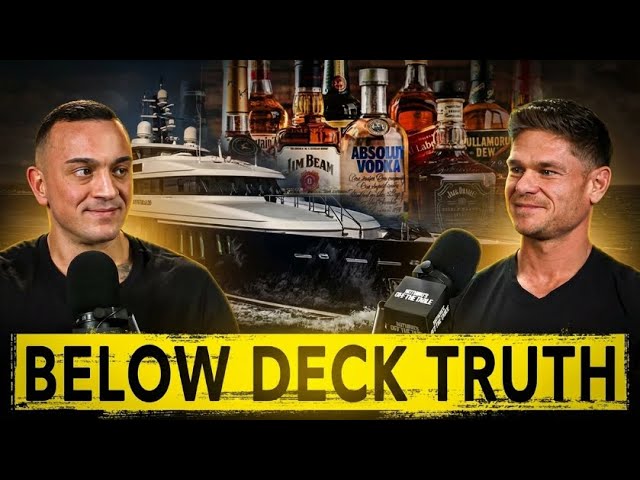
I created Nothing’s Off the Table to inspire real hope and change for people struggling with addiction and for those already in recovery who are looking to continue to grow. We share raw, honest stories, including the darkest moments, not to glorify drugs, alcohol, or gambling, but to show where addiction can take us, and more importantly, that it doesn’t have to end there. Recovery is possible, change is possible, and if someone else made it out, so can you. I hope you enjoy today’s episode.
We’re back. another episode. Nothing’s off the table. Um, I came across a gentleman on Instagram. His name is Ashton Pinar. And, um, he’s jacked. He’s way more jacked than me. And he talks about getting sober, getting his life together, how fitness has really helped him in his sobriety, which has been the same for me. Um, and then I found out you were on Below Deck, too, which was uh which is interesting.
We can get into that later, but um >> really good to have you here and uh I love what you’re doing. I think for people in sobriety and recovery, my fitness is absolutely instrumental in my sobriety and my recovery. Like if I’m not in the gym, >> um >> my soon to be wife thinks I have an issue. Like I’m obsessed with the gym.
Yeah.
>> But she doesn’t understand that. like that hour and 20 minutes a day in the gym is just so mentally >> um relieving for me.
>> Um >> so I love what you’re doing. Good to have you here. Welcome.
>> Thank you. Appreciate >> to New York.
>> Yeah.
>> Um tell me a little bit about yourself, like where you grew up and where you’re from and we can get into the >> the nitty-gritty.
>> The nitty-gritty. Yeah.
>> So, uh originally from Johannesburg, South Africa. Um it’s where I was born, raised. Um, I was there up until 27.
Um, yeah, I mean, growing up in South Africa, very diverse country, uh, 11 official languages, lots of different culture.
Um, and a lot of that culture is around food, drinks, um, lot of partying and celebration. Um, and it definitely sort of played a role and shaped who I was.
um especially with the the drinking and the social scene. Um but yeah, earliest sort of memories I have, fondest earliest memories I have is on the sports field. Um I think that’s where a lot of my discipline stems from. U played cricket, soccer in sort of like junior years and then as I got into senior high school as we call it, um rugby was my game. Um and that was just that was awesome. I carried that through to college. um sort of played at a provincial level which is like the equivalent of state here. Um and I I always say that sport is pretty much what got me through school. Um my parents got divorced when I was five. Uh they were very young parents. Um 17 and 18 when they had me. Um, so I had a very dynamic upbringing between the two of them and basically being a kid in the household while they were navigating life as as young 20-year-olds, you know, getting their footing in their careers, in their relationships, and all that sort of stuff. Um, sport was kind of like the only thing I had control over.
I knew that if I put a certain input into my training, into my skill, onto the field, I would get that out output consistently. Um, which was not the case in my home, right? Um, because things were ever changing. Uh, we would be moving houses, my mom would have different boyfriends, dad different girlfriends, fiances.
Um, so it was very, very dynamic. Um, I could never really get too attached to certain environments or homes or people because they were ever changing. Um, and looking back, I just I take my hat off to my parents honestly for the way that they did navigate that time of their life. Um, because if I if I had to have a kid at 18 or 19, I mean, I just think about what I was doing at 18 or 19, I was definitely not responsible enough to be to bring somebody into this world. So yeah, very grateful for for my upbringing. Um, it also taught me a lot.
Um, you know, I kind of I always said, and I mean this in the most respectful way, but watching my parents sort of struggle through life, I always said I was going to strive to do things a bit different. Um, you know, financial instability, obviously having very young parents trying to find their footing in life, money was always an issue. Um, my dad was quite an explosive man. Um, you know, very aggressive in the way that he would deal with his emotions and his feelings, which was a big part of my upbringing and a big part of what I had to get under control. Um, which is a a very big throughine in my entire life and especially through Below Deck and that sort of stuff, which we’ll we’ll probably get into. But but yeah, um Johannesburg, South Africa, divorced parents, uh your very young parents and and sport was basically the thing that got me through um until the point that I was kind of just bored with what I was doing at 27. And that’s when I see a bit of adventure. Um, I kind of went straight from school into college. Uh, straight from college into my first job and just quickly realized that I was not built for 9 to5 sitting at a desk.
>> And I was kind of searching for any sort of fulfillment and stimulation in my social life that I wasn’t getting from my career. Um, and that was kind of like a a turning point for me where I sort of, you know, reached the peak of of partying, drug use, alcohol, just really chasing that stimulation and trying to feel some sense of belonging, some sense of purpose, but also just cha uh chasing a sense of being grounded and happy in a moment, whereas my life didn’t feel like that at the time. So, yeah, that was kind of just the the short rundown. Did you were you drinking in like your high school and and college days and and the rugby days? Um were there like any instances that really stick out to you where maybe you said to yourself like oh I this may be a problem like maybe I shouldn’t be drinking or maybe I shouldn’t be using like any any big inst instances like that.
So throughout school um you know when we get when we get to 18 we’re basically legal to drink as opposed to 21 I think in most states. Yeah.
>> Um and you know growing up it was sort of like a ride of passage where your dad would share a couple sips of his beer like leading up to 18. So probably from like 14 onwards that would kind of be a thing. And um you may have a a whole beer at like 16 or 17. Um, so again, like it’s kind of like a right of passage and a culture thing that you you sort of earn. Um, I I don’t think I was I wouldn’t say I I didn’t realize that there was a problem earlier on because it was just so accepted. So many people in college were drinking.
>> We were all partying. Um, it was just it was part of what we did, right? That’s how we went out. That’s how we had fun.
Um, and then when you’re young, you experiment. you’re kind of like testing your boundaries and you’re like, you know, one night you get too smashed and you’re puking everywhere and you can’t see and you’re like, “Okay, I know that that was maybe one too many or two or three too many.” Um, my issues started coming closer to when I was 27. So, like reaching this peak of me making a big change in my life, um, I when I was drinking, I would hate I would hate the feeling of being drunk. So what started happening is um I don’t know how I got I know how I got introduced to it but it wasn’t anything significant um but cocaine started becoming part of the the party situation and and dynamic because if I would I would drink to a point I’d feel that like okay little bit messy point couple lines of cocaine and now you straightened up. You don’t feel that messiness you’re not like falling all over the place. Uh you kind of sharpen up a little bit. you get your vocabulary and vernacular back and a little bit more confident and now you feel like you can just continue going on for the whole night.
>> Um and when I started questioning things was how much more regular that became part of the the situation. So um it was less and less that I could drink, have a good time without wanting that that cocaine to kind of level me out a little bit. Um, and that started becoming it would be once a month, then it was twice a month, then it was like every weekend we’re partying, we we’re getting a couple bags, and you know, that that became the norm. Um, and I was always very anti any substances or or or drugs. Um, and I don’t know what it was in my upbringing or what made me that way. And I think just something internally was not okay with the fact that this is this was now my life. this was part of my habits. Um, but I’m also very it it was interesting around this time I also started my personal development journey. So I had a good friend of mine who I was parting a lot with. He was a bit older than me, a little bit more wise than me, a little bit further on in his personal development journey and he started introducing me to a couple of people that he follows, mentors and I started learning some of these concepts.
So throughout this time, I was also developing this personal awareness. So I wasn’t just like drifting through this life thinking that this was normal and this was okay. I knew something was off and I started questioning like, well, why is this an evergoing thing now? Why is this becoming more present in my life? And I knew something was off. And I knew that there was something in me that was looking for attention or at least satisfaction that I was trying to get through the partying and the drinking and the drugs. And I knew it was my career. I knew I was not being stimulated by what I was doing. And I was kind of just going through the motions, searching for some sort of belonging and fun and excitement in the nights out. Um, >> some feeling of per purpose and usefulness.
>> Yeah.
>> Yeah.
>> Was when did you go on below deck? Like where in this part of your journey were you on Below Deck? I get messages all the time from people saying they don’t know where to start in their recovery that they feel lost. I’ve been there before. That’s why I’ve teamed up with Banyan Treatment Centers. They help people find their light again. It’s not about shame or labels. It’s about getting your life back. Look guys, I don’t partner with just anybody. I truly believe in the brand and the work they’re doing. Bian is compassionate people who actually care about helping you heal. So, if that’s where you are right now, reach out. Call the number in my description or send me a message and I’ll personally make sure you get connected to the right people. You’re not alone and this could be the moment your life starts to change. So it was like 28 29.
So very soon after I made this transition. So the big transition in my life was when I left Johannesburg, South Africa at 27. Um I I knew what I didn’t want. I didn’t have a plan. So I resigned from my job at 27. I didn’t have a backup plan. Didn’t know what I was going to do. I just knew that if I kept two feet stuck in two two boats going in different directions, I was never going to go anywhere. Yeah.
>> So, I kind of like the security of a kn one day, he’s like, “Dude, if you stay in that situation, you’re going to go nowhere. You got to make a decision and you got to just go for it.” Um, and it was weird like through a couple of books that I was reading and stuff like that, I I had this this confidence in just being okay with not knowing. Um so one of the books I read at that time was Deepak Chopra’s six laws of spiritual success and one of them is having security in the unknown and I just you know when I that book came came along at the perfect time and it’s exactly what I needed to sort of read and and take on is just being okay not knowing what that next step is where that next door is going to open what what the next situation’s going to be. And I just knew that if I stayed true to myself and made decisions and just uh built on who I was, that I knew who I was inside, like things would happen for me. So resigned from from a job, sold my house, sold my bike, sold my cars, um furniture, everything. And um during that time was doing a lot of meditation, journaling, just trying to like you know look within and and and start building something from within. and uh that my housemate that I was living with at the time, he mentioned yaching. He said, “A couple of our friends are in yaching. Why don’t I look into that?” And I didn’t say anything or think about it. Did a bit of research, got in touch with those friends, and it just seemed like the perfect thing that I needed at that stage of my life. Um I was going to travel, which was a big thing for me. I felt very isolated in Little Johannesburg, South Africa. I felt like I felt like I was built for more and I felt like I needed to expand my my horizon and and just like get out there and travel a bit so I could I could travel. I could earn money while traveling and it was just something very different. Um and and that’s what I committed to. So I used all the money from like selling everything that I had to do the yacht training to buy the ticket to the south of France, the visas. And the worst thing about that whole situation is it’s not like you go through an agency as a newbie and you automatically get placed on a boat. Like you go having sold everything and you’re going to now look for work in the south of France >> and there are a lot of people looking for work. So it’s not like there’s an abundance of opportunities and positions. You’ve got to really stand out when you get there. Um, and a massive part of my story is doing all of that, being in the south of France, and getting down to my last €50, which is like $40 basically. And um, there was that point where I was like, “Oh my gosh, am I going to have to like call home and beg for somebody to to borrow me money to buy a ticket back home and then and then what?” Like have my tail between my legs and come back to Exactly. Like I failed, right?
>> And I there was something in me that just did not accept failure as an option. So I had the the mantra of security in the unknown, just doing the best I could and like trusting that doors would open and just failure wasn’t an option. So as much as that thought popped up in my mind, I just didn’t entertain it. I was like something’s going to come about. And um finally I landed like the holy grail of first jobs. Got onto an expedition yacht. Uh they were doing an Arctic expedition all the way up north. We visited like 17 different countries um in the 75day itinerary.
um went through that. It was everything that I needed. Like being on the bow of that boat, traveling the places we went, like my whole life just started making sense and I was like, “This is what I needed.” Um came back home after that season and that’s when I heard about Below Deck. Well, I heard about Below Deck on this first boat that I worked on cuz I said to the the captain, I was like, “We should put up cameras around this boat because we we get up to such cool stuff.
>> Like you could start a YouTube channel on this. People will watch what we get up to.” And that’s when he told me he’s like, “There’s a show like that below deck.” And it kind of like just implanted in my subconscious mind. And I thought that’s probably what what I’d want to do. Like I’d want to get onto that show. So when I was back home, somebody that I met doing day work originally in in on the south of France.
He phoned me and he’s like, “Hey man, I’ve I just got a call from like these people from below deck. Um they’re looking for crew mates. Like do you know what this is about?” And I said, “Yeah, actually I do. My last captain told me about it. if you’re not going to do it, let me know cuz I’m super interested.
And he didn’t want to do it at the time.
And that’s how I got in touch with the recruiters. And um got onto an interview. It was like a series of four or five interviews with different sort of levels of of the recruiting team. And it was a matter of like I think it was two or three months and they were like, “Yep, we want you on.” And that was then the first season that was in Tahiti. So, I went straight onto the the the cameras and the TV show with not even like a full yaching season under my belt. So, I was still very new into the industry when I went onto the show. Um, so that’s how I got into it.
>> It’s crazy. I um my soon to be wife loves Below Deck. Yeah.
>> Loves. Um and >> were you you weren’t sober on this on this show yet?
>> No, I was very much still drinking.
>> Got it.
>> Yeah. I don’t I like most of my guests, I don’t like to know anything really about them. I like to the conversation to be organic.
>> Um >> but my wife spoiled it a little bit for me. She was like, “Yeah, he was definitely drinking on that show.” And I said, “Was it bad?” She’s like, “I can’t really remember.” She don’t think it was good though.
>> Yeah.
>> Um >> tell me a little about that. And then I know you you said you got sober shortly after that.
>> Tell me a little about that.
>> So first season was was great. Um, barring the fact that I nearly lost my life on camera. Um, got wrapped up in a line, pulled off the back of the boat.
Um, that was super scary. Um, but that season I was kind of just seen as the, you know, happy golucky party boy. Um, that got his, you know, almost died on camera and that’s kind of like how that season sort of ended in a little bow.
Um, and it was very representative of sort of my drinking life, how it kind of flowed into this next season and what happened at the the sort of peak of the ugliness that happened. Um, in my normal life, nine times out of 10, I’d be the life of the party. Things would be great, but there would be that 10th time that I would lose my temper, something would trigger me. Um, I’d have a blowout of some sorts, and it was it was exactly like what happened on the show. So, first season, everything good, nothing bad happened. Second season, um, again, just continue drinking. And Below Deck’s got this the perfect recipe for like drama and for entertainment because working on a boat boat is long hours. We we don’t meet the crew before we we work with him, especially as a first-time. um it’s small quarters, long hours, and then they kind of condense a much sort of broader, longer charter season into into uh a more action-packed charter season. So, they do like uh two-day charters back to back. Whereas, in the normal industry, you won’t hire you won’t rent a boat like that for less than a week at a time. So, it’s like these short backto-back charters, go out, party. short backto-back charters, turn the boat around, go out party, backto-back charters, turn the boat around, go and party. So, it’s like you get tired, your filters start dropping.
Um, you drink hard, hung over, working hard. So, it kind of just like brings everything to the surface and things like things like boil over.
>> Um, >> the the biggest scene that that happened was after one night, we were in the van.
Um, Kate said something to me that triggered me and lost my temper, hit the van window, and I’m like trying to turn around to like just address her and and you know, look at her in the face and like kind of confront her. And um, it got very messy because of the way it obviously looked. Um, but again, very representative of what my drinking life had been. That was the one night out of 10 that people got to see me get triggered, lose my temper and have this outburst. Um, and and that that was a very difficult thing for me and that was the big turning point. So, I had only I was so drunk that night that I didn’t even remember exactly what happened. The first time I saw what actually happened was halfway through that season was airing and we were still going to Los Angeles to do pickup interviews. So, they were still doing editing for the second half of the season, and the producer said to me, “Hey, like the the second teaser, like the midseason uh trailer for the rest of the season is ready. Do you want to see it?” And I was like, “Yeah, obviously.” And I had known that like there was a lot of animosity and like fighting and stuff that happened that season, but there was always this little question mark around that night around like what really happened. And watching that scene back like my heart just sank and like you know it was very difficult for me to see the extent of like what happened. And the hardest thing was I had recreated the environment that I was scared of and like that was kind of like a a big part of my upbringing that I hated. So remember I said like my dad was very hot-headed uh you know very explosive and that’s the way he kind of handled his his feelings whether it was shame anger uh frustration you know he would punch things and break things and scream and shout and and that’s exactly what I did in in that van and watching that back that like I was my biggest critic in that moment because I had created the very environment that I hated from my upbringing and that didn’t sit well with me. Um, that that was when I I realized something something’s going on here and something needs to change. And because I also had the the awareness of like how psychology works and stuff, um, I realized that it it it didn’t have everything to do with what that person said. It had everything to do with like why was I so triggered by something that see that seemingly didn’t mean anything.
Um, and in the beginning stages, it was hard for me to make sense of all of it.
Um, in the beginning I was like, “Oh, well, she said this and she did like that and this and that.” But as I sort of got honest with myself and like started really dissecting what was going on. I knew that it had nothing to do with Kate. It had nothing to do with anybody around me. It had everything to do with what was going on inside of me.
And that’s when I started questioning everything. And I, you know, it was kind of the peak. It’s almost like I had to see myself in third person view for something to like click in my brain to be like, “Dude, we need there’s something going on that needs to be fixed.” And I just knew that if I was to do the work and to uncover what needed attention, it was going to have to be through through sober through a sober mind. Um because the alcohol was just a distraction. It was a numbing agent. It was masking all the stuff that actually needed needed attention. And that’s when I just, you know, threw myself into into this exploration of like understanding my psychology, understanding my upbringing, understanding what it was about that situation that really got under my skin. like you know when you ask yourself sort of why five to 10 times you get to the bottom of okay this is probably or this is where the root of that actually came from. Um and it’s it’s been a hugely beneficial and eye opening experience for me. Um, it’s very hard to do that sort of work and to dig into your past and your traumas and confront yourself with hard truths because, you know, when you’re doing this work, you’re kind of uncovering everything like all the ugliness, all the the shameful things. Um, you you bring everything from your life into question and try and make sense of it.
And and that’s been my work for the last six years is um you know quitting drinking is it’s a drop in the ocean if you compare it to like the real work that needs to happen.
>> Oh yeah.
>> Um you know that’s that’s in many sense the easy part. You know once you take the numbing agent away or the coping thing that you’re using to get through life now you’re really faced with your [ __ ] Now it’s like >> well what what is it that drove me to drink in the first place? like what is it that I’m that I’ve been avoiding?
What are the the experiences and situations of my life that have shaped who I am today as adaptations, as conditioning, as coping mechanisms? And you’ve got to go back and visit traumas.
You got to go back and visit things that are very uncomfortable about your upbringing and things that you’ve been purposely avoiding and not dealing with.
So, it’s very confronting and it’s it’s very difficult to deal with. Um, and I will say it was not easy doing it in the public eye. Um, that for me was the hardest thing because I am my biggest critic. I was not happy with the behaviors I saw on the screen. Um, but when you choose to put yourself in the public eye, you open yourself up to scrutiny from absolutely everybody. And um, I thought that I was strong enough to deal with it. And and honestly, I I got to points in my life where I didn’t want to deal with it anymore. where you know and the biggest thing for me is that I thought I had done so much work on myself which was really part of the reason why I felt so confident going on TV in the first place. I was like I got nothing to hide. I’m confident in who I am. Um and I I believe that that I was a good human being. Like I believe that my essence and the core of who I was was was pure honest and and and good.
But it was clear that there was conditioning adaptations in parts of my life that that needed attention. It was very difficult to deal with backlash, to deal with labels, to deal with people telling you what they think when your internal dialogue is also so harsh on yourself in the first place. So you’re getting it from within yourself. You’re trying to navigate the situation. You’re trying to make sense of it, but you’ve got the world coming down on you as well, projecting like what they think and what what they feel. Um, and it was a very difficult time in my life. And thank goodness I had good people around me that that sort of just kept bringing me back to like, Ashton, just remember who you are. Like, yes, you know, that happened. And and and that sort of stuff happens in many people’s lives that are just not shown on on TV. Doesn’t make it right. 100% not. But I kind of had to just I needed some people to ground me and bring me back to reality, but also just like remind me of who I really am.
Um, I tell people all the time, especially like alcoholics, that two things that you said that really stuck with me, alcohol and drugs were not my problem.
They were the solution to my problem.
>> Yeah.
>> My problem was my way of thinking.
>> And um, my sponsor tells me all the time, we’re not bad people trying to get good. We’re sick people trying to get well.
>> Yeah.
>> And um, I have a lot of similarities to you. Um my my dad wasn’t angry. My dad just dealt with things with anger. Y >> because that’s the way he was he was raised. Was raised in that kind of household and that kind of passed on to me as well. So >> um >> what are these last six years looked like for you? I know you’re married. Um what are you up to?
What does your recovery look like? can we can talk about I’d love to hear about your coaching business and >> do you like do you h I’ll ask my questions later all right >> I’m jumping ahead >> um yeah so the last 6 years has been interesting um I never thought in my wildest dreams that I’d be able to quit drinking just because it was um I’m actually a very shy person very insecure in a lot of ways and going out and drinking I kind of needed that liquid courage or needed the the cocaine to like actually socialize and like be comfortable with who who I am. A big void in my life and I think it was because of my dynamic upbringing was having a sense of belonging and I kind of felt like if I was drunk or a little bit like you know confident with a cocaine like I felt more accepted and more sort of had the sense of belonging within a group of friends or a group of people. Um, so never in my wildest dreams did I think I could actually just cut everything out. But when I did, it was surprisingly easy to not even be tempted by drinking. Um, and I think I had to make nonsense of what I was doing as well. So what I mean by that is like I’ve got a very logical way of thinking and if I can reverse engineer something and make sense or nonsense of something, it’ll solidify why I do something or how I behave. Um, I was having four day hangovers, spending thousands of dollars while I was out. Not one one out of 10 times I had some sort of panel beating to do in terms of like mending relationships or apologizing to somebody or picking up the pieces of just a blowout, right? Um, and then I wouldn’t remember half the evening anyway. And I was hung over for 4 days and I wasn’t productive. So I was like, I’m paying for this. It’s like the self- torture that I’m paying for. I’m paying thousands of dollars to not remember half my night, to feel like crap for 4 days, and I’ve probably, you know, ruined a relationship somewhere here or there. So, that was very easy for me to let that go. And that was the first step. The second step was okay, going deep into the work and uncovering what’s who is Ashton, you know, how has he be conditioned? Um what are the adaptations? What are the things that need attention? A big part of that process was uh plant medicine. So I’ve done two two big ceremonies that were hugely hugely beneficial. Um I had done a lot of the cognitive head work. Um I could explain a lot of concepts and understand some things but there was this disconnect between my mind and my my body. So like the the cognitive and sematic. Um, and it’s almost like I needed that assistance from the plant medicine ceremonies to kind of like dig into me and bring the stuff to the surface that really needed the attention. That was hugely hugely beneficial to uh for me. Um, and the next big turning point was after meeting my wife, after getting married, uh, talking about kids.
Um, and up until that point, I hadn’t shaken this like aggression, short fuse, temper thing in me. And I always maintained that I felt like the behavior came through me. It was never really of me. Like I never felt like I owned that anger. It wasn’t my anger, but man, it came through me. Like someone cuts me off on the road and I’m like, I’m boiling. I’m freaking boiling. Someone like challenges me and I’m like my ego comes up and I want to fight. Um, you know, or like my a big part of my rage cycle was a shame rage psy cycle. So when I felt shame or I felt inadequate, it was almost like my my defense mechanism was to rage. And that that’s exactly what happened on that show. When Kate mentioned something about my mom, it triggered a huge um amount of shame in me that was around my relationship with my mom and my my parents and a whole bunch of stuff that I hadn’t dealt with. And that’s what it was about. And that’s that’s why I raged in that moment. So when we spoke about kids, I knew that I had to get figure this out because I did not want to pass that anger and aggression on to my my son or my my daughter one day. And and that’s when the real like work began. I was like, I’ve got to get down to like what the hell this is about. And that that’s where a lot of my therapy um you know, I dove really deep into therapy to uncover all of that. Um and I’m like super proud to say that I’ve been able to let that go. And it’s like a weight that’s been lifted off of my shoulders, you know, learning and understanding where the anger came from and being okay with leaving that with my dad and like, you know, his upbringing and whoever passed that on to him. It’s their stuff to bear. It’s not mine. Um, so that’s been a huge part of of my journey. And um obviously going through all of this and learning all of this, something in me, I don’t know if there’s a teacher part of me or what it is, but I’ve always said that I don’t feel like the learning loop is closed until you teach somebody else something that you’ve learned.
>> Um and even when I started my personal development journey, I was like, “This stuff is crazy.” Like, “Oh my gosh, this is so wild. Like this is open blowing my mind. I need like who can I help with this?” And I think about my brothers and my friends and other people that like struggle with this. Um, so at the beginning of the sobriety journey, um, was actually co I couldn’t get back to the boat that I was working on, but I had the idea to start the coaching business. So, it allowed me the perfect time and space to actually set the coaching business up. And it was weird.
It was almost like helping people better themselves through health and fitness kind of kept me accountable to the whole process as well. And as I was learning things, I was teaching my clients as well. So, it was it was perfect for what I needed. Um, and as the years went on, there was this big void. Um, I kind of expected my body, my life, everything to just magically start fixing itself once I started drinking. Um, but I was eating like a bodybuilder, training like a bodybuilder, and I was not looking like a bodybuilder. I was still pretty bloated. I was still pretty puffy. Um, I had like mental fatigue, didn’t have mental clarity. I was, my mood was like pretty shot. I was pretty depressed. Um, and I had this big question mark around like surely sobriety shouldn’t feel like this. Like surely I should feel like a million bucks because I’m putting the work in psych psychologically. I’m I’m training hard. I’m eating well. Like some something’s must be off. And that’s when I got introduced to the world of of deeper functional testing, um, blood tests, genetic tests, gut tests, really getting deep into your physiology. Very similar to what I was doing on the psychology side of things, right? like really digging into the psychology of what’s driving things. That’s what I did with the physiology as well. And when I ran these tests and and saw some of the stuff that came back, like everything started making sense. Um, genetic testing is an absolute game changer. Gives you the owner’s manual, the blueprint for your body, shows you what you’re good at, what you’re not good at, what your body needs support in. It helps you understand a lot about your psychology as well. Um, and it also obviously shows you what you need to be preventative of um, disease-wise. Um, blood work gives you your current environment in your body, shows you exactly what needs attention, and that also links to a lot of your symptoms that you’ll feel on a day-to-day basis.
And you layer that with something like uh, gut testing. I’m sure you’ve heard like guts, the second brain, digestion, absorption, immunity, hormone regulation, all happens in the gut. So, if something’s off there, it’s going to throw other things off as well. Um, and that really revolutionized the way that I would coach people because again, now that I had all this information, I couldn’t be okay with just you bringing you on as a client and just giving you a nutrition plan and a training program and and helping you follow that because I knew there was so much more to the process. And that’s why now when we take on clients, we start with all the testing up front because that’s how we can be that much more personalized, unique, accurate, risk-free in in the way that we design, then design your program. So, I’ve got a clinician in my team. She’s an absolute weapon, like specializes in all this stuff. Um, and it’s just been gamechanging for for our clients. Um, clients come to us, they’ve been dealing with symptoms and struggles for years, like doctors are not helping them, and we uncover things so quickly on the front end, and we basically validate the way that they’re feeling, but then we give them the game plan to fix that. And it really just changes their physiology. It changes um, who they are really. Alongside that, we do the psychology work, right? Like all the deep work that I’ve done uncovering broken or adapted belief systems that are driving emotions, that are driving habits, that are driving the outcomes. A lot of people get stuck in this habit and outcome section of of health and fitness. They’re like, “Hey, I need to change my habits to change the outcome.” But what’s what’s what’s driving the habits? It’s your emotions, the way that you interacted the world around you. And what drives those things? That’s your belief systems. Well, what makes your belief system up? The things that you saw, that you heard, that you experienced in your earlier years have shaped, conditioned, and made you this adapted person. So a lot of people focus on just the habits and the outcomes, but the real transformation comes when you challenge the belief systems and you change those because now motivation starts coming through you. You don’t feel like you have to like white knuckle life and like really just try and like uh militantly discipline your way to to your goals. So when you combine that level of psychology with this level of physiology, the the beauty happens when those things come together. where now like the psychology and the things that you you saying you want in your life, you’re actually feeling it from an identity standpoint, things get easier to do. And then physiologically, you’re not dealing with the symptoms, the roadblocks, everything that’s holding you back on a physiological side. So when those things come together, that’s when your body’s reacting well, you’re feeling good, you then you feel like you can take on the world. Um, and I always say like that’s that’s when you now turn the sobriety sobriety decision into your best life in your body. Um, and and that’s something we got to understand like years and years of drinking and abusing your body, it takes a toll on you. Yeah.
>> Like you don’t just get a free pass, you stop drinking and everything fix it fixes itself.
>> Like you know just like the psychology on the physiology physiological side, you got to do a lot of that work to fix things. It really uh drinking and drugging for a long time really damages you emotionally and spiritually.
>> Oh yeah.
>> And uh I’m an AA I’m an AA guy. I’m a 12step guy. It’s really the only way I’ve been able to to stay sober after 10 years of in and out in and out.
But I’m a little over three years. Took me 10 years to get one year. And the last uh the last 6 months I’ve started seeking more. Right. I think the 12 step I think the 12 steps I it’s my Bible. I love them. Um I think it’s instrumental for for early on personal development and getting sober. It’s all about trust God, clean house, help others. Great.
Um, I also feel that outside help is needed >> because a lot of these behaviors that I’ve done in addiction were exhibited when I was a kid.
>> Mhm.
>> And then they’ve just the consequences have just they just got greater because I started drinking and drugging and stealing and robbing and doing all this crazy [ __ ] when I was when I was high.
But when I was a kid, it started with me being angry in the playground or it started with me stealing someone’s pencil case in second grade and all these little things. Um, so I I I love hearing about people who are really doing the deep work because that’s like >> that’s when you’re really free.
>> Yeah.
I tell like there’s there’s people who come to AA or I’m in Gamblers Anonymous too and there’s people come to GA and they don’t work any steps and they just they’re just dry. They’re just absinent.
And I’m like, bro, like there’s there’s real freedom in doing some work on yourself on the inside and like figuring out why you [ __ ] were a compulsive gambler or why you were a a junkie to begin with. You you didn’t come out of the womb a junkie. You didn’t come out of the womb a gambler. You know, it it these >> these things have have progressed as you’ve gotten older.
>> Yeah.
>> Um >> my question for you is do you have a lot of sober clients? Like do a lot of people who are sober curious or >> um in sobriety reach out to you because there is that connection.
>> Yeah, absolutely. It’s it’s where I’ve sort of transitioned all my attention currently. Um I don’t not take on clients that are not sober. Um, I’ve got a lot of clients that are that do still drink socially and what have you. Um, but I have really moved into that segment of people that have committed to sobriety or that are struggling to that need that extra support. So, I I’ve I’ve actually helped a lot of clients um into recovery where they’ve, you know, like yourself struggled for 10 years to just get a couple weeks or months under their belt. Um, and and it’s really about taking them through that deep work. Um I’ve got a current client that I’m working with and she’s been part of all the groups. She’s been part of like so many um collectives and groups and things and you know we’ve had two sessions with her and she’s just like dude the way you say things and the way the work we’re doing now this is moving me like I can actually see the light now and I can believe that that I can actually do this because it’s just a different way of thinking. Um so so yeah working with a lot of people in that space um and and just seeing like such huge results like life-changing. Um, and it’s very rewarding because it’s it’s not like, hey, we’re just going to dive deep into the psychology. Like, humans don’t like to hear, hey, we got to do some brain work. Like, your your mindset [ __ ] Like, there’s stuff we got to fix there. But if you can introduce the physiological side as one say, hey, it’s not all your mind’s fault. Like, there’s stuff going on in your body that’s making the mental work that much more difficult. So, let’s attack them from both sides. Cuz that’s when you’re going to feel more like, hey, we’re making progress. things are feeling better. Um, so, so yeah, dealing with a lot of people in that space, sober, curious, and committed to sobriety. And I kind of like it because I think it takes a specific person who’s said, “Hey, my drinking’s a problem.” There’s a certain level of awareness there with that person. And I like to work with that cuz you can be very productive with somebody that has the right mindset and intentions. They just need the right guidance by a mentor, someone that’s been there, that’s done that that can show them a couple things that they haven’t seen yet. That really makes makes that that difference.
>> Yeah. And also somebody that they can say, “Oh, Ashen, I drank like a fish last night and then I cursed out my sister and then this and that.” And you’re like, “Yeah, done that, too, man.
It’s all it’s going to be okay.” Yeah.
>> Like if you do the work, it’s going to be okay.
>> That’s a big thing is the the non-judgment. um way about going things and that’s a through line with a lot of my clients is just like I was very hard on myself these people can be very hard on themselves as well and it’s just about being like hey it’s okay like yeah that happened but we’re going to we’re going to get over it we’re going to fix it.
>> Um that accountability and support and having somebody in your corner that that’s been there and understands it is is also hugely gamechanging. Um, I had a question for you if you don’t mind.
>> Listening to to what you were saying, do you speak to a lot of is it men, a lot of guys that that struggle with addiction and stuff like that?
>> Yeah. So, um, since I started this, I started this almost a year ago.
>> Um, it’s obviously about people who are in recovery, some from alcohol or substance abuse. Um, I’m also a compulsive gambler. I come from a lineage of compulsive gamblers. My dad is not. my grandfather was. And so I started having some gamblers in recovery who came on told told some amazing stories. But I get messages on a weekly basis probably let’s say 10 to 15 times a week.
>> And right now I’d say eight or nine of them are gambling. People who are gambling in silence.
>> Yeah.
>> And are struggling.
And then you know six or seven of them are people who they’re addicted to the theratom now which you but can buy at gas stations like this like opiate. It’s like an opiate um copycat.
>> Wow.
>> People who are addicted strung out in fentanyl crack the usual the usual stuff. Um and you know my advice to people is find a community. For me, it was AA or GA and uh go in there, raise your hand, ask for help. But the flip side of things is that my sponsor was like not very happy that I was doing this podcast. I was like, it’s against the 11th tradition. We always maintain anonymity at the level of press radio film. I said, the traditions were written in 1934.
>> In 1934, I didn’t have a cell phone to text my my drug dealer. Yeah. Yeah. And >> 1934, I didn’t have my cell phone to download FanDuel and gamble away my life savings in 3 hours.
>> So, um I have a lot of people that reach out and my best advice to people is always like find someone close to you, tell them what’s going on, get honest, and then go to a meeting.
>> Yeah. Which is a lot easier said than done.
>> Yeah. It’s the hard It’s the hardest part of the whole thing.
>> Yeah. And and the reason I asked the question is uh I’m very passionate about men’s work. Um men’s mental health uh men’s suicide rates is sort of the big thing that I kind of want to move into and and change. Um I don’t know about your upbringing, but I was never brought up and taught how to identify emotions, how to process emotions, how to talk about the way that I feel. Cuz like you say, you say your first advice is go to a meeting, put your hand up, and ask for help. We weren’t con We were not brought up that way. We were brought up in the opposite way where we were taught that big boys don’t cry. That put your big boy pants on, >> keep kicking the can down the road.
>> Exactly. So, the way that we were brought up was supposed to bring up these strong men, but we’re we’re very weak as as a a male generation because we are not emotionally literate. We don’t have emotional intelligence because we were we were taught to avoid everything emotional.
>> I was I was raised in an old school Italian household where my mom came to therapy with me once. This was very recent. This was like a year ago. She said to the therapist.
>> Where I come from, we don’t talk about our our feelings and we definitely don’t talk about our feelings with strangers.
>> Yeah. That’s what she said straight up to the therapist. And I was just like, >> “Yeah, >> which I listen that’s the that’s what they were raised with. So what she’s giving me is the best that she could offer cuz that’s all she has.” And like that was a big resentment and like source of of pain for me as a child that like I maybe felt that I wasn’t nurtured or loved the way I needed to be and so on and so forth. But that’s like you do the deep work and you get to that place of acceptance of like my mom was just doing the best that she possibly could.
>> And and that was a a big part of my therapy was I was getting stuck in that thought. So when I was speaking to my therapist, he would be like, you know, describe your upbringing and what what were these things that were happening?
And I would I would describe a situation that wasn’t great where I wasn’t getting what I needed as a kid. And I would immediately say, but my parents are doing the best they could. they were young and he said, “You got to stop doing this. You’re basically gaslighting yourself because you’re saying that your uh the things that you’re experiencing are not real because your parents were doing the best they could. You’re never going to heal yourself that way.” It’s okay to acknowledge that your parents did the best that they could, which is what what what I also acknowledged. But you have to acknowledge that that younger version of you needed something that you didn’t get, and that was neglect.
It’s not about blaming your your parents. It’s not about like put putting everything on their shoulders. It’s about the awareness and the understanding. And that’s that’s what I had to I had to learn to like stop putting the butt in there and stop protecting my parents. My reality was my reality. There were certain things that I didn’t get when I was brought up. And I started off by what was what did I say? My parents were young. They did the best they could. I couldn’t do what they did. But I can’t lie to myself and avoid that there was still damage done in in those years. And that’s where the true real healing came from. And it’s why you, in my opinion, it’s why there are so many men that are disconnected, that are addicts to porn, gambling, all these things, because it’s their way of escaping things that they don’t know how to feel or process, right? So that’s the coping mechanism because we weren’t taught like, oh, I’m feeling sadness or I’m feeling a sense of anxiety or stress. What’s a healthy way to deal with that? How do I get down to like what the real problem is? It’s easy to pick the phone up and start scrolling and and you know, porn or or uh gambling or whatever it is. It’s a big distraction. So, it’s like we’ve we’ve really got to start supporting men and helping men not by saying, “Hey, go put your hand up and talk about it,” but teaching them how to do that. What does that mean? you know, like get them into the understanding of like where the lack has come from and and why it’s hard to speak about your feelings and to process those things and that it’s not weakness and it’s not uh it’s not soft things and it’s not for the the girls, right? It for us to be really strong men, >> we have to be connected to ourselves. We have to become very self-aware. We have to have the tools to be able to emotionally regulate. And it starts with being able to identify an emotion, not hide from it, not distract yourself from it, to sit in your [ __ ] and feel stuff because ultimately, how how are we going to break that generational trauma? How are we going to not pass that on to our kids? We have to do that work. Something has to change. And that’s that was the biggest turning point in my life.
Sitting standing in the kitchen with my wife talking about kids, I was like, “Holy [ __ ] I’ve not done enough of the work. I’m going to pass this on to my kids if I don’t get down to the bottom of what the hell’s going on.
How long have you been with your wife for?
>> Uh, three, four years now.
>> Nice.
>> Yeah.
>> We’ve been together six years. Been married now for 3 years. Uh, we’re in the process of trying.
>> Yeah.
>> God bless you guys. Good luck to you both.
>> Appreciate that.
>> Before we wrap up, one thing, one piece of advice for someone who’s watching right now who’s still sick and suffering it. So, it really depends where this person is and struggling, but where I’m seeing a lot of the a lot of progress is starting to question the trigger moments. So, in your day-to-day life, the way that our brain works is our brain wants to protect us from any form of like negative feeling, something that hurts, that’s scary, that’s uh anxiety driven or stressful, our brain will search for the shortest way to relieve that that pain. If you’re an addict, you’ve created these habits. Your brain’s created this habit. I feel stressed. I feel anxiety. Drink, substance, porn, gambling. That that’s the short circuit. You need to break that short circuit. And the easiest thing you can do in the moment is instead of having the knee-jerk reaction to go in for grab for the crutch to just question it for a couple seconds. Be like, “Okay, whoa. Okay, I know my brain’s pushing me to to take that, but what am I really feeling now? What am I really wanting in this moment? Because addiction is just this false pleasure loop, right? We have a craving for something.
We then associate that craving with some sort of false pleasure. We take the false pleasure. We feel this false pleasure for a little bit. It wears off.
We still feel that freaking craving, but now we’ve got the the the guilt and everything associated with the action that we were trying to satisfy this pleasure with. So, we’ve got to break that circuit just for a short moment.
You don’t have to fix everything in the moment. But when you feel the sadness, the stress, the anxiety, whatever it is, just feel it for a little bit. And instead of grabbing for something, break that cycle and just question and say, “Where does this come from? What am I really feeling? What am I really craving?” And you don’t have to do anything about it. If you still want to go for whatever it is that you’re addicted to, go for it. But you’re going to start building this momentum of questioning yourself in the moment. And if you can wait a couple of seconds, the craving or the like wanting to grab for something will subside and then you can start getting inquisitive with yourself and start asking the questions of like what am I really craving? Like what am I avoiding?
You have to start having that inquisitive nature and start questioning the way that you’re feeling and not just drifting, not just giving into the knee-jerk reaction. That’s where everything starts. And from there that you know that’s where things can get difficult because now it’s like okay I know that I’m not it’s not the beer I want it’s relaxation I want. So how do I start relaxing in a healthier manner?
It’s connection I’m craving. How do I connect with my wife or the people around me on a deeper level rather than just on the superficial level of like getting drunk with somebody. Right? So that I think that’s the the biggest thing is in that moment break that that knee-jerk reaction call into question what am I really feeling? What am I really craving? And how can I deal with that in a healthier manner?
>> You heard it here, Ashton. All about breaking the cycle. Appreciate you coming out today.
>> Yeah.
>> Um I’m going to link Ashton’s socials and a link to um his website in the description of this episode. You can find him there. If you’re struggling, if you really resonated with something he said today, reach out to him. He answered me. He’ll definitely answer you. Um, and thanks for watching.