Why Raising Your Kids on the Farm is the Best Decision You’ll Ever Make
Why Raising Your Kids on the Farm is the Best Decision You’ll Ever Make

Growing up on the farm or in a small town,
I spent a lot of time feeding hung over,
maybe still drunk.
The first three to five years when you get out of high school,
get away from the family farm,
get away from the family business.
Number ten — that’s what that was, yeah.
Ten centimeters or whatever,
millimeters?
Millimeters or centimeters —
I’m freaking out.
I would guarantee 50% of the teachers in that school are caring.
Respect.
Respect all the mothers out there,
all the mother — man.




Okay, Cole, so what are you having?
I’m having…
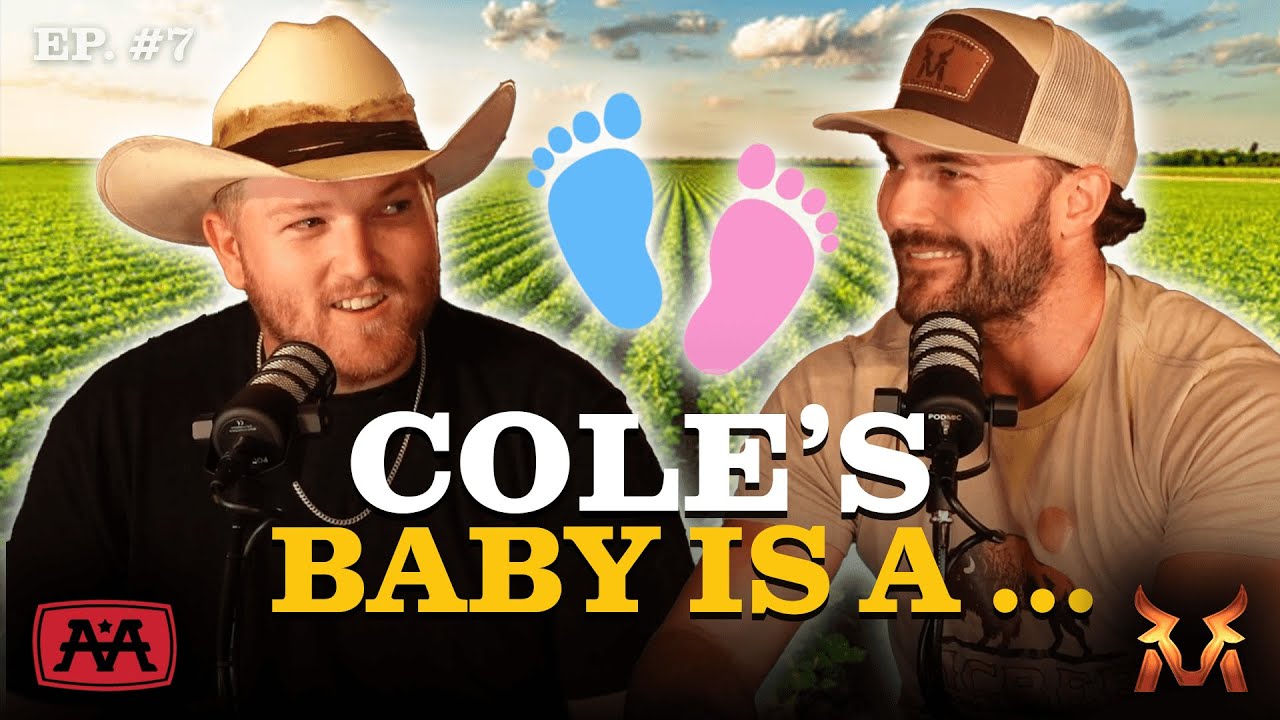
Hey y’all, welcome to Meet the MCB’s,
powered by AG America Media.
Today I’m joined by my brother Cole,
and we’re going to be talking about life growing up on the farm,
the benefits of raising a family on the farm,
some of the negative aspects too,
and what we think the ideal way of raising a child would be,
if we had our own.
Which I don’t.
Cole does.
Or will.
So guys, new episodes of Meet the MCB’s drop every Tuesday on YouTube
and every other audio podcast listening platform.
Please, if you like the episodes,
share it,
subscribe to us,
come back for more.
Every Tuesday we’ll be dropping new ones,
so saddle up
and let’s get down and dirty with it.
Hey y’all, thanks for tuning in today.
We’ve got an exciting podcast today,
and I think it’s something I’m going to let Cole take the lead on,
because this is what he has more experience in.
And hell, let’s be honest —
he’s got a baby on the way,
due in December.
And by the time this episode releases,
Casey will have posted the gender, right?
Okay Cole, so what are you having?
I’m having a girl.
The first — first girl is a girl.
So we have the first grandbaby for my mom and dad,
and it’s a little girl.
Which my mom has wanted her entire life.
To say that she’s going to be spoiled
is probably an understatement.
It’s bad.
It is.
It’s going to be really bad.
She’s going to be the most spoiled baby on the planet.
My mom kept trying for a girl,
and she had four boys.
Yeah.
And on like the last —
she wanted a girl every time,
and she thought the last two were girls —
me and Braden.
They weren’t.
Sometimes it was like back then,
where they were still confused.
Didn’t she think I was supposed to be a girl for a while?
And I wasn’t.
I even questioned that up until you—
No, you didn’t have to question that once I was born, trust me.
Alright.
So today’s episode,
we’re going to be talking about growing up on the farm
or in a small town.
Gallatin is population 1,700.
It’s a 1A school.
And Jesse and I did not grow up in Gallatin,
whereas Cole actually moved up here sophomore year.
Yeah — sophomore year.
Sophomore year going into junior year.
And so we wanted to talk about
really the positives that come with growing up on the farm
or in a small town in general.
Where we come from is Independence, Missouri.
I had 550 in my graduating class.
Jesse had the same.
How many down there?
492?
Down here it was 60,
and we were the biggest class Gallatin’s ever had.
Yeah.
Gallatin usually ranges 45 to 50.
Yeah, like 45–50, somewhere in there.
So it’s a big difference, wouldn’t you say?
It was huge.
It was a huge difference.
A total life change.
I’m trying to —
it’s just way different at a small town.
You know, the high school —
I really like going to a small-town high school
just because of the feeling of knowing everybody.
You go to the football games on Friday night,
and the whole town is there.
You go into Casey’s the next day,
everybody’s telling you good game,
everybody’s talking to you.
And it’s just —
what happens if you threw an interception?
Everybody’s making fun of you.
So I mean, the good and the bad comes with it.
But no, I loved it.
I’m glad that I did get the experience both,
which was good.
I got to go to a big school —
we were 5A.
Which is —
there’s only 6A in Missouri,
so it was a pretty big school.
And that was just a lot.
I definitely like a small town better.
It fit me way better.
And your plan —
Casey’s plan —
y’all are building a house up here,
you’re going to be raising your daughter in Gallatin.
She’s going to be going through the Gallatin School District.
Thoughts on that?
1,000%.
I know —
shoot, I went to high school with like six of the teachers up there now.
I know so many of the people.
They’re still the same teachers.
I know they’re getting taught the right things.
I’m not going to get into politics or anything,
but in 2024,
things that are being taught in big schools and big city schools
are not what they’re supposed to be learning.
I want my kid to go to school and learn the right things.
I also want to be able to take my kid to school
and know that she’s going to be safe.
Yeah, that’s a good point.
A small town —
I mean, the school,
I can see it from my front door.
I can see it from our office.
I would guarantee 50% of the teachers in that school are caring.
Wouldn’t you say?
I mean, I hope —
I guarantee it, honestly.
I would say knowing who all—
I would say every one of them
knows how to operate a gun.
Yeah.
Yeah.
I would say they all have something hidden in their closet
or carrying underneath their pants.
Yeah.
I can tell you this —
I’m not saying there’s not good teachers all over, obviously.
There’s great teachers everywhere.
I just trust the school systems of small schools way better
after going to one,
and just with the amount of change in our world nowadays.
It’s scary sending your kid to a big school.
I mean, you look at some of the issues we’ve had
with school shootings over the last few years.
There is something to be said about knowing
pretty much every single person in the building.
Yeah.
And even for the kids —
for the most part, everyone knows everyone.
There are no serious outcasts, I would say,
in a small school.
I mean, out of the 60 people in your class,
I bet all of them had friends.
Oh, every single one of them.
Every single one of them.
There was obviously the five of us,
the ten of us maybe,
that moved in throughout the years.
But a lot of them literally grew up together since kindergarten.
They knew each other —
they were so close,
like brother and sister,
because they’d been around each other for so long.
And I think in a big school,
there’s so many students,
so many kids to keep your eyes on,
that some of them fall through the cracks.
Unfortunately,
from a big school perspective,
it would be almost impossible
to keep tabs on every single student
when you have 500-plus in a class.
You have some that start to drift away,
start to lose friends,
and become some of the problem kids
or potential school-shooter kids, in my opinion.
I could be completely wrong on that,
but just seeing it from a Gallatin perspective,
it’s such a close-knit community
that everyone knows everyone.
And really, everyone is part of a friendship group somehow.
For sure.
One hundred percent.
Honestly, smaller classes helped me way more.
I struggled in math a little bit
throughout high school and college.
But the best math teacher I ever had —
Miss Sparks —
was at Gallatin.
She was literally the best teacher I ever had.
She helped me so much,
and I think it’s because she had the time.
She wasn’t teaching 30-plus students.
We had maybe 20.
She only had one class of pre-cal,
one class of whatever it was.
It was pre-cal.
I was in college algebra, then pre-cal.
You know how it goes.
Did I even take pre-cal in high school?
I passed it too.
I did.
What did you have to take in college
that you absolutely did not go to?
College algebra.
Four times a week.
8:00 a.m.
I had to drop that.
That was rough.
That was rough.
It’s all right, bud.
Somehow they slipped you into that one.
That was not the call.
Yeah, I knew it wasn’t going to work.
Four times a week,
8 a.m.,
my first semester of college.
Alright.
So we talked about the benefits
of going to a small-town school.
But what about raising a family on a farm?
What are the benefits found there?
There are so many morally strong character traits
and a strong foundation
that are built whenever you grow up on a farm.
What would you say those are?
I would say you don’t even know it as a kid.
When you’re helping your dad or your mom,
or you’re on the farm feeding cows,
you don’t know you’re working.
You’re having fun.
But it’s teaching you work ethic
without you realizing it.
When you’re eight years old doing chores,
it doesn’t feel like work.
You like doing it with your family.
As you grow up,
you just learn to work.
You learn to wake up.
You learn routine.
You’ve got chores.
You’ve got responsibilities.
At eight years old,
you might be feeding the water cow
or the horses every day.
It puts you in a routine.
Waking up at the same time,
doing things consistently.
That’s a big part of growing up on a farm.
We didn’t really get that
until I moved up here.
We only got it on the weekends.
And when we came up on the weekends,
what did we do?
We worked with our dad.
And we loved it.
Saturday and Sunday weren’t days off.
We worked every weekend with my dad.
But we loved it.
In the city,
Saturdays and Sundays
are spent playing video games or doing whatever.
On a farm,
your ass is getting to work
from the time you can walk.
The reason my dad had so many kids
was so he could put us to work.
I fully believe that.
I believe that too —
free labor.
And I also think delayed gratification
is one of the strongest character traits
a person can have.
The ability to do the work
without receiving the reward right away.
You wake up every day,
feed and water animals,
take care of them.
You do the work
before you get the benefit.
You don’t get to hang out with friends
until chores are done.
You don’t get to play games
until chores are done.
That carries into adult life.
You know work comes before fun.
That’s something a lot of kids miss out on.
I agree.
And responsibility too.
Doesn’t matter how you feel.
Doesn’t matter if you’re sick.
You still have animals to take care of.
That stays with you your whole life.
Family above all
and connection to land and animals.
Working together makes it bigger than yourself.
You’re not working for yourself —
you’re working for your family,
for past generations,
for the future of the farm.
Family becomes everything.
You eat together.
You work together.
Your family becomes your best friends.
And the connection to land —
you see crops grow,
you harvest them,
you see the full cycle.
That connection is special.
You value what you work for.
Idle hands are the devil’s playground.
That doesn’t exist on a farm.
You’re too busy.
I spent a lot of time feeding hungover,
maybe still drunk.
You still had to wake up.
Society is more connected than ever technologically,
but more isolated socially.
On a farm,
you have real face-to-face connections.
That matters.
You learn how to talk to people.
At ten years old,
we were sent into MFA
to talk to grown adults.
That builds confidence.
You grow up faster on a farm.
A 15-year-old farm kid
and a 15-year-old city kid
have completely different maturity levels.
You learn responsibility early.
But it’s not all rainbows.
There are fewer opportunities in small towns.
Less networking.
Less exposure.
You need to leave for a few years.
Go to college.
Go work somewhere else.
Then come back if you want.
That’s my biggest regret —
not leaving for three to five years.
If I had a kid,
they’d grow up on a farm,
then get away for college.
See the world.
Then decide.
That’s how you build strong morals
and open-minded thinking.
You can’t force anyone to love farming.
They have to choose it.
And to choose,
you have to experience other things.
Alright guys,
thanks for tuning in.
We’ll see you next week
on Meet the MCB’s.
[Music]