The Curse of Oak Island Season 13 Episode 24 | Breakdown & Hidden Details
The Curse of Oak Island Season 13 Episode 24 | Breakdown & Hidden Details
 LD
LD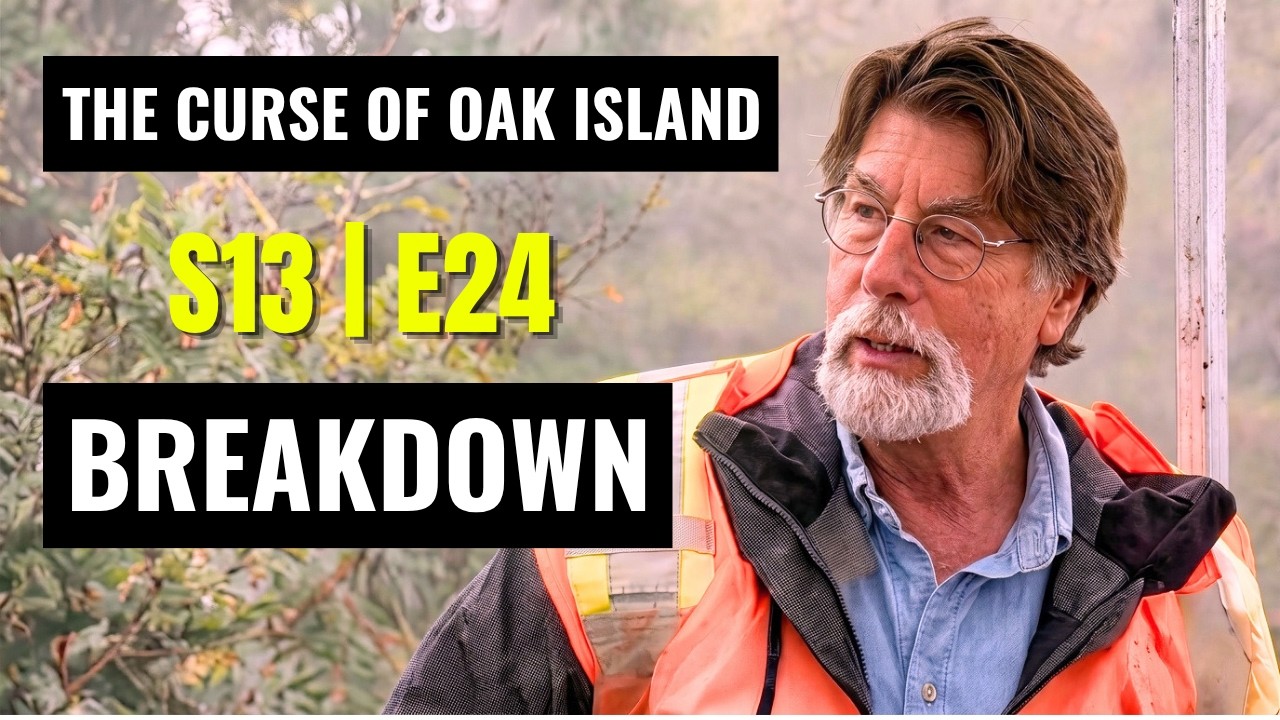
This is the Curse of Oak Island, season 13, episode 24, overseeing the dig.
From the first moments of this chapter, the search takes on a wider shape. What begins on Oak Island now reaches across the Atlantic toward the Portuguese Azores Islands, where ancient structures appear to mirror what the team has seen before.
And with that connection in mind, the men driving this search return to the Money Pit area, ready to begin one of their biggest digs yet.
For years, Oak Island has held its secrets in layers of mud, stone, timber, and water. Again and again, the island has offered signs that people were here long ago, working with a purpose.




Some of those signs seemed too organized to be natural. Some seemed too deep, too carefully placed, too exact.
But even after long effort, one question has remained at the center of everything.
Was something buried here on purpose? And if so, by whom?
Now, in this episode, that old question is given new life far from Nova Scotia, in the Azores.
The team has seen ancient structures whose form and design appear strikingly familiar. They’re not simply old walls or rough stone remains.
What matters is the pattern, the shape, the sense that human hands once built with intention, using methods that may have traveled farther than anyone first believed.
If the same ideas appear in both places, then Oak Island may not be an isolated mystery. It may be part of a much larger story.
That thought alone is enough to change the mood.
On Oak Island, every clue has value, but some clues do more than add detail. Some clues change direction.
This new overseas link does exactly that. It suggests that the builders connected to Oak Island may have known more, traveled more, and planned more carefully than many once thought.
And if that is true, then the structures already found on the island may no longer seem strange on their own. They may fit into an older and wider map of human movement across the sea.
The Azores Islands sit far out in the Atlantic, a place long tied to travel, weather, and seafaring routes.
Over the centuries, many cultures crossed those waters. Some settled there. Some passed through. Some may have left marks that still remain in stone.
When the Oak Island team studies old structures there and compares them with what they have seen at home, they are not simply chasing a distant idea.
They are trying to answer a practical question.
Do these similarities point to shared knowledge, shared builders, or shared purpose?
That question matters because Oak Island has never been only about treasure.
Treasure is the promise that drives the effort, but beneath that is another search. It is a search for understanding.
Why were tunnels cut? Why were materials placed in ways that suggest planning?
Why do certain features on the island seem to point to engineering rather than accident?
And why, after so many years of digging, do new signs keep appearing instead of fading away?
The Money Pit remains the center of that puzzle.
It is the place where the legend began, and it is still the place where the strongest hopes are drawn.
Generations came here before, each one believing it was close. Some found traces of works below ground. Some found timber at depth.
Some found signs that the ground had been disturbed by people long ago. Yet none reached a final answer.
The story of Oak Island became one of near success and sudden setback, of bold effort and silence from below.
That long history gives weight to every choice made in the present.
When the team decides where to dig, they are not starting fresh. They are building on the work of many years, including their own.
They know where old shafts once stood. They know where previous efforts ended in collapse, flooding, or confusion.
They have maps, samples, scans, and records.
More importantly, they have patterns. And in a search like this, patterns matter more than isolated finds.
In the Money Pit area, the evidence has begun to gather in a way that is hard to ignore.
It does not arrive as one clear answer. Instead, it comes in pieces.
Data from below the surface, signs that something may be buried at depth, hints of structure where there should be none.
These pieces do not yet name what lies underground, but together, they suggest order.
And order is what turns suspicion into action.
The team now believes that this part of the island may still hold a target worth pursuing on a much larger scale.
That belief is not based on hope alone.
It comes from the way separate clues begin to support one another.
The old mystery of the Money Pit, the signs of deep human activity, the suggestion of buried material, and now, from across the ocean, ancient structures that seem to echo what Oak Island has already revealed.
One clue may raise interest. Several clues together can justify a major decision.
That decision is the massive dig.
A large dig is never just a matter of bringing in equipment and breaking ground. It is a statement.
It means the team is prepared to commit real time, money, labor, and risk to one area because they believe the evidence has become strong enough.
On an island where earlier searches were often narrow, cautious, or limited by old methods, a major open dig changes the scale of the effort.
Instead of looking through small openings into darkness, the team will attempt to expose more of the ground itself and read its story layer by layer.
This shift from theory to action gives the episode its momentum.
For a long time, much of the Oak Island search has depended on reading signs from fragments.
A piece of wood, a trace of metal, a scan anomaly, a void, a change in soil.
But now comes the moment when those fragments must lead somewhere real.
If the clues are true, then the ground should begin to tell the same story more clearly as the dig moves downward.
Even so, the team knows better than to expect easy answers.
Oak Island has a way of complicating every move.
Ground shifts. Water enters. Old works cross through newer ones.
Past digs disturb original layers.
What looks clear in one moment can become uncertain in the next.
That is why planning matters so much.
The dig must be large enough to reveal patterns, careful enough to protect possible evidence, and controlled enough to manage a site that has frustrated searchers for centuries.
As preparations begin, there is a visible sense of purpose.
Equipment is brought into place. The work area is marked out.
The team studies where the strongest evidence seems to point.
This is not the excitement of blind chance.
It is the steadier feeling that comes when many separate lines of belief begin to meet in one place.
The Azores connection has not replaced the evidence on Oak Island.
It has sharpened the way the team sees it.
That may be the most important change of all.
Sometimes a mystery remains unsolved, not because clues are missing, but because old clues have not yet been understood in the right way.
A structure overseas that seems to mirror one at Oak Island can do more than surprise the team.
It can help them recognize design where before they only saw ruins.
It can make them ask whether the island’s buried features were parts of a system, not random works left behind by different people at different times.
With those thoughts in mind, the first break in the ground carries unusual weight.
Every layer removed may bring the team closer to a hidden construction, a deposit, or an answer that has waited below for generations.
The work begins in a careful rhythm.
Earth is moved. The upper layers are stripped back. The site opens.
What was once a narrow search area becomes a larger field of investigation.
At first, progress is measured not in dramatic discoveries, but in changes of texture, color, and form.
Soil is read like a record.
Disturbed ground can tell one story. Packed layers tell another.
Stone placement matters. Timber position matters.
If the ground has been worked before, it often leaves signs.
The challenge is to tell the difference between natural formation, earlier search damage, and original human design.
That is where experience becomes critical.
The deeper the dig goes, the more attention sharpens.
The team watches for any indication that they are entering a zone tied to the evidence detected earlier.
No one wants to claim too much too soon.
Oak Island has taught that lesson many times.
Still, the deeper layers bring with them a growing pressure.
If the signs below are real, the dig should eventually begin to show them in a visible way.
If not, then one of the strongest working ideas in the current search may begin to weaken.
That uncertainty is part of what makes the moment so compelling.
The viewers know what the team hopes for, but they also know the island’s history.
Every gain has carried risk. Every promise has faced delay.
And so the dig becomes a test, not only of the ground, but of the theory behind it.
Can the clues from scans, patterns, and overseas comparisons truly guide the team to the right place?
Or are they once again chasing a shape in the dark?
As the work continues, the island begins to speak in its usual careful way.
There may not yet be a final answer, but there are suggestions.
There are signs that the team is not digging at random.
Each clue, however small, matters because it comes within a larger frame.
This is not just soil removal. It is the slow opening of a long sealed question.
Something happened here.
The real issue is whether the team can now follow the trace of that event before the island hides it again.
But no large dig comes without problems.
This is where effort meets reality.
Ground conditions change. Visibility can be limited.
Water and unstable material can turn a promising site into a difficult one in a short time.
Even when equipment is powerful, the earth does not yield its history in neat steps.
A major operation can bring speed, but it also brings pressure.
Decisions must be made carefully.
Go too fast, and important evidence may be lost.
Go too slow, and momentum begins to fade.
There is also the mental pressure that comes with any search of this kind.
The team is working under the weight of past failures, public expectation, and the island’s long reputation for disappointment.
They are not only digging into the ground, they are digging into a legend that has already outlasted many confident men.
That creates a special kind of tension.
Hope is necessary, but hope alone is dangerous.
Every member of the team must balance belief with restraint.
[music]
That balance gives this part of the story its realism.
The search is not presented as an easy march toward treasure.
It is shown as a demanding investigation, one that asks for patience as much as courage.
There are moments when the evidence seems close, and moments when doubt returns.
The site itself can raise questions faster than it answers them.
A sign of structure may lead to another layer.
A promising pattern may call for more work instead of immediate reward.
On Oak Island, progress often comes with delay attached to it.
And yet, even in that pressure, something important begins to take shape.
The Azores connection does not fade into the background.
Instead, it keeps offering a new way to think.
If ancient structures across the ocean truly resemble those found or suspected on Oak Island, then the team may be dealing with a shared tradition of building.
Not proof, not certainty, but a possibility strong enough to influence interpretation.
In a mystery this old, interpretation can change everything.
This is where the episode gains a second wind.
After the physical challenge of the dig and the natural rise of doubt, the overseas comparison restores direction.
The team begins to look again at what lies before them, not as isolated traces, but as parts of a method.
How were people building? What shapes were they repeating?
What purpose did those forms serve?
If the same kind of thinking shaped both places, then Oak Island may be less mysterious in one way, and even more important in another.
Because if the island was part of a wider network of knowledge, then the search is no longer about one hidden object alone.
It becomes a search into planning, travel, and intention on a much bigger scale.
Who crossed those waters? What did they bring? What did they hide?
And why choose Oak Island at all?
Questions like these widen the frame without losing the core tension.
The treasure may still be underground, but the meaning of that treasure grows larger with every clue.
As the team moves deeper into the Money Pit area, that larger frame hangs over every decision.
The ground below them may hold more than valuables.
It may hold confirmation that the works on Oak Island were designed by people with knowledge, reach, and purpose far beyond what simple legend once suggested.
That possibility does not remove uncertainty.
If anything, it sharpens it.
The closer the team believes it may be, the more careful every move must become.
This brings the episode into its tightest stretch.
The operation is now fully active.
The target area has narrowed in importance.
The clues have not vanished.
If anything, they now seem more meaningful because they stand inside a growing chain of logic.
Old island evidence, new overseas comparison, fresh effort at scale.
Each piece supports the next, and together, they create the strongest feeling yet that the team may be on the edge of something significant.
But Oak Island rarely gives up its answers all at once.
Instead, it builds expectation slowly.
The team senses that they are approaching a meaningful point in the dig, but the ground still holds back the full story.
That restraint is part of the island’s power.
It keeps everyone leaning forward, searching one layer deeper, asking one more question.
Is the buried evidence close?
Is the team finally opening the right part of the Money Pit?
Or is the island preparing another turn just when belief is highest?
In these final stages of the episode, the atmosphere is one of controlled suspense.
No one can yet speak of final proof. No one can yet claim victory.
But neither can the new evidence be dismissed.
The dig itself is real. The effort is serious.
The clues that led here were not imagined.
And the connection to the Azores has added a new level of meaning to what the team is seeing on Oak Island.
A mystery once viewed mainly through local legend is now being tested against a wider historical possibility.
That is what makes this chapter stand out.
It does not end with the mystery solved.
It ends with the mystery sharpened.
The team has taken what they learned overseas and used it to guide a major new move at home.
They have chosen to act, not simply to speculate.
They have returned to the most famous ground on the island with renewed belief that something important remains below.
And that leaves the search in a powerful place.
The Azores structures suggest that Oak Island may belong to a much older and broader story than many once believed.
The Money Pit dig suggests that the physical evidence on the island may still lead somewhere concrete.
Together, those two lines of inquiry create a rare moment in the long hunt.
A moment when idea and action begin to move together.
Still, the outcome remains open.
The team has not reached the end.
The ground has not yielded its full answer.
What they have gained is direction.
And on Oak Island, direction can be as valuable as discovery.
It tells them where to focus.
It tells them which clues deserve greater weight.
It tells them that the island may still be guarding something placed there long ago for a reason.
So the story moves forward, not with certainty, but with momentum.
The massive dig in the Money Pit area has begun.
The evidence of buried treasure has been taken seriously enough to justify one of the boldest efforts yet.
And the strange mirror between Oak Island and the Portuguese Azores has opened a new path of thought, one that may help explain why this island has resisted simple answers for so long.
For the team, the work is far from over.
Every foot of ground still has to be read, tested, and understood.
Every new sign must be weighed against old records and hard experience.
But something has changed.
The search no longer feels like a circle returning to the same hope.
It feels like a line extending outward, from Oak Island to the Azores and back again, linking stone, earth, and possibility across the Atlantic.
That is where this episode leaves us.
Not at the end of the hunt, but at a turning point within it.
A wider world now touches the mystery of Oak Island.
A larger dig now tests the evidence below the Money Pit.
And the old question, the one that has drawn men here for generations, rises once more with fresh force.
If the clues are true, then something important may still wait underground.
And if that is the case, then the next move may matter more than ever.
LD